


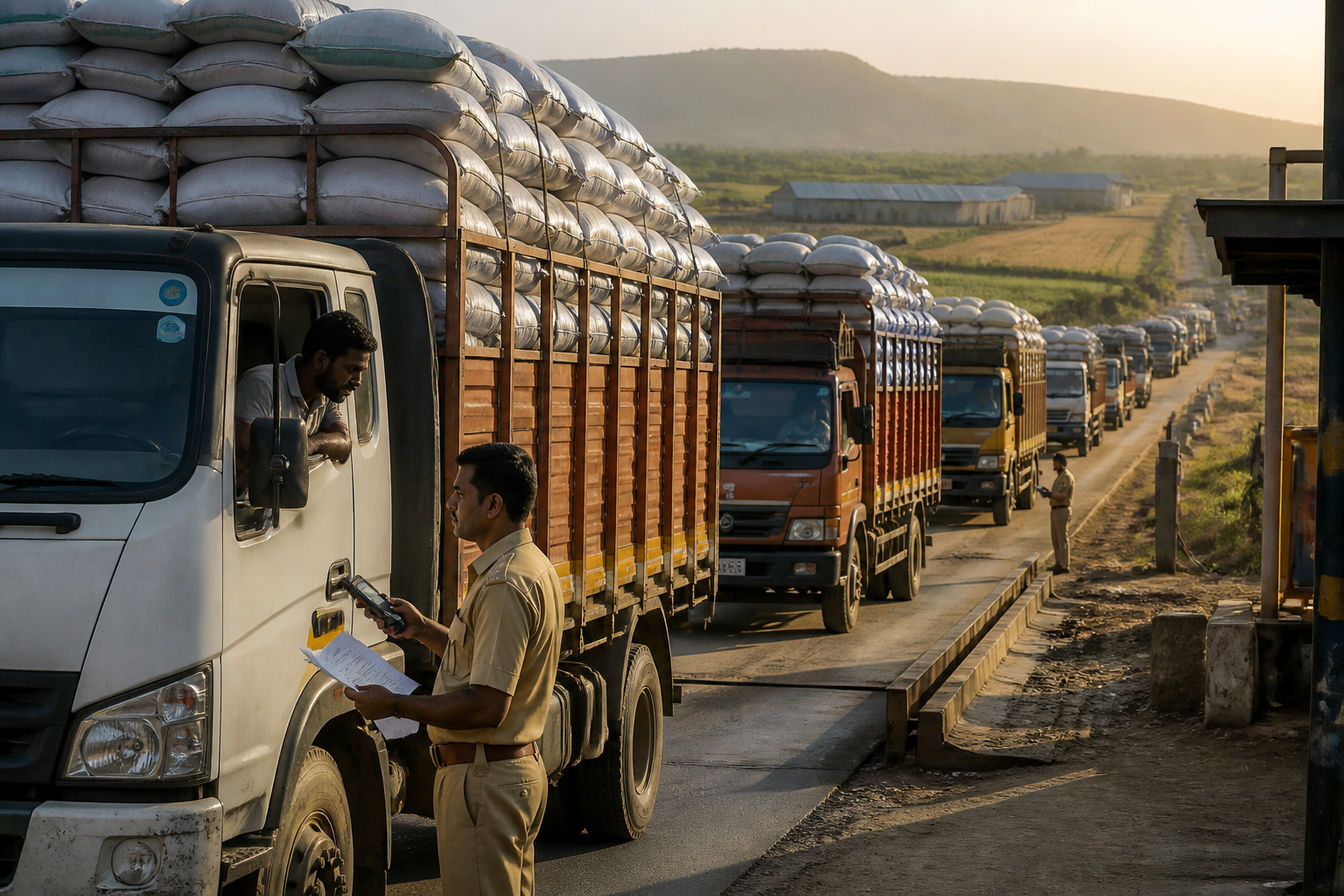
E-way bill checks have helped the government identify suspected diversion of subsidised fertiliser, with trucks recorded making unauthorised detours, delivering to locations other than those designated or making additional trips, according to a report by The Times of India.
The Finance Ministry conducted preliminary analysis after concerns emerged over possible fertiliser shortages, hoarding and diversion following the start of the Iran war, an unnamed official told the newspaper. The ministry subsequently alerted the Fertiliser Department.
The e-way bill system, introduced nine years ago, is required for trucks transporting goods valued at more than Rs 50,000. The electronic document records the movement of goods and can be used to compare a vehicle’s declared route and destination with its actual movement.
The checks were carried out as the government faced renewed pressure over fertiliser prices. The supply situation has since eased and the government has built up stocks, but diversion remains a concern because fertiliser is heavily subsidised. The report said such diversion is not a new phenomenon.
The Fertiliser Ministry separately operates the Integrated Fertiliser Management System, or iFMS, to track the movement of subsidised fertiliser. The use of e-way bill data adds another layer of transport and logistics information to the monitoring process, allowing authorities to examine movement beyond the fertiliser department’s own tracking system.
A parliamentary standing committee recently reported several forms of leakage during transportation. These included partial unloading and re-routing between railway rake points and remote districts, particularly in hilly areas of Jammu and Kashmir and Uttarakhand. The committee also recorded 28 cases of unauthorised movement without valid documents in Madhya Pradesh during 2025-26, as well as delayed or missing reports confirming receipt at the destination.
The panel also said neem-coated urea was being diverted to industrial users, including plywood and resin factories, diesel exhaust fluid units and cattle-feed manufacturers. The states identified in connection with this diversion were Rajasthan, Uttar Pradesh, Gujarat, Karnataka and Punjab.
Agriculture Ministry data cited in the report showed that authorities conducted 4.8 lakh raids across the country in 2025. These inspections resulted in more than 17,000 notices, nearly 7,000 licence cancellations and about 850 first information reports against alleged defaulters.
The report also referred to studies by multiple agencies pointing to the smuggling of fertiliser from India to neighbouring countries through trucks. The latest e-way bill checks are therefore part of a wider enforcement effort involving transport records, fertiliser tracking systems, inspections and police action.
The government’s immediate focus remains on monitoring subsidised fertiliser movement and preventing leakage as supplies and prices continue to be watched by the relevant departments.
