


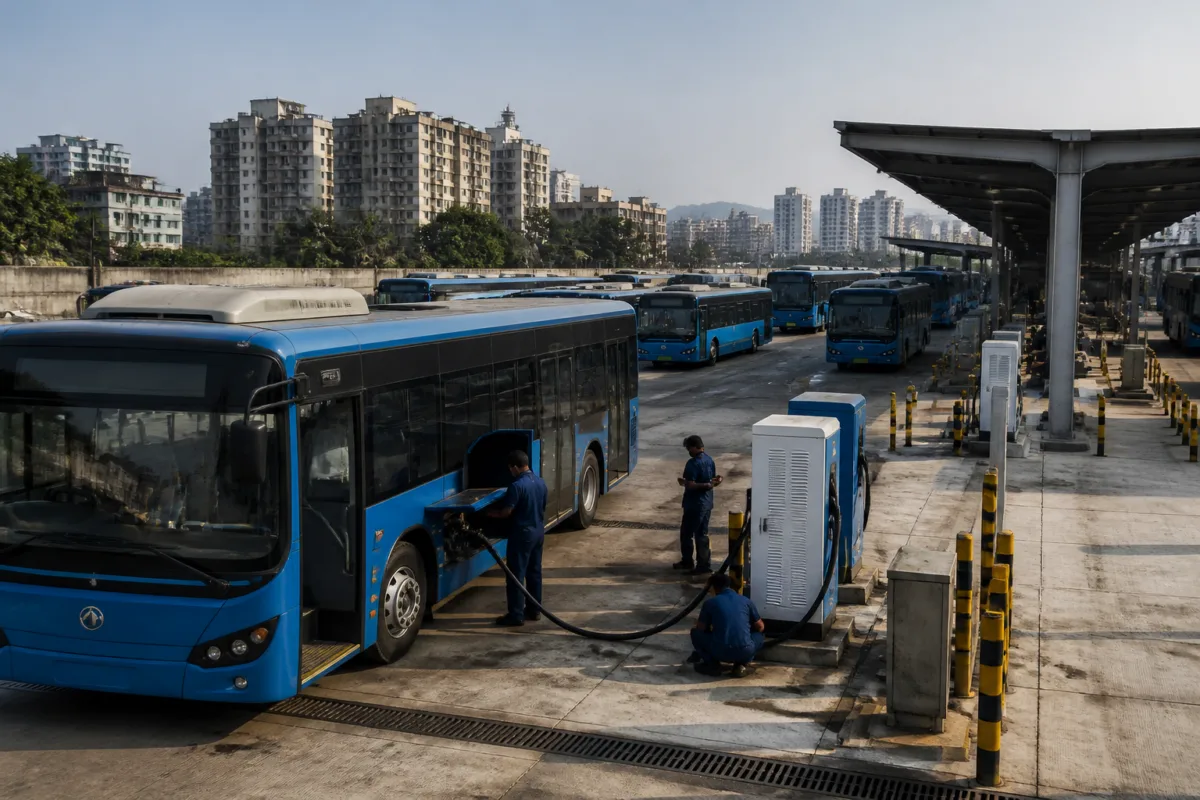
EKA Mobility is planning ₹2,000 crore in capital expenditure over the next three years as it scales electric bus manufacturing and enters heavy electric trucks and six-seater vehicles, chairman Sudhir Mehta told The Hindu BusinessLine. The company says it has an order book for 11,000 buses valued at nearly $2 billion, including long-term servicing.
The company is targeting combined revenue of ₹2,800 crore in FY27 from EKA Mobility and its group company Pinnacle Industries. Mehta said EKA is aiming for ₹2,000 crore in revenue, compared with approximately ₹600 crore last year, while Pinnacle is expected to contribute around ₹800 crore.
EKA’s reported vehicle volumes increased 13.4 times to 1,786 units during April-September, from 133 units in the year-earlier period. Mehta said the company is matching production with depot readiness and that revenue from the bus order book could shift by two or three months depending on infrastructure availability.
The company currently has 20 operational depots and expects another 80 to be established over the next 18 months. It plans to be present in 45 cities. EKA’s bus service contracts run for 12 years and cover maintenance, parts supply and operational support. According to Mehta, the company is achieving more than 99 per cent uptime. Charging infrastructure for the buses is provided by the concessionaires operating them.
Mehta cited the company’s operations in Mira-Bhayandar as an example of urban demand, saying one EKA bus carries more than 800 passengers daily. The company has not disclosed, in the supplied interview, the full city-wise allocation of its 11,000-bus order book or the timetable for individual deliveries.
Alongside city buses, EKA is pursuing electric six-seater vehicles for rural and small-town transport. Mehta said about 2,000 such vehicles are already on the road. The vehicles cost approximately 50 paise per kilometre to operate, travel around 18 kilometres on one unit of electricity and can be charged through a standard 16-ampere socket, according to the company chairman.
EKA currently has 75 operational dealer points for the six-seaters and is adding six to 10 every month. The company intends to expand through smaller towns into rural markets, where the vehicles could connect villages with schools, markets and public transport. The interview did not provide independent operating data or details of the regulatory framework governing these services.
The company’s next expansion phase is heavy electric trucks. Mehta said a fully loaded diesel truck may cost around ₹50 per kilometre in fuel, compared with approximately ₹30 per kilometre for an electric truck at an electricity price of ₹12 per unit. He acknowledged that electric trucks have higher equated monthly instalments and said EKA is focusing on fixed-load, point-to-point operations where charging can be planned.
The company is testing vehicles with customers before sales and does not consider battery swapping necessary for most applications. Mehta said financing and charging availability are more important for the applications EKA is targeting.
EKA is developing common vehicle technologies, including motors, batteries, power electronics and software, across its product categories. Mehta said the company has more than 100 people in its software team, recruits around 150 young engineers annually and is working with IIT Chennai on pantograph-based fast charging.
Mehta said EKA has completed its current funding rounds and is not seeking additional cash at present. He identified charging infrastructure and electricity transmission capacity as critical factors for the wider adoption of electric mobility and linked the company’s ambition of $1 billion in annual revenue by 2030 to the pace of electric vehicle penetration.

