


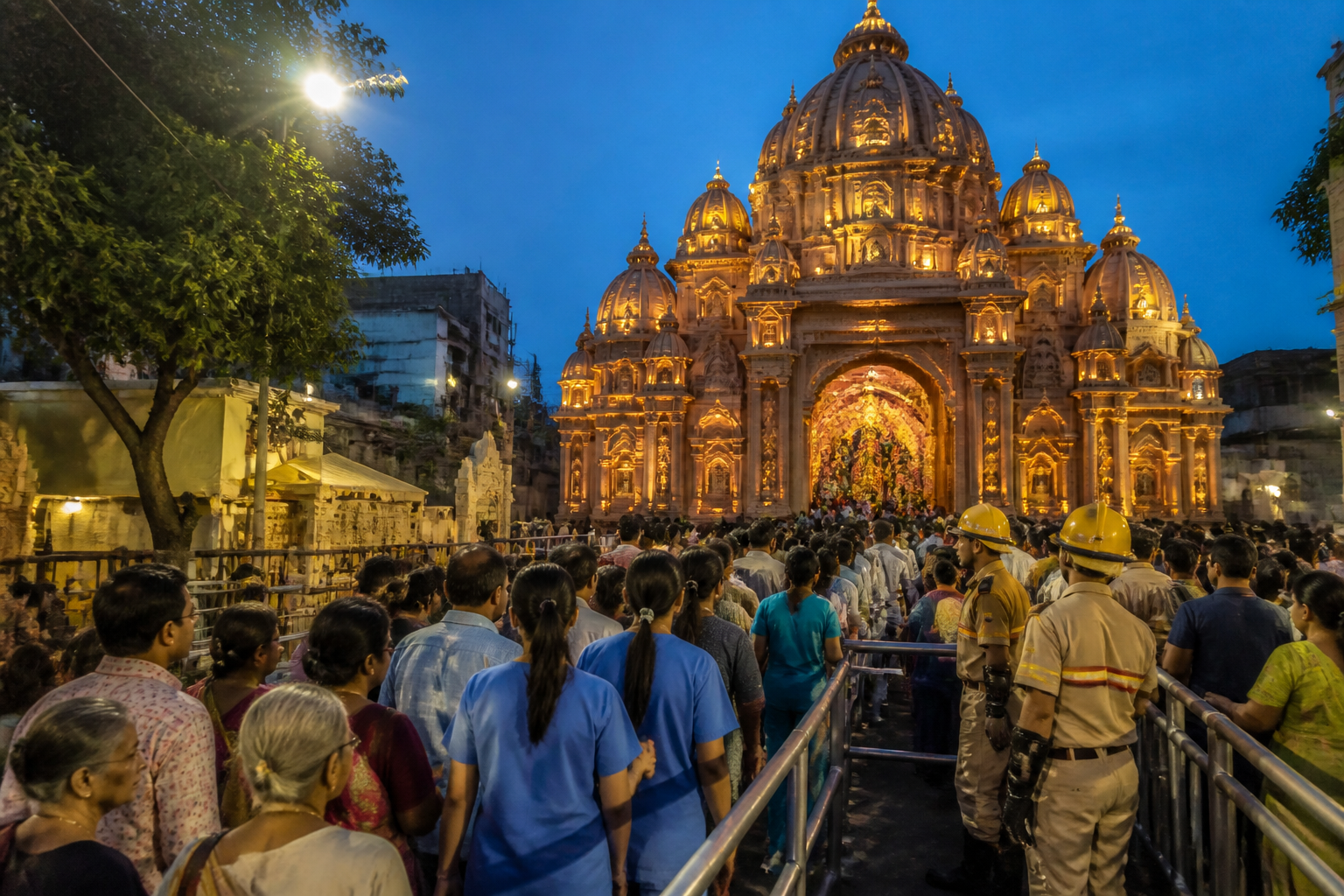
The Durga Puja Coordination Committee has announced that no VIP passes, tickets or paid access arrangements will be permitted for darshan during Durga Puja 2026, as organisers seek to make access more equal across celebrations in Kolkata and elsewhere in West Bengal.
The decision was announced at the committee’s first press conference on Wednesday by its principal organiser, Rudranil Ghosh. He said there would be no arrangement for collecting even a single rupee in exchange for a pass or ticket in the name of the puja.
“We hear that many are collecting crores of rupees in the name of VIP passes or cards. This is extremely painful,” Ghosh said, according to Sangbad Pratidin. He added that the committee would not comment on the allegations but would leave the matter to the people of Bengal to judge.
The committee’s announcement places access to popular puja venues within a wider question of how large public festivals are organised. Durga Puja attracts visitors across neighbourhoods and cities, and entry systems can influence who gets easier access during periods of heavy footfall. The committee said its approach would be to ensure arrangements for everyone to view the idols equally.
Ghosh said the term VIP should not be limited to ministers, politicians or other prominent figures. He identified elderly people, those who are ill, social workers, doctors, nurses, police personnel and fire service workers as people who should also be treated as VIPs by puja organisers.
“Everyone should be provided a proper arrangement to see the idols equally,” he said, adding that there should be no distinction between people based on status before the deity. The statement does not set out a separate operational plan for queues, accessibility or emergency movement at individual puja venues.
The committee also said it wanted to reduce the emphasis on a small number of prominent or high-budget pujas. Ghosh said that although many pujas are held in Kolkata and across the state, only a limited number had traditionally received greater attention. The committee said it would work towards giving all pujas greater visibility rather than ranking them primarily by budget or prominence.
As part of that effort, the committee has launched a website, dpssinfo.com, where information about pujas is expected to be made available. It also said live streaming of pujas would be arranged through the website, allowing celebrations to be viewed beyond the physical venues.
Ghosh said around 700 to 800 puja committees had already joined the organisation and that membership was expected to approach 1,000. He appealed to more organisers to participate so that information about the celebrations could be shared more widely across the world.
The committee’s next steps are to expand membership, publish information on participating pujas through its website and arrange live streaming. The announcement did not specify a common access protocol or implementation mechanism for individual puja committees.

