


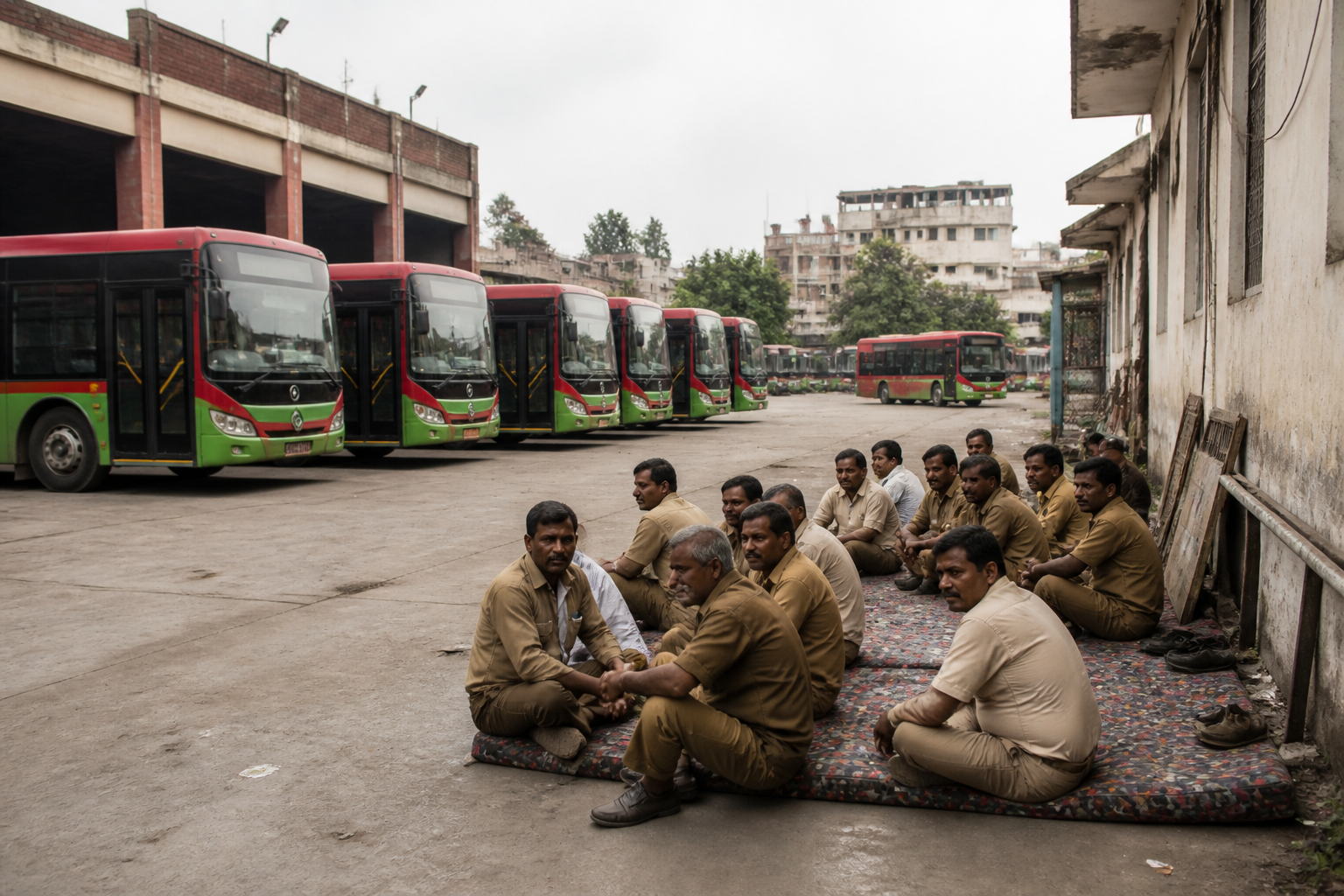
The DTC drivers’ strike entered its third day on Thursday, with more than 10,000 drivers staying off duty and most of the Delhi Transport Corporation’s 6,840 public buses remaining parked across the city’s depots. The stoppage has disrupted bus operations as drivers press for higher wages, leave, insurance and other service-related benefits.
The striking drivers are demanding a minimum daily wage of Rs 2,000, an annual bonus, payment for work on government holidays and medical insurance, among other conditions. DTC drivers currently earn Rs 862 a day, according to the report, with several drivers saying that commuting costs, household expenses, loans and deductions leave little or no money at the end of the month.
Transport Minister Pankaj Singh said on Thursday that all the demands, except the wage increase, had been accepted. He said he had met the drivers and secured the concessionaire’s approval for demands related to medical facilities, leave, compensation for additional kilometres driven and providing employment to a family member if a driver dies.
Singh also said the government would determine an appropriate wage increase after consulting the Labour department. “I also assured them that after consulting the Labour department and determining an appropriate amount, we would ensure that they receive a pay hike,” he said.
The DTC Karamchari Ekta Union disputed the minister’s account. Union president Lalit Chaudhary told The Indian Express that none of the drivers’ demands had been met by the government during negotiations and said the strike would continue on Friday.
The impact was visible at depots across Delhi. At Wazirpur, 150 buses were parked while drivers sat on mattresses outside the depot. Driver Joginder Singh, who travels daily from Jhajjar to Delhi, said he spends Rs 80 on the journey and drives about 105 km during three rounds between Wazirpur and Nand Nagri. He said his two children’s school fees range from Rs 2,500 to Rs 3,000 a month and that he has been asking friends to pay his motorcycle loan instalments.
At the GT Karnal depot, 121 buses remained parked. Driver Ashu Panchal said his daily petrol expense for travelling from Sonipat to work was between Rs 150 and Rs 200. He also estimated that lunch, tea and snacks cost him about Rs 100 a day, while vegetables and groceries for his household cost another Rs 200 to Rs 300. Panchal said he also works on a gig ride platform while returning home and is considering leaving the job after starting an e-commerce business.
Drivers at Rajghat depot 1 and Shadipur described additional pressures linked to the job. Imran Alvi said deductions could be made from drivers’ pay when buses suffered minor damage. Sunil Kumar, who has driven public buses for more than two decades, said drivers did not receive leave, holiday pay, medical insurance or accident insurance. He added that drivers sometimes pooled money to support colleagues who were injured or died.
Kumar also said performance incentives were difficult to earn because drivers had to stop at designated locations and complete routes within fixed times despite Delhi’s traffic. The reported incentive is Rs 50 for morning-shift drivers and Rs 100 for those on the evening roster. The union’s decision to continue the strike on Friday is the next stated development in the dispute.
