


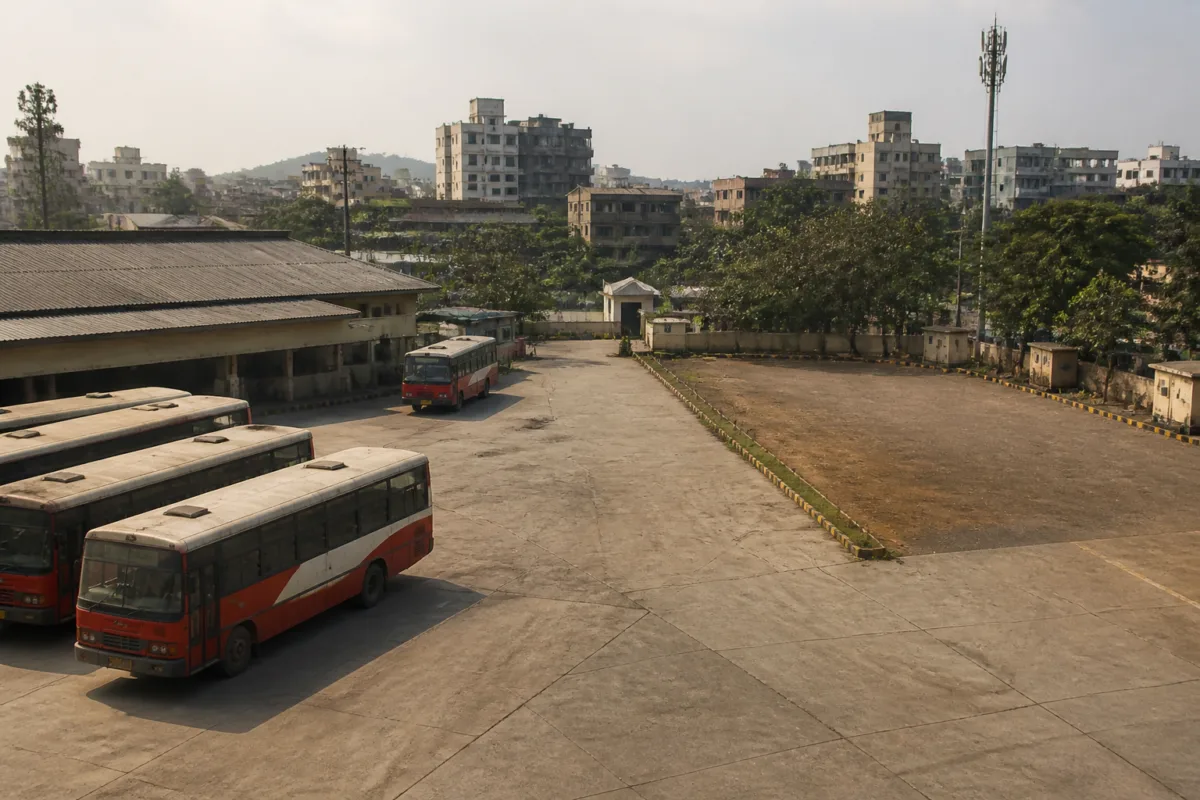
The Maharashtra transport department has granted administrative approval for an electric bus charging station at the State Transport (ST) bus depot in Dombivli MIDC, with an estimated cost of Rs 6 crore 17 lakh 28 thousand, according to a report by Loksatta.
The facility is planned on an ST-owned plot near the gymkhana in Dombivli MIDC. The report places the land parcel at about four to five acres and says it has been held by the ST corporation for several years. The site is expected to serve buses operating from the depot to Thane, Palghar and other districts.
The approval comes as the state transport department gives greater priority to electric buses in public passenger transport. The report says local transport services and Maharashtra State Road Transport Corporation (MSRTC) buses are expected to increasingly shift from diesel to electric operation, creating a need for charging infrastructure at existing depots.
Dombivli falls under MSRTC’s Thane division. The division’s depots include facilities at Kalyan, Dombivli MIDC and Vitthalwadi. These depots handle local passenger services as well as inter-district routes.
The proposed charging centre would add a new operational function to the Dombivli MIDC depot. Electric buses would need to visit the facility for charging, increasing activity at the depot alongside regular passenger operations and staff movement, the report said. However, the report does not specify the number of chargers, their capacity, the number of buses to be supported or the expected daily charging schedule.
The project is being funded through the budget head for bus station modernisation facilities. The administrative approval clears the way for the charging centre, but the report does not state when construction will begin or when the facility will become operational.
For commuters, the immediate significance is institutional rather than a confirmed change in services: the depot is being prepared to support a larger electric-bus fleet. The eventual effect on routes, service frequency, operating costs and emissions will depend on the facility’s capacity, the availability of electric buses and the implementation schedule, none of which has been detailed in the report.

