


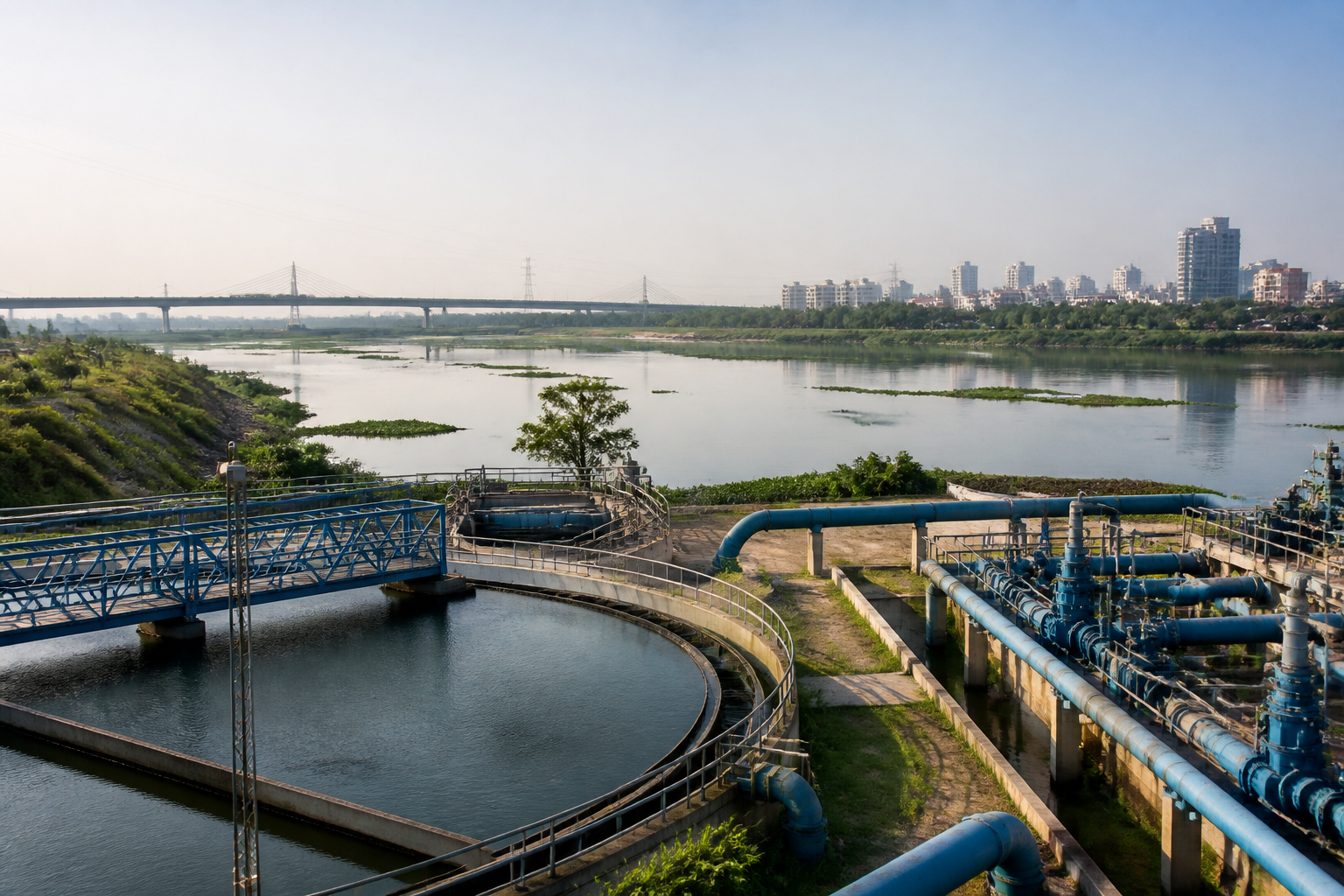
The Delhi Jal Board’s Jal Manthan 2026 conclave has concluded with officials, water experts and utility practitioners calling for a coordinated approach to strengthen Delhi water security and accelerate the rejuvenation of the Yamuna.
The two-day conclave, held on September 15 and 16, brought together water specialists, technology experts, administrators and representatives of multilateral organisations from India and abroad. The discussions focused on the linked challenges of water supply, sewage management, wastewater reuse and river pollution in the national capital.
Six themes shaped the deliberations: 24×7 quality water supply, a circular water economy, a future-ready workforce, Digital DJB, financial sustainability and Yamuna rejuvenation. Together, the themes cover both the operational responsibilities of a city water utility and the administrative and financial systems required to maintain them.
The discussions highlighted that improving Delhi’s water security cannot be treated as a supply-only exercise. The approach discussed at the conclave included water supply, sewage collection and treatment, wastewater reuse, drain management and pollution control as connected parts of the same urban system.
This focus is significant because water security in a large city depends not only on the availability of raw water, but also on the ability to distribute treated water, collect sewage, process wastewater and prevent untreated flows from entering drains and rivers. The conclave’s agenda placed these functions within a single framework rather than treating them as separate infrastructure programmes.
The circular water economy theme also brought attention to the role of wastewater reuse in reducing pressure on freshwater resources. The supplied report did not specify targets, reuse volumes or individual projects discussed during the event, but it identified reuse as one of the central areas for strengthening the city’s water management system.
The discussions on a future-ready workforce and Digital DJB pointed to the organisational changes required alongside physical infrastructure. The report did not provide details of proposed digital systems, staffing plans or technology deployments, but included these issues among the six principal themes of the conclave.
Financial sustainability was another focus, placing the long-term operation of Delhi’s water and sewerage systems alongside service expansion and environmental restoration. No specific funding commitments, tariff measures or financial figures were announced in the material available from the conclave report.
The Yamuna rejuvenation discussions were linked to drain management and pollution control, indicating that river restoration was considered alongside the systems that carry wastewater through the city. The report did not state a new deadline or implementation schedule for the work.
The Delhi Jal Board concluded the conclave after the two days of discussions. The next stage will depend on how the ideas and priorities discussed across the six themes are translated into specific utility, technology, financial and pollution-control measures.
