


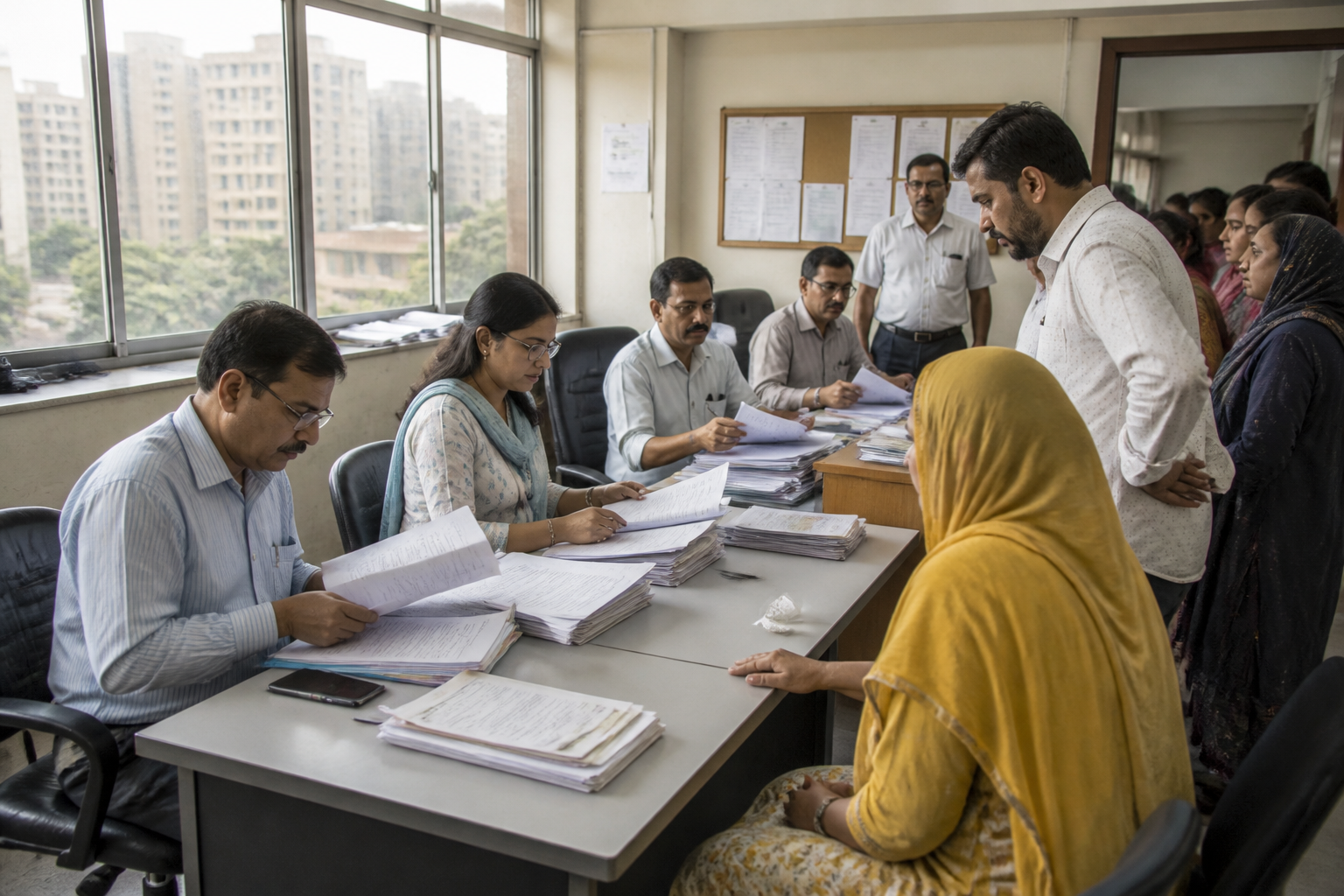
More than 350 electors in Delhi’s draft electoral roll have been marked ineligible for the final roll during the ongoing Special Intensive Revision (SIR), prompting the Chief Electoral Officer to warn against deletions without completing the required verification process.
The electors were among those who had been flagged for notices during the hearings process. More than 200 of the cases are from the Vikaspuri constituency. Other constituencies where electors have so far been marked ineligible include Madipur, Malviya Nagar, Sangam Vihar and Tughlakabad, according to information reported by The Hindu.
Delhi Chief Electoral Officer Ashok Kumar has directed Electoral Registration Officers (EROs) to follow a 10-point checklist before declaring an elector ineligible or deleting a name from the electoral roll. In a letter issued on September 25, the CEO specifically instructed officials not to make deletions on “flimsy or frivolous grounds”.
The direction places the verification process at the centre of the next stage of the SIR exercise. EROs are the officials who hold the statutory power to mark an elector ineligible. The CEO’s warning therefore addresses the procedure through which names can be removed from the final electoral roll, rather than merely recording the number of cases already identified.
The SIR is being conducted through hearings involving electors whose names were flagged for notices. The latest figures indicate that the process has already produced decisions affecting hundreds of people in less than a month of hearings. The constituency-wise spread cited in the report also shows that the issue extends beyond a single Assembly segment, with cases reported in parts of west, south and southeast Delhi.
For residents whose names have been flagged, the immediate administrative issue is whether the required verification has been completed before an ineligibility decision is taken. The CEO’s instruction does not state that the 350-plus decisions will automatically be reversed. It instead requires EROs to ensure that the prescribed checks are completed and that deletions are not based on weak or frivolous grounds.
The process also places responsibility on individual EROs, who are the statutory decision-makers in these cases. The distinction is significant because the final electoral roll will depend not only on the notices issued but also on the documentation and verification considered during the hearings.
The CEO’s letter is the latest official instruction available in the report. Further decisions on the flagged electors will depend on the completion of the verification process and the actions taken by the respective EROs before the final electoral roll is prepared.
