


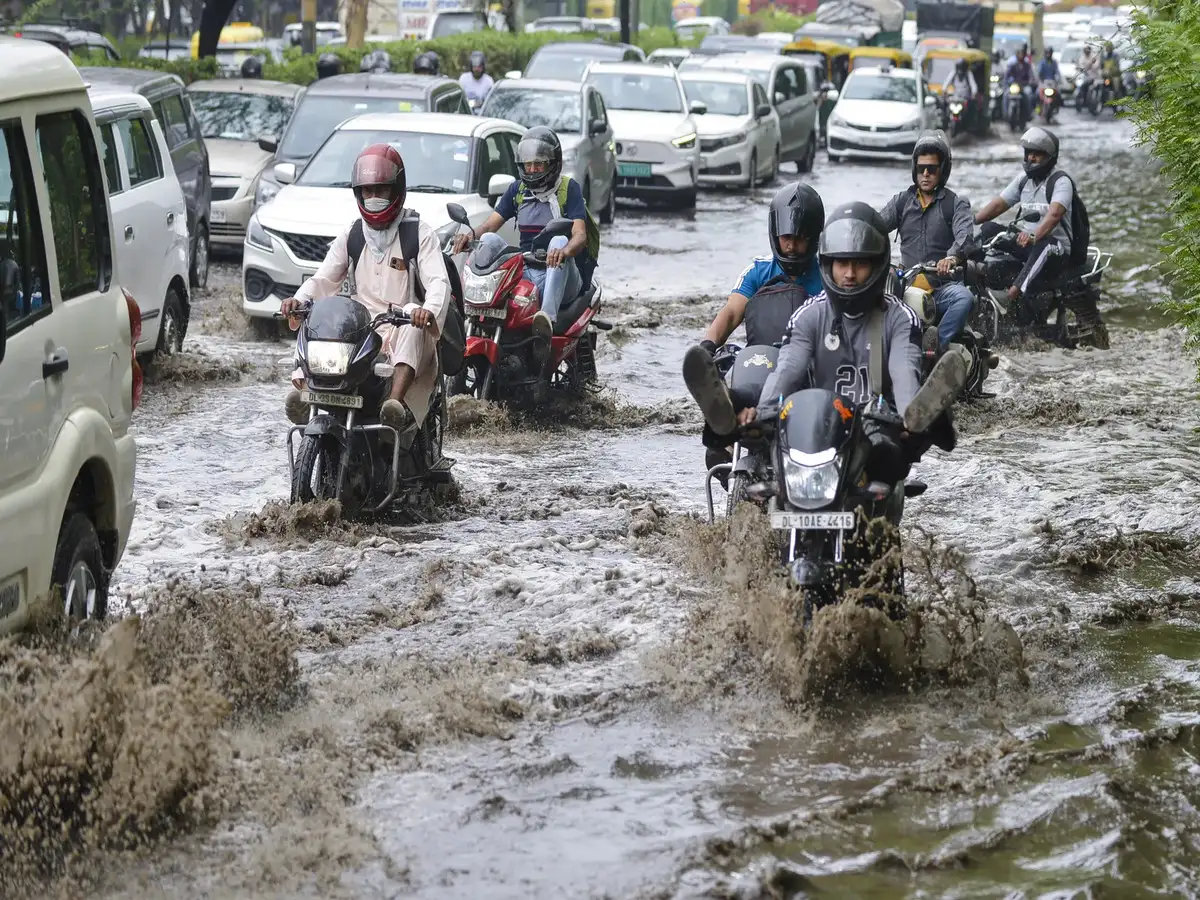
Delhi has experienced its heaviest May rainfall since 1901, breaking century-old records and causing significant disruptions across the capital.
The India Meteorological Department (IMD) reported an unprecedented 186.4 mm of rain this month till May 25, exceeding the previous record of 165 mm set in 2008. This sudden deluge, coupled with high-velocity winds and intense lightning during a severe thunderstorm on the weekend, tested the city’s resilience and exposed critical vulnerabilities in urban infrastructure. The late Saturday night storm brought widespread waterlogging, power outages, and severe traffic snarls, prompting IMD to issue a red alert for wind and thunderstorms. With wind speeds reaching up to 82 kmph, city officials urged residents to remain indoors, highlighting concerns over public safety during extreme weather events increasingly linked to climate change.
One of the most visible impacts was at the Indira Gandhi International Airport, where adverse flying conditions led to over 400 flight delays and 49 diversions, including 17 international flights. Airport authorities cited wind shear, intense lightning, and heavy rain as key factors making take-offs and landings unsafe. The cascading delays disrupted travel plans for thousands of passengers, revealing the airport’s susceptibility to weather-related operational shocks. As the storm subsided, the IMD forecast partly cloudy skies with humid conditions on Monday, accompanied by an orange alert for light rainfall and gusts up to 50 kmph. The minimum and maximum temperatures were expected to range between 23°C and 36°C, signalling a temporary pause in the intense heatwave that had gripped the region.
The persistent rainfall throughout the week is seen as a double-edged sword. While it offers relief from the oppressive summer heat, it also underlines the urgent need for Delhi’s urban planning to incorporate robust water management and flood mitigation systems. The current infrastructure, overwhelmed by intense downpours, struggled to cope with the volume of water, resulting in significant urban flooding and traffic chaos. The rains also brought a noticeable improvement in air quality across Delhi and neighbouring National Capital Region (NCR) cities. The Central Pollution Control Board (CPCB) recorded the Air Quality Index (AQI) at 97, placing it within the ‘satisfactory’ bracket—a welcome change after months of poor air quality. Surrounding areas like Noida, Greater Noida, Ghaziabad, and Gurugram also reported improved air conditions, demonstrating how natural weather patterns can momentarily ease pollution levels.
The extreme weather event is part of a broader national pattern linked to the early onset of the southwest monsoon. States such as Maharashtra, Kerala, Tamil Nadu, and Puducherry are simultaneously experiencing heavy rains and flood conditions, signalling shifting climatic norms that require adaptive governance and sustainable urban development. In Maharashtra’s Pune district, the monsoon rains have caused near flood-like conditions. Baramati and Indapur tehsils bore the brunt, with water entering homes in over 220 villages, prompting swift deployment of National Disaster Response Force (NDRF) teams for rescues. Local officials reported road closures and rescues of stranded residents, highlighting the acute vulnerabilities in rural and peri-urban flood management systems.
Kerala remains under multiple red and orange alerts as the monsoon intensifies, with several districts forced to close schools as a precautionary measure. These parallel developments across states underscore the interconnectedness of regional weather systems and the need for coordinated disaster preparedness strategies. Delhi’s recent rains offer a crucial reminder that climate resilience must be central to the city’s development plans. Urban flooding, power outages, and transportation disruptions threaten not only convenience but public safety and economic stability. Officials and experts advocate for investments in green infrastructure such as permeable pavements, urban wetlands, and expanded drainage capacity to better absorb rainfall and reduce runoff.
Moreover, the improved air quality during this period illustrates the potential benefits of integrating natural environmental cycles with sustainable urban practices. Reducing fossil fuel emissions and enhancing green cover can build upon these natural improvements, helping cities like Delhi transition towards healthier, more equitable living environments. As the capital prepares for the rest of the monsoon season, it faces a critical opportunity to align urban growth with climate-conscious policies that safeguard residents and foster ecological balance. The record-breaking May rains are a clear signal that cities must evolve rapidly to confront the challenges of a changing climate while advancing sustainability and equity.
Also Read : 50-year May rain record broken in Pune tehsil
