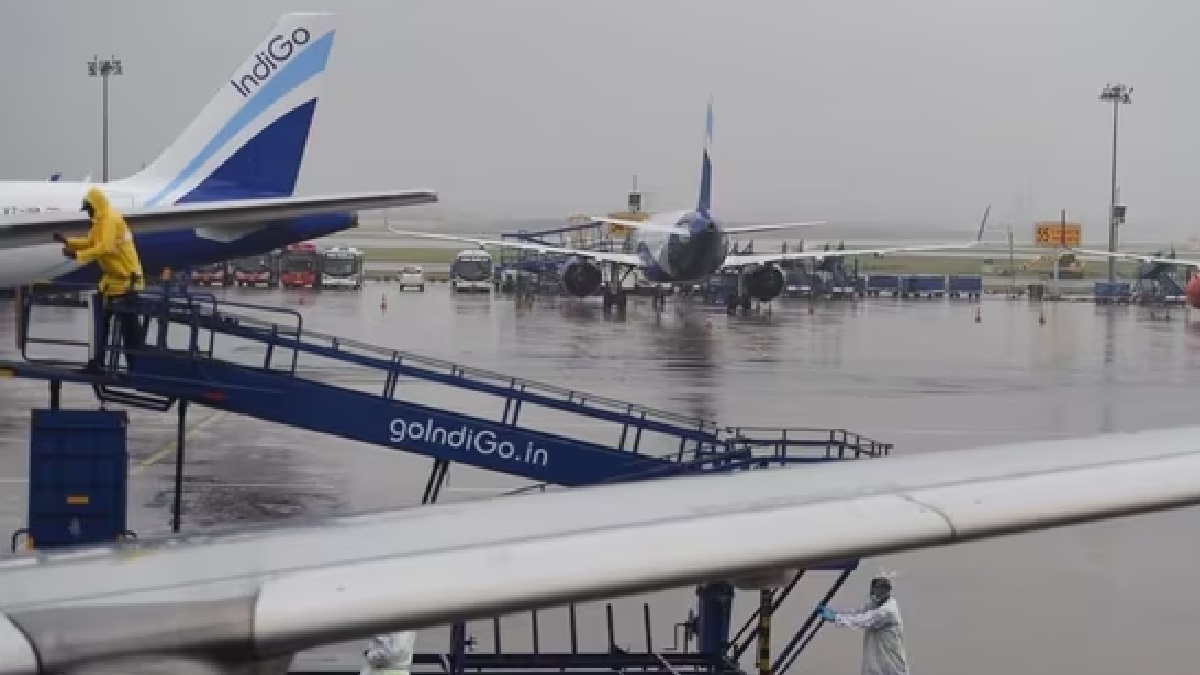
Delhi Rains Disrupt Flights as IGI and IndiGo Warn Passengers
Delhi rains returned on Monday, disrupting air travel and triggering urgent advisories from the Indira Gandhi International Airport (IGI) and major airlines like IndiGo. The sudden shift in weather brought respite from the intense heat but also led to widespread travel delays and waterlogged roads. As light to moderate rainfall swept across the capital and neighbouring regions, the India Meteorological Department (IMD) placed Delhi under a yellow alert, warning of thunderstorms and lightning over the next 48 hours.
Flight operations at IGI Airport faced interruptions due to adverse weather and increased air traffic congestion. Despite confirming that operations remained largely functional, airport authorities urged passengers to avoid road travel and instead rely on Delhi Metro to reach terminals. Several arterial routes to the airport were choked due to rain-induced bottlenecks, causing hours-long traffic delays, especially during peak morning departures. IndiGo Airlines, India’s largest domestic carrier, was among the first to issue a public travel advisory, asking passengers to check real-time flight statuses before leaving home. In a statement, the airline explained that persistent rain was affecting schedules and that some flights were being held due to congestion. “Our teams are working closely with air traffic control to minimise delays,” said the advisory, while cautioning passengers to allow additional travel time owing to waterlogging and slow-moving city traffic.
The IMD forecast suggests that Delhi will continue to witness light to moderate rainfall till the weekend. Temperatures are expected to remain in the comfortable 32°C to 34°C range. While the rainfall brings relief from the oppressive heat, it also exposes the fragile state of urban infrastructure. Most city roads, especially in South and West Delhi, witnessed significant water accumulation, causing not only delays but also raising concerns over public safety. Neighbouring states such as Uttar Pradesh, Haryana, Punjab, and parts of Rajasthan are also expected to receive rain under the active monsoon pattern. This widespread weather activity is likely to persist, making travel unpredictable across the region. All districts in Delhi, including North, East, South-West, and Central zones, remain under alert, though no red warnings have been issued yet.
Delhi’s civic authorities have yet to comment on contingency plans for monsoon preparedness, even as the capital continues to see rainfall-related disruptions annually. The lack of stormwater drainage upgrades and poor road design in urban pockets remain unresolved challenges. The city’s over-reliance on private vehicles and underwhelming last-mile connectivity exacerbate the impact of even moderate rainfall. Despite repeated advisories, many travellers found themselves stranded at key junctions like Dhaula Kuan, AIIMS, and Mahipalpur, as real-time traffic maps showed red across major stretches of the Ring Road and NH-48. IGI Airport’s advisory was reiterated on social media, asking passengers to stay in contact with their airlines and use the Metro wherever possible. For international flyers, the issue was further complicated by long immigration lines and rescheduled connections.
Meanwhile, the environmental benefits of the showers were not lost on residents, who welcomed the dip in pollution levels and the much-needed break from the oppressive climate. However, the lack of urban resilience raises questions about the capital’s readiness for extreme weather events. With climate variability increasing the frequency of such occurrences, stakeholders—from civic planners to airline operators—must adopt long-term, eco-sensitive strategies that support seamless mobility during seasonal changes.
While the rain is a reminder of nature’s vital balance, it also underscores the urgent need for Delhi to invest in adaptive, sustainable urban systems. The monsoon should not be a seasonal crisis but a test Delhi must start passing—consistently, and equitably.