


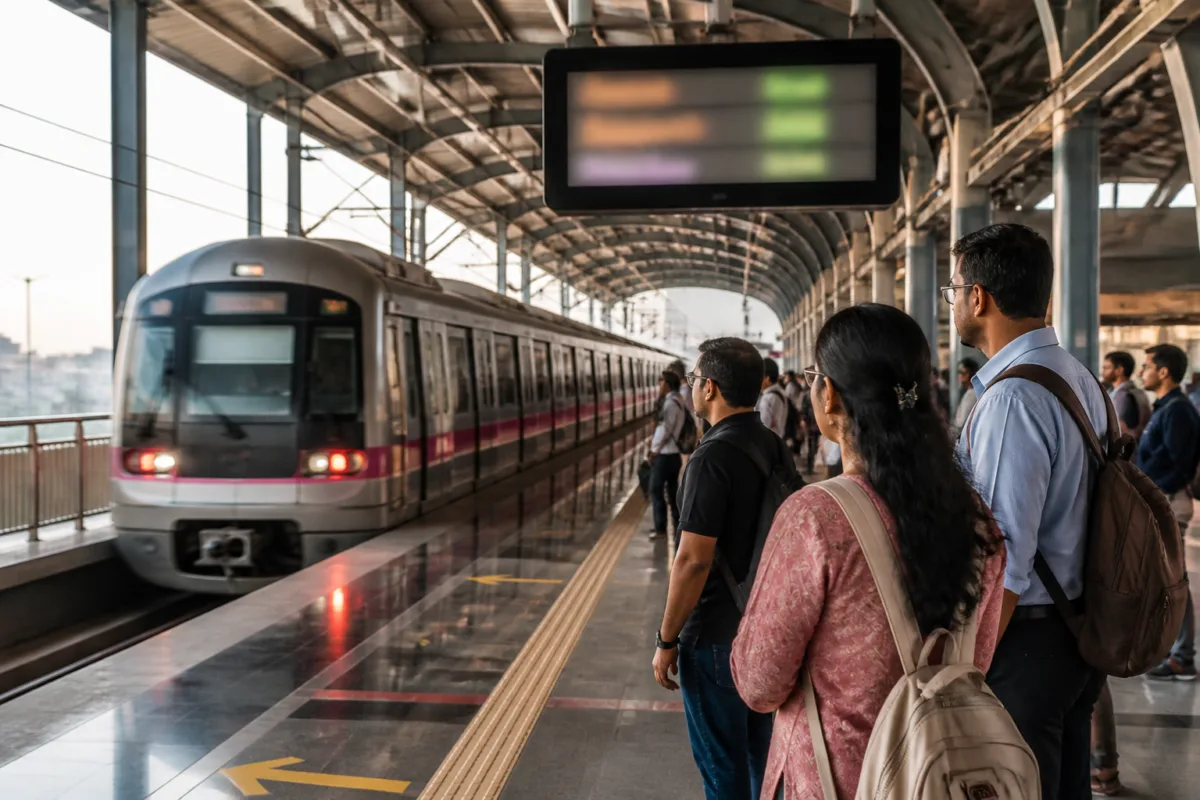
The Delhi Metro Rail Corporation has started displaying real-time coach occupancy information at stations on the Pink Line, allowing passengers to identify less crowded coaches before boarding and potentially improving the distribution of commuters across each train.
The facility, which was already available on the Magenta Line, uses passenger information display system screens on Pink Line platforms to show the estimated occupancy level of individual coaches shortly before a train arrives. Commuters can use the information to move towards a coach with relatively more space instead of entering the most crowded section of the train.
According to the report, the system relies on load sensors installed in the coaches. These sensors measure the current weight of each coach and compare it with the coach’s empty weight. The system then uses the difference to estimate the percentage of passengers inside each coach. That information is transmitted to platform displays for passengers waiting at the station.
The Magenta Line has been providing real-time coach occupancy information since 2022. Following what the report describes as a successful implementation there, DMRC has extended the facility to the Pink Line, also known as Line 7. The Pink Line is a circular corridor, and integrating the occupancy data across the line presented an additional systems challenge, according to the report.
The service is intended to be particularly useful during morning and evening peak periods, when some coaches can fill faster than others. By making the occupancy estimate visible before the train arrives, passengers can choose where to stand on the platform and avoid having to search for space after boarding.
The system also addresses a practical limitation of metro travel: passengers often gather near familiar entry points or the most convenient platform locations, leading to uneven crowding between coaches. Providing coach-level information gives commuters an opportunity to distribute themselves more evenly across the train, rather than treating the entire train as equally crowded.
For passengers, the immediate benefit is better information at the point of boarding. The facility may reduce the need to walk through crowded coaches or move along the platform after a train has arrived. The report also states that a more even distribution of passengers can improve comfort, make better use of available train capacity and support smoother operations.
The rollout places greater importance on the accuracy and visibility of the information shown on the platform displays. Because the figures are estimates derived from coach weight, the system is designed to indicate relative occupancy rather than provide a manual count of passengers. DMRC’s next operational task is to maintain the system across the Pink Line so that the information remains available when commuters need it, particularly during peak-hour services.

