


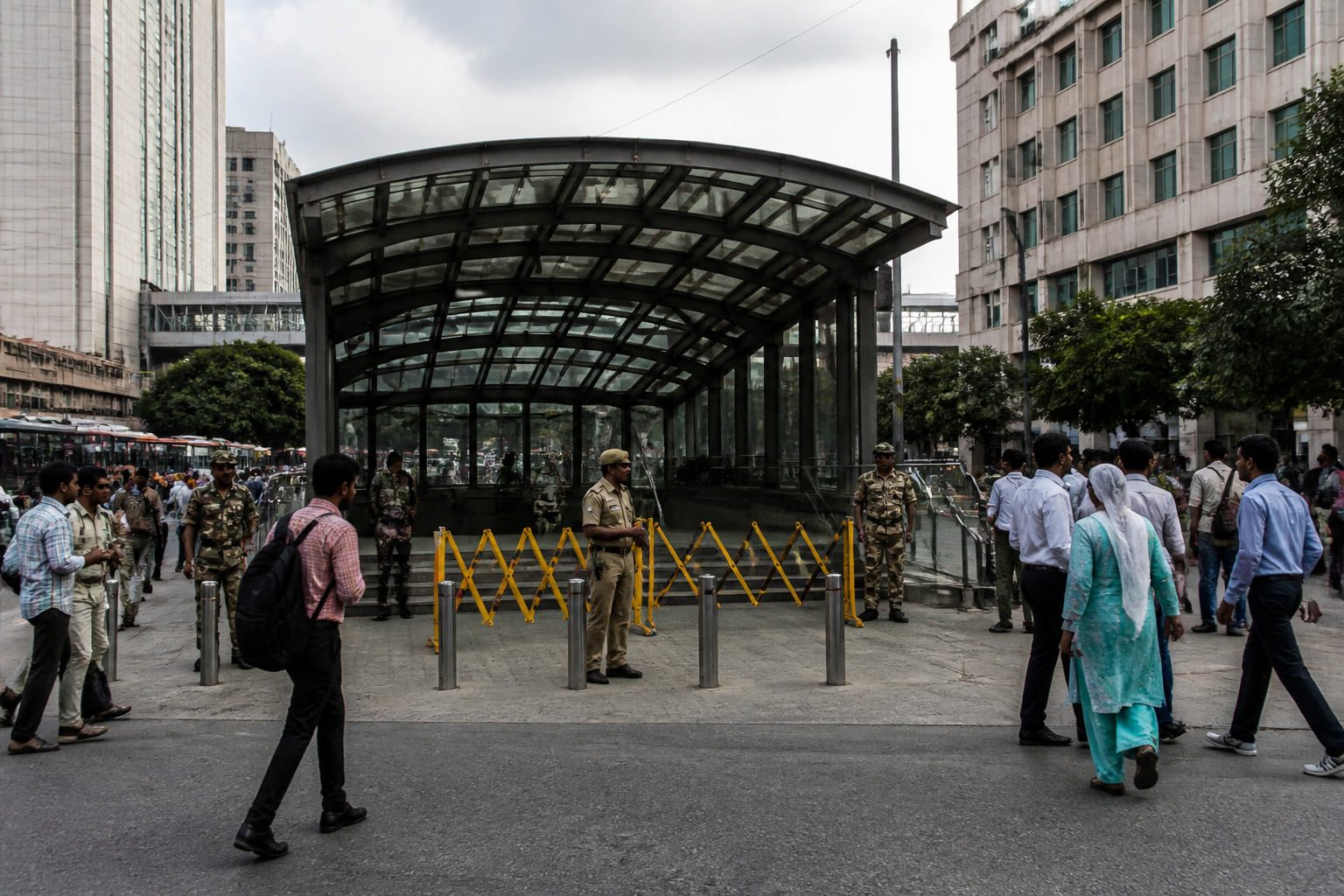
Delhi Metro entry and exit restrictions at six central Delhi stations were extended until 5 pm on October 12 as security agencies reviewed arrangements amid political protests in the capital, the Delhi Metro Rail Corporation said.
The stations affected were Rajiv Chowk, Patel Chowk, Janpath, Mandi House, Central Secretariat and Barakhamba Road. According to the DMRC update cited by Live Hindustan, passenger entry and exit at these stations had been suspended from 6 am and was initially scheduled to remain closed until 4 pm.
The DMRC later said the restrictions would continue for another hour. In a post on X, the corporation said the six stations had been closed from 6 am for security reasons and would remain closed until 5 pm. It added that security agencies would review the situation and that further updates would be shared according to their assessment.
The restrictions did not amount to a complete shutdown of train services through the affected stations. The DMRC had earlier stated that interchange facilities would remain available at all six stations, allowing passengers to change between Metro lines even though they could not enter or exit at those locations. The arrangement was intended to keep network connectivity functioning while limiting access to areas under heightened security.
The affected stations are among the most important interchange and central-city access points on the Delhi Metro network. Rajiv Chowk connects the Yellow and Blue lines and serves the Connaught Place area. Central Secretariat links the Yellow and Violet lines, while Mandi House connects the Blue and Violet lines. Patel Chowk, Janpath and Barakhamba Road also serve major government, commercial, cultural and office districts in central Delhi.
The restrictions came as security was tightened in central Delhi during protests linked to demands for the resignation of Chief Election Commissioner Gyanesh Kumar, according to the report. The report said the Congress and other opposition groups had announced demonstrations after an earlier protest organised by the Cockroach Janata Party and student organisations.
Live Hindustan also reported that entry and exit facilities at 45 Metro stations had been closed during the October 10 protest period, while interchange services continued. The report said the DMRC had initially applied similar restrictions to 57 stations before reducing the number to 45 following directions from the Supreme Court. These details were reported by the publication and were not independently verified in the material supplied for this report.
The temporary restrictions highlight the operational challenge faced by a high-capacity urban transport system during demonstrations and security alerts. Closing station gates can reduce direct access to sensitive areas, but it also shifts passenger movement to neighbouring stations and can complicate journeys through central Delhi. Keeping interchanges open allows trains to continue operating across lines, but passengers travelling to offices, government buildings, markets and public institutions near the affected stations must use alternative access points.
The DMRC’s stated next step was a review by security agencies. The corporation said normal arrangements and any further changes would depend on that assessment, with additional updates to be issued accordingly.

