


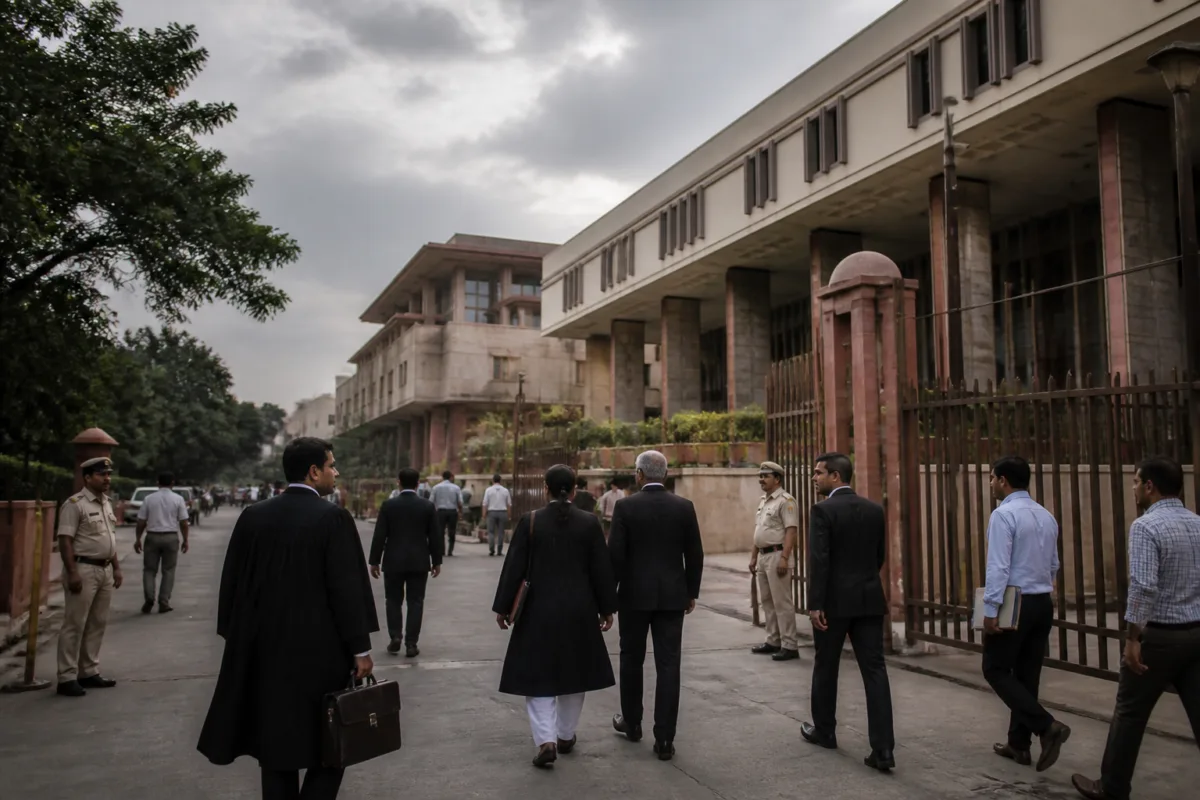
The Delhi High Court has rejected All India Students’ Association president Neha Bora’s plea challenging a police notice requiring her to execute a peace bond before a special executive magistrate, while directing that she receive all material relied on in the proceedings.
“I am rejecting the writ petition at this juncture,” Justice Subramonium Prasad said while pronouncing the judgment on Friday. The court’s detailed order was awaited at the time of the report.
The police notice, issued on October 17 under Section 126 of the Bharatiya Nagarik Suraksha Sanhita, required Bora to appear before the special executive magistrate on October 19. It asked her to show cause why she should not execute a personal bond of Rs 10,000 with one surety for keeping peace during the period of enquiry.
Section 126 of the BNSS allows a special executive magistrate to seek such a bond when there is credible information that a person may breach the peace, disturb public tranquillity or commit a wrongful act that could cause a disturbance. The provision operates as a preventive measure and does not itself amount to a finding that the person has committed an offence.
Bora was taken into preventive detention on October 16 while she was travelling to join the Cockroach Janta Party’s ‘Lehra Do Tiranga’ march in Connaught Place. She was released on October 17, the same day the police notice was issued.
The proceedings before the special executive magistrate relate to allegations of sloganeering at Mandi House on October 16, repeated protests around Jantar Mantar despite prohibitory orders under Section 163 of the BNSS, and attempts to instigate people to participate in the October 16 demonstration.
In her petition, settled by lawyer Abhik Chimni, Bora argued that the notice was vague and factually incorrect. She also contended that it did not provide material substantiating the alleged likelihood of a breach of peace. During the hearing on Thursday, her senior counsel argued that citizens did not require permission to hoist the national flag and that seeking regime change was not improper in a democracy.
The High Court’s directions require the special executive magistrate to provide Bora with all material relevant to the proceedings. The direction keeps the executive-magistrate process subject to disclosure of the basis on which the preventive action has been initiated, even though the court declined to interfere with the notice at this stage. Further proceedings will continue before the special executive magistrate.

