


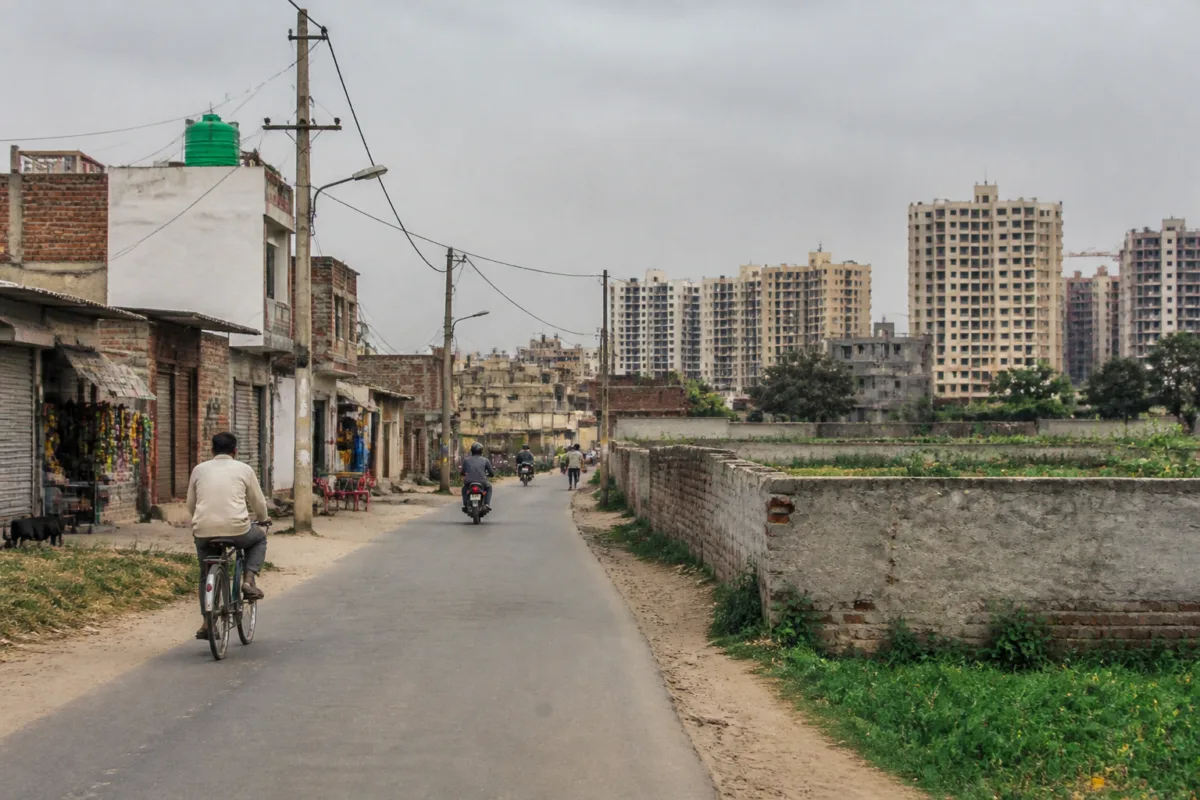
Delhi has declared 48 villages urban areas, bringing their old habitation zones and entire revenue boundaries under urban status through a notification issued by the city government’s Urban Development Department. The notification was issued by Lieutenant Governor Taranjit Singh Sandhu on October 23, according to the report by Jagran – New Delhi.
The decision covers villages spread across Outer North, North, North-West, North-East, South, South-West and South-East Delhi. The notification includes both the existing built-up settlements and the full revenue areas of the villages, marking a formal shift in how these territories will be classified for urban administration.
Among the villages named in the notification are Bakoli, Palla, Hamidpur, Singola, Tajpur Kalan, Mungeshpur, Jagatpur, Sabapur, Badarpur Majra in Burari, Fatehpur Beri, Chhawla, Ghumanhera, Bijwasan, Kair, Dhansa, Galibpur and Chak Chilla. The report states that several other villages are also included in the notification.
The change is significant because the urban designation covers more than the older habitation areas traditionally associated with these villages. By including the complete revenue areas, the notification places the wider administrative boundaries within the declared urban area rather than limiting the change to existing settlements.
The immediate administrative implication highlighted in the report is that funds of elected representatives can now be spent in these villages. This includes the development funds associated with legislators and Members of Parliament, which could previously face restrictions where areas did not carry the required urban classification.
For residents, the notification changes the formal status of settlements that have continued to grow within Delhi’s expanding urban footprint. The affected villages are located across multiple parts of the capital, including areas on the city’s outer edges and locations adjoining established urban development. The decision is expected to open a new route for development work in these areas, although the notification itself does not specify individual projects, funding amounts or implementation schedules.
The administrative change also brings the revenue boundaries of the villages into the urban framework. This distinction matters because the older habitation area and the surrounding revenue area may not have shared the same status for public works and local development decisions. The notification establishes a single urban designation for both components in the villages listed.
The move follows a long-standing transition in which rural settlements within Delhi’s expanding metropolitan area have increasingly been absorbed into the city’s wider urban system. In this case, the government notification provides the formal basis for treating the identified villages as urban areas and for considering development expenditure within them under the applicable urban framework.
The next steps will depend on how the relevant departments and elected representatives use the changed classification. The notification issued through the Urban Development Department is the operative administrative step reported so far; the source does not provide details of specific works, project approvals or timelines for spending the newly available funds.

