


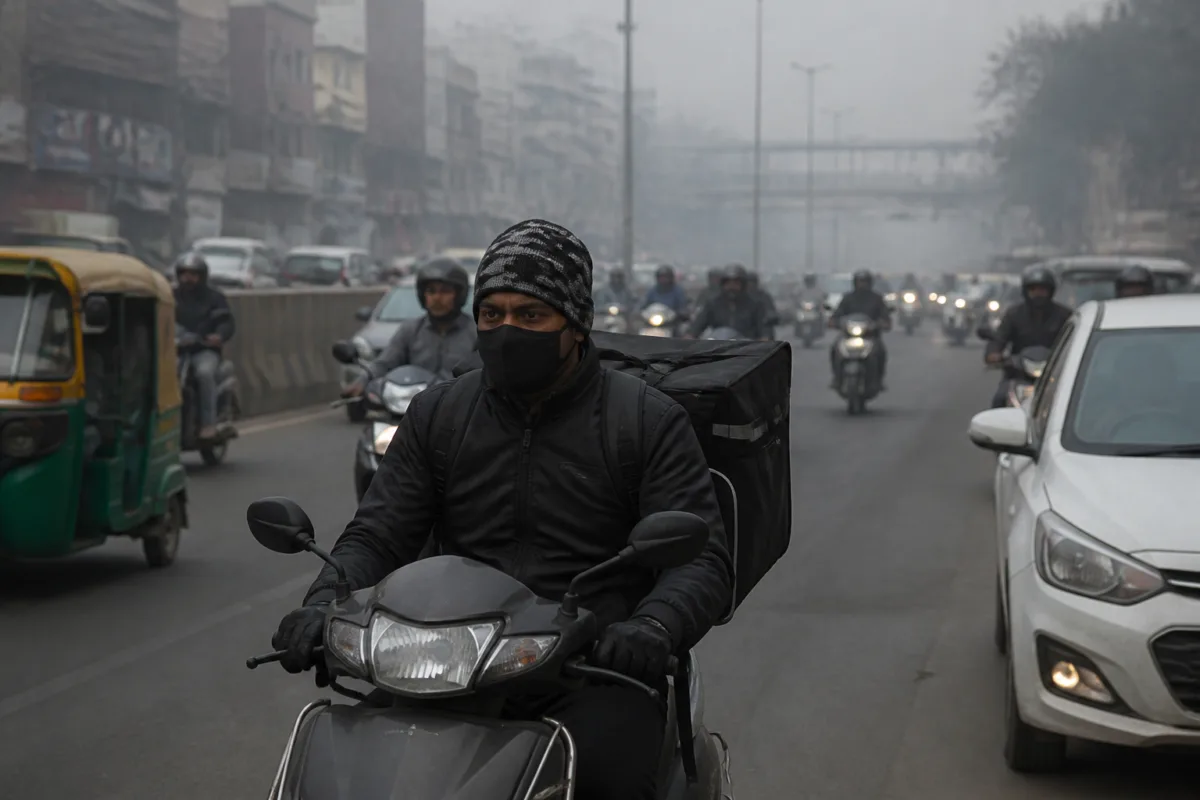
Delhi’s gig workers are continuing food and household deliveries for up to 10 to 14 hours a day despite eye irritation, coughing and breathing difficulties linked to severe air pollution, according to workers interviewed by Jagran. The report estimates that around 12 lakh gig workers operate in the city and says many are seeking masks, health insurance and an additional pollution allowance from delivery and aggregator companies.
The workers, who mostly travel by two-wheelers, spend much of their working day on Delhi’s roads. Several said the polluted air has made routine delivery work difficult, but that they cannot stop because their earnings are tied to completed orders and daily expenses such as fuel.
Tanuja, a single mother from Maujpur who works with food and household-goods aggregator companies, said she leaves on her scooter in the morning and continues until night to support her children. She said a doctor had advised her not to go outdoors because her eyes were watering continuously, but stopping work would affect her daughter’s upbringing.
According to the report, Tanuja has a daily target of 25 delivery orders to recover her fuel costs through incentives. She said this requires her to ride for 12 to 14 hours, while the polluted air causes severe irritation in her eyes. She added that covering her face with cloth and wearing a mask has not provided adequate protection.
Another Maujpur-based gig worker, Lata, said workers receive no assistance from companies if they fall ill or suffer an accident because of the conditions in which they work. She also pointed to the absence of basic facilities such as drinking water and rest areas. Workers therefore have to continue working after repeatedly splashing water on their faces and eyes, the report said.
Rohit Kumar, a gig worker originally from Firozabad in Uttar Pradesh, said winter smog reduces visibility and makes breathing difficult. He told Jagran that his health deteriorated so badly because of pollution last year that he had to stop working and return to his village for two to three months. He said similar conditions were developing again this year.
The workers’ accounts highlight the exposure faced by people whose jobs require them to remain outdoors for most of the day. Unlike office-based workers, delivery workers cannot avoid traffic corridors or reduce their exposure without also affecting their earnings. Their work also depends on maintaining delivery targets and remaining available across the city.
Vandana Narang, a worker coordinator with Jan Pahal, said gig workers form one of the largest sections of the unorganised workforce and are being required to work through adverse weather and dangerous pollution without social security. She said companies and the administration should take responsibility for workers’ health and provide pollution allowances, N95 masks and health insurance.
The workers’ demands place responsibility on both the platforms that organise deliveries and the public authorities overseeing labour and urban health conditions. The report does not indicate that companies or government agencies have announced a citywide package of protective measures for gig workers. For now, workers remain on the roads while seeking basic protection against pollution-related illness and financial loss.

