


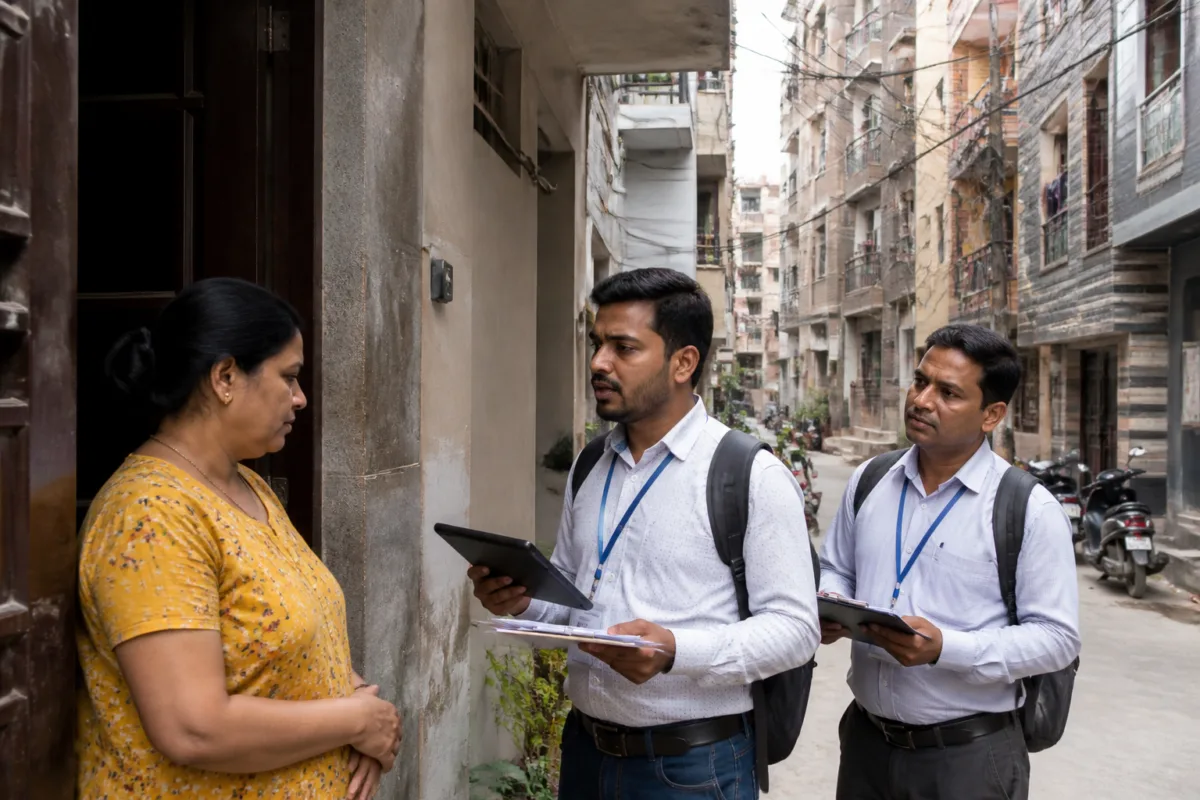
Delhi Census 2027 is likely to enter its second phase on January 10, 2027, giving residents 15 days to submit their details online before enumerators begin door-to-door data collection across the capital. The schedule was reported by Jagran – New Delhi based on information from officials, although the final arrangements are yet to be confirmed through the proposed meeting chaired by Delhi’s chief secretary.
Under the reported schedule, residents would be able to complete self-enumeration online from January 10 to January 24. House-to-house data collection would then begin on January 25 and continue until February 28. A correction window is planned from March 1 to March 5, allowing changes to be made to the information recorded during the enumeration process.
The first phase of the census was completed on June 14 and covered information related to houses and households. According to the report, officials recorded about 7.6 million houses and 5.5 million families in Delhi. The data also indicated that more than 23 million people were ordinarily residing in the capital.
The second phase is expected to include 40 questions covering personal, household and socio-economic details. These include a person’s name, age, sex, marital status, relationship with the head of the household, religion, education, employment and occupation. The questionnaire is also expected to seek information on caste, mother tongue, disability and migration.
The exercise will ask for additional details such as parents’ information, place of birth, previous place of residence and the length of time a person has lived at the current location. Questions on the number of children in a family and bank accounts are also expected to be included. Mobile phone numbers, Aadhaar details, voter identity card information and passport details may be requested where available. Officials said providing Aadhaar information would be voluntary.
The inclusion of caste information is a significant feature of the exercise. The report says such information will be recorded in the census for the first time since 1931. The data could add a new layer to the population profile used by governments while assessing education, employment, migration and social conditions.
For Delhi, the census process is also important because population and household data inform the planning of public services and infrastructure. Information on where people live, how long they have lived in the city, their employment, education and migration status can help authorities understand changing demand across neighbourhoods. The supplied report does not specify how the data will be translated into individual projects or allocations.
The proposed online self-enumeration facility would introduce a digital step before the traditional field survey. Residents who do not use the online option would still be covered through the subsequent door-to-door exercise, according to the reported schedule. The final operational process, including the digital platform and the role of enumerators, remains subject to official confirmation.
Census information is collected to understand population size, education, employment and social conditions and to support future planning. The report also states that safeguards exist to maintain the confidentiality of information provided by residents. The next reported milestone is the meeting chaired by Delhi’s chief secretary, where officials are expected to discuss the second-phase arrangements.

