


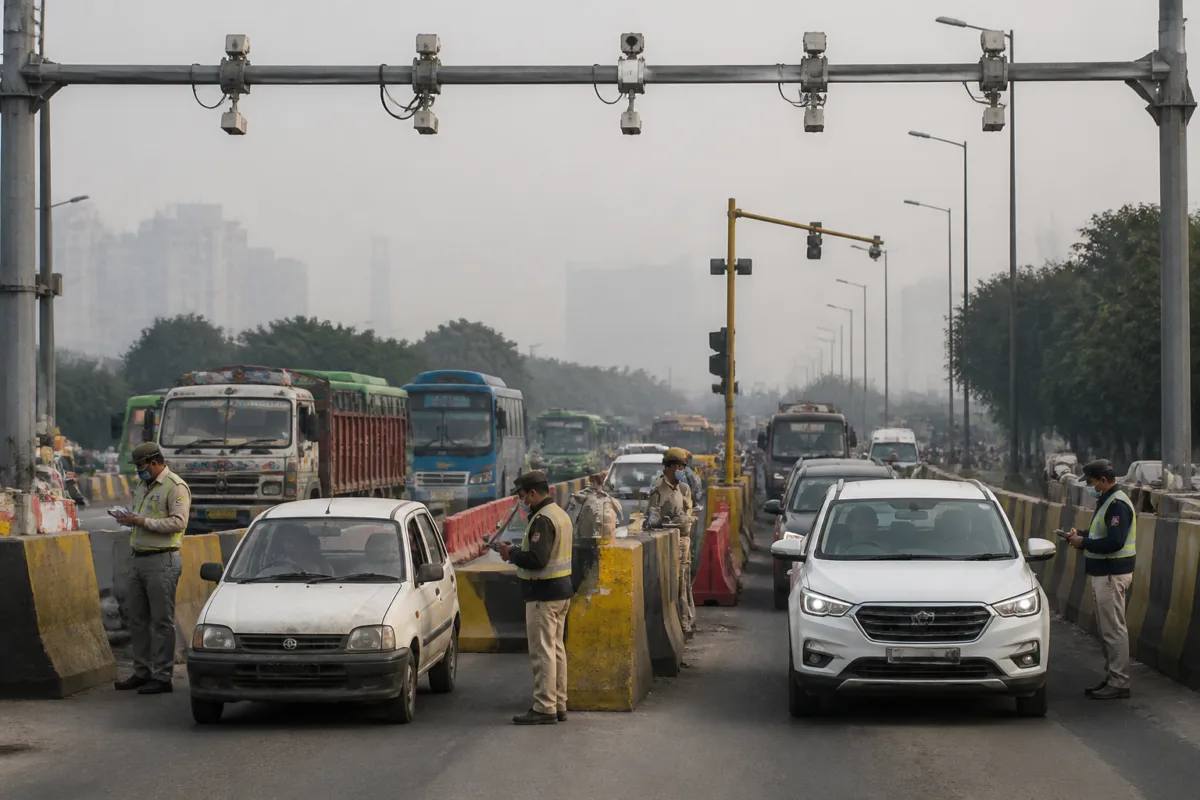
Delhi’s BS6 rule will stop vehicles registered outside the capital that fall below Bharat Stage VI emission standards from entering the city from November 1, 2026, as authorities begin enforcing a winter pollution-control measure expected to affect more than 10 lakh vehicles across the National Capital Region.
The restriction will remain in force until January 31, 2027. It applies to vehicles coming into Delhi from neighbouring cities including Gurugram, Noida, Faridabad and Ghaziabad. The measure is part of Delhi’s winter action plan, when deteriorating air quality typically leads to tighter controls on transport and other pollution sources.
Vehicles powered by CNG or electricity will continue to be allowed into Delhi. Diesel buses and trucks that comply with BS6 standards will also be permitted, as will buses registered in Delhi. Vehicles registered outside Delhi that meet only BS4 or older standards will be stopped, unless they fall under the permitted CNG or electric categories.
The impact is expected to be significant across the NCR. Transport department estimates cited in the report indicate that Gurugram and Faridabad together have nearly two lakh non-BS6 vehicles, around 70% of which are BS3 and BS4 vehicles. The two cities also have about 50,000 commercial vehicles. Noida and Greater Noida have more than four lakh non-BS6 vehicles, with over half reported to be BS4 vehicles, mostly petrol cars. Ghaziabad is estimated to have around four lakh such vehicles.
Gurugram traffic police have separately advised that BS4 and older commercial goods vehicles will not be allowed to enter Delhi from November 1. The restriction covers light, medium and heavy goods vehicles, trucks and buses, including vehicles operating under All India Tourist Permits.
Authorities are strengthening checks at Delhi’s borders using Automatic Number Plate Recognition cameras and artificial-intelligence-enabled cameras. These systems will read registration plates and help identify vehicles entering the capital. Entry points from Noida, Gurugram and Ghaziabad are also being reinforced for physical interception of vehicles that do not meet the applicable standard. Around 300 transport department enforcement personnel are expected to be deployed.
Vehicle owners can check their emission standard through the Parivahan Sewa website or app. After opening the “Know Your Vehicle Details” service on the VAHAN database, users must enter their registration number and complete the verification process. The vehicle record should contain an “Emission Norms” or “Norms” field showing whether it complies with Bharat Stage IV, Bharat Stage VI or another standard. The information may also appear on the physical or digital Registration Certificate. If the record is unclear, an authorised dealer or the vehicle manufacturer can confirm the standard.
Bharat Stage emission norms set legal limits for pollutants including carbon monoxide, nitrogen oxides, hydrocarbons and particulate matter. India moved directly to BS6 in April 2020, skipping BS5, as part of an effort to accelerate reductions in vehicle pollution. The BS6 framework also requires the use of low-sulphur fuel.
The report said the government plans to introduce BS7 standards, aligned with Euro 7 norms, for new cars and SUVs from April 2029. Small goods vehicles are expected to follow from April 2030, with heavy-duty vehicles scheduled for April 2031. For the immediate restriction, vehicle owners travelling into Delhi will need to confirm their emission category before November 1 to avoid being turned back at the city’s borders.

