


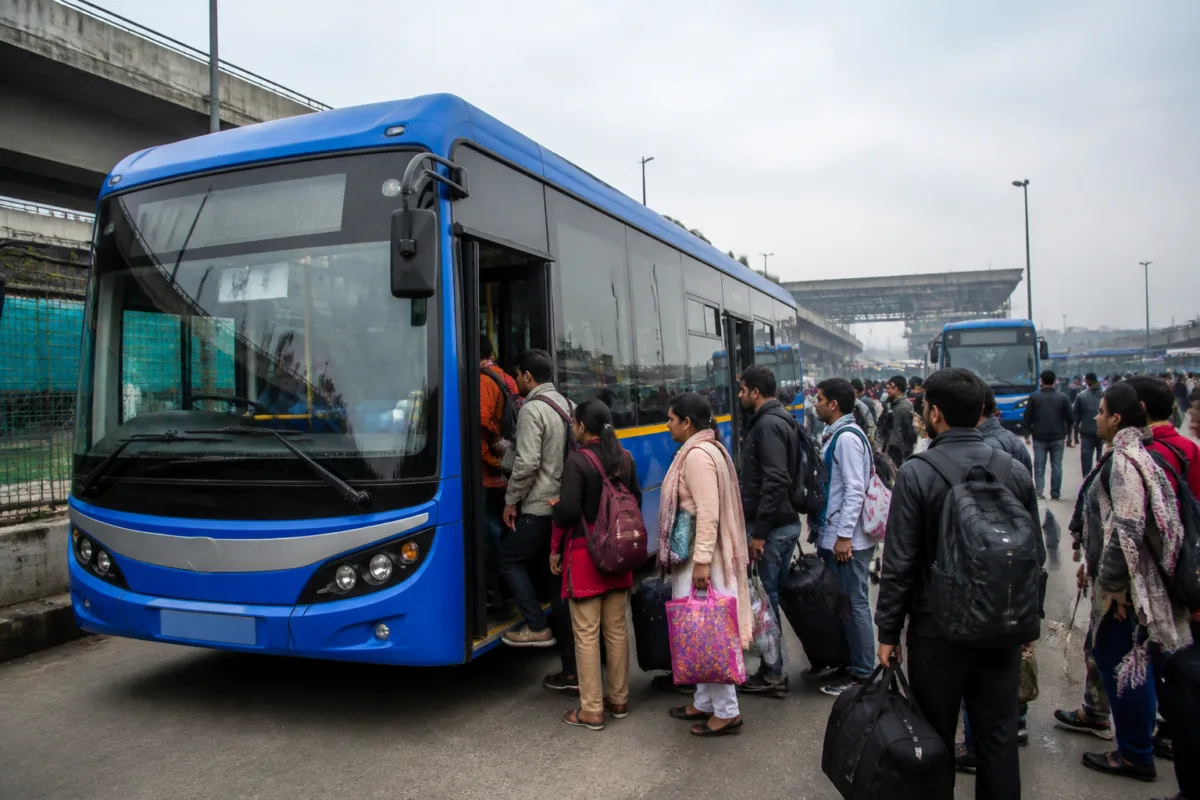
The Delhi-Bihar bus service has begun with 77 buses and discounted fares for passengers travelling home for Chhath, offering additional interstate road connectivity to Bihar and eastern Uttar Pradesh during the festival travel period. The arrangement includes routes to five Bihar divisions, mandatory safety equipment and restrictions on the age and emissions standards of participating buses.
According to the Delhi transport department, the initial fleet includes 36 buses for Muzaffarpur, 13 for Patna, 12 for Purnia, 10 for Gaya and six for Darbhanga. The service is being operated under an agreement between the Delhi and Bihar governments.
Delhi Transport Minister Dr Pankaj Kumar Singh said concessional fares had been fixed across non-air-conditioned seater, non-air-conditioned sleeper, air-conditioned seater and air-conditioned sleeper categories to provide financial relief to passengers travelling during the festival. The reported fare reduction ranges from Rs 134 to Rs 1,028, depending on the route and bus category.
On the Delhi-Patna route, the non-air-conditioned seater fare has been reduced from Rs 1,615 to Rs 1,221, according to the report. The air-conditioned seater fare from Delhi to Patna has been reduced from Rs 1,980 to Rs 1,361, representing a reported saving of up to Rs 619 in that category.
The agreement provides for 18 interstate routes linking Delhi with major Bihar cities, including Patna, Gaya, Bhagalpur, Muzaffarpur, Darbhanga, Purnia, Araria, Kishanganj, Buxar, Nawada, Madhubani and Biharsharif. Several services will pass through major Uttar Pradesh cities such as Noida, Agra, Lucknow, Kanpur, Gorakhpur and Varanasi.
Each route has provision for 12 permits from Delhi and 12 permits from Bihar. The arrangement is intended to formalise interstate operations between the two states while providing passengers with more direct road connections beyond the existing travel options during a period of high demand.
The transport department has also specified operating and safety conditions. Only buses complying with BS-VI or higher emission standards, along with CNG or electric buses, will be permitted under the arrangement, according to the report. Participating vehicles must have vehicle location tracking devices and emergency buttons.
The agreement sets a maximum operating age of 10 years for diesel buses and 15 years for petrol and CNG buses. These provisions link the expanded festival transport service with emissions compliance, vehicle monitoring and emergency response requirements.
Tickets issued in one state will remain valid for the entire journey in the other state under the agreement. After payment of applicable taxes in the home state and completion of the required permit endorsements, passengers and operators will not face additional special road tax, motor vehicle tax or passenger tax in the other state, except where permitted by law.
The agreement will remain effective for 10 years from the date of signing or until it is replaced by a new agreement between the two states. Its duration may be extended further through mutual consent, according to the transport department information cited in the report.

