


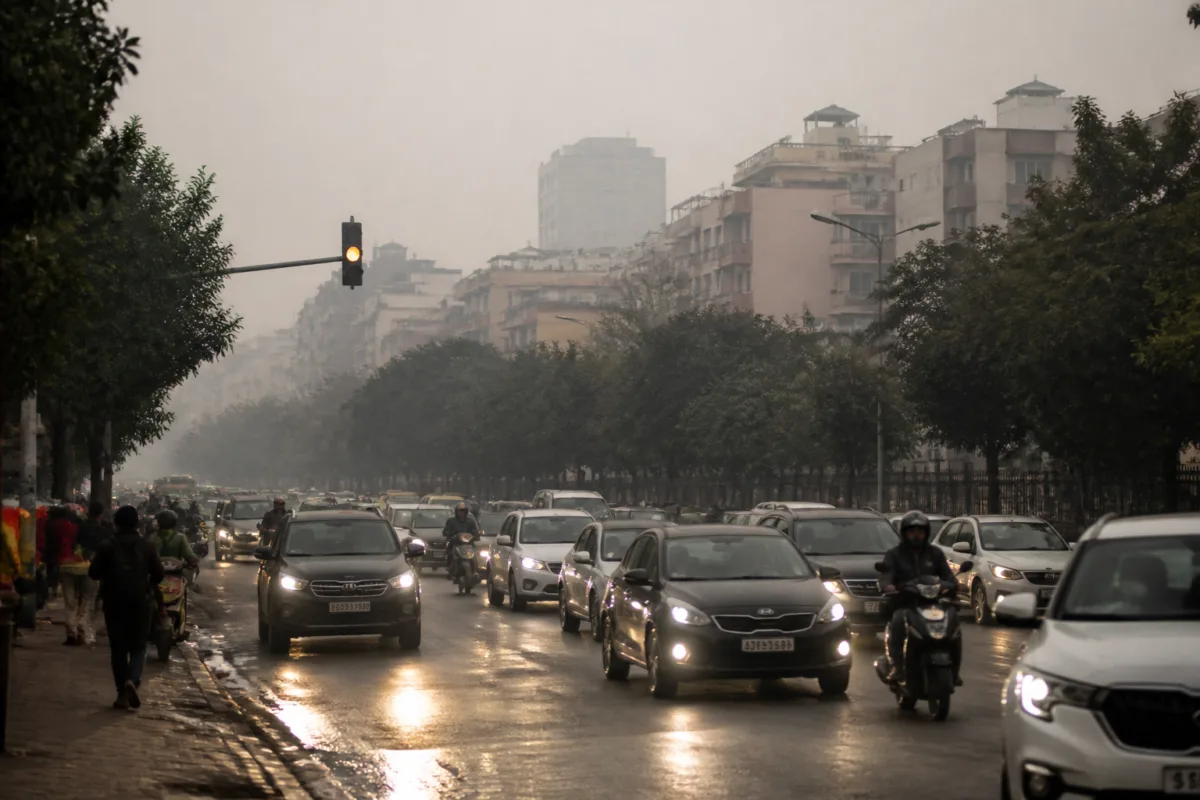
Delhi’s air quality deteriorated sharply within 24 hours, with the city’s average Air Quality Index rising from 90 to 159 and 12 areas crossing the AQI 200 mark on Saturday evening, according to a report by Live Hindustan – NCR. The affected locations include residential neighbourhoods and areas with heavy traffic.
An AQI of 159 falls in the moderate category, while readings above 200 are classified as poor. The deterioration followed a brief improvement after strong winds and rain affected Delhi and large parts of north India on Thursday. The rainfall brought down temperatures and temporarily reduced pollution levels, but the improvement did not last.
The report attributed the renewed rise partly to low soil moisture after below-normal rainfall in September. Drier ground conditions can leave more dust available for resuspension, particularly in areas exposed to traffic and construction activity. Light spells of rain have provided short-term relief, but pollution levels have risen again soon after those episodes.
At 4pm on Saturday, 12 monitoring areas had recorded AQI readings above 200. Delhi’s average AQI had been 90 a day earlier, meaning the city-level reading increased by 69 points in a single day. The change shows how quickly the city’s air quality can shift when temporary weather-related relief fades.
The report also cited readings from AQI.in showing significant fluctuations between October 16 and October 17. The index was recorded at 135 at 10.30am on October 16 before improving to 65. It later rose to 240 by the evening. By 10.30am on October 17, the reading had eased to 216, still within the poor category.
The immediate outlook is affected by the absence of expected rain. The report said Delhi was unlikely to receive rain over the following three to four days, raising the possibility that pollution levels would continue to increase during that period. It did not provide a separate forecast for individual monitoring stations.
Delhi Environment Minister Manjinder Singh Sirsa said on Saturday that, excluding the Covid-19 year of 2020, Delhi’s air had been the cleanest since 2016 during the comparable period this year. According to figures cited in the report, Delhi had recorded 211 days of good, satisfactory or moderate air quality up to October 17, 2026.
The comparison showed 110 such days by the same point in 2016, while the corresponding figures were 200 days in 2025, 209 in 2024 and 206 in 2023. These figures describe the number of days in the better air-quality categories, but do not remove the significance of the latest short-term deterioration across several localities.
The latest readings place Delhi’s air quality in a rapidly changing phase, with rainfall providing temporary improvement and dry conditions allowing pollution to rise again. The next three to four days, when rain is not expected, will determine the immediate direction of the city’s AQI readings.

