


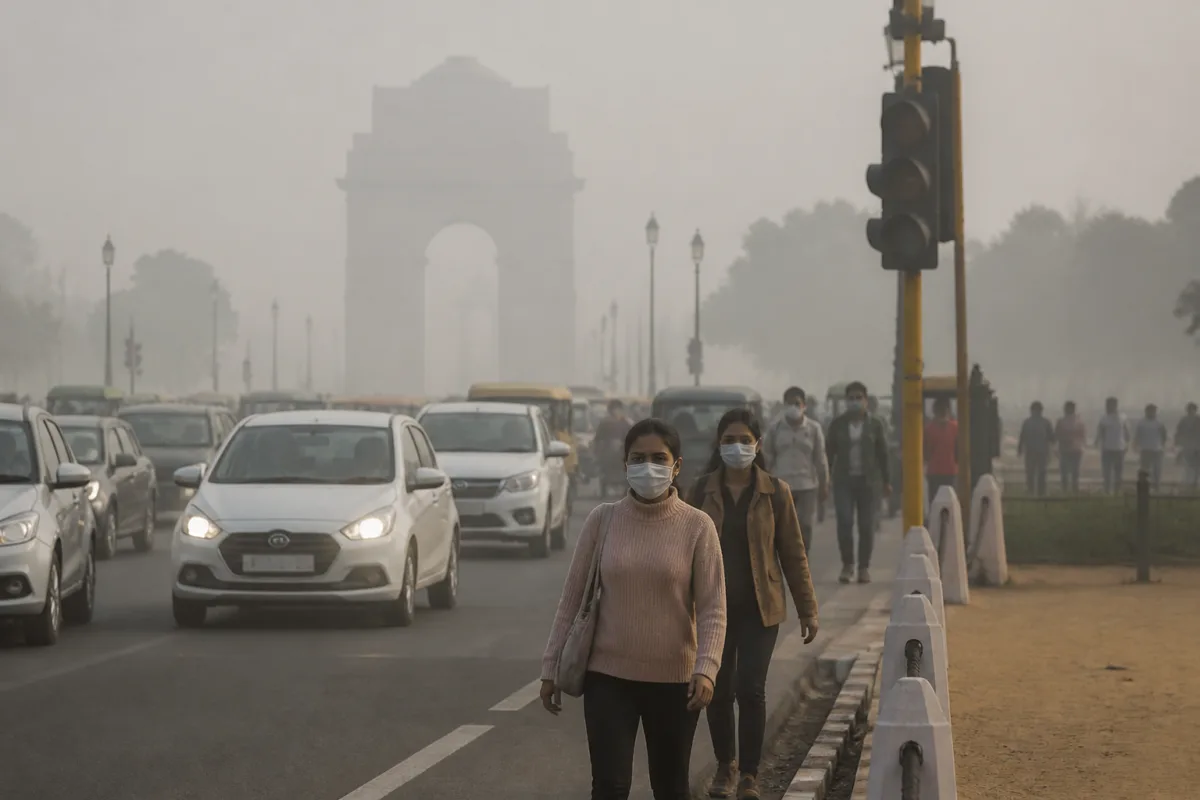
Delhi AQI readings neared 400 on Diwali morning, with the air quality remaining in the very poor category across the capital and crossing into the severe range at several monitoring stations, according to Central Pollution Control Board data cited by Jagran. India Gate recorded an AQI of 398, while multiple parts of Delhi reported readings above 400.
The deterioration has reduced visibility across the city and added to concerns for residents exposed to polluted air during the festival. People were seen wearing masks while travelling outdoors, as the National Capital Region continued to experience poor air quality after several days of worsening pollution.
CPCB data showed that Delhi’s average AQI on Saturday was recorded between 364 and 369, placing the city in the very poor category. The national AQI classification considers readings from 301 to 400 very poor, while readings above 400 fall into the severe category.
Pollution levels were particularly high around the Indian Institute of Technology Delhi, where AQI readings ranged from 440 to 452. Punjabi Bagh, Jahangirpuri, Rohini, R K Puram and Vivek Vihar also recorded readings above 400, according to the report.
The worsening conditions were recorded across the city’s monitoring network. Of Delhi’s 59 monitoring stations, between 16 and 22 stations reported air quality in the severe category, the report said. The variation reflects the uneven concentration of pollution across neighbourhoods, with some areas recording substantially higher levels than the citywide average.
The readings came as Delhi-NCR marked Diwali, when pollution levels can rise because of the combined effect of local emissions and seasonal atmospheric conditions. The report said residents had already been experiencing suffocating air for several days before the festival morning readings were recorded.
Doctors advised children, older people and those with respiratory illnesses to remain indoors and limit exposure to outdoor air. Reduced visibility and elevated pollution levels also create difficult conditions for commuters and outdoor workers, although the supplied report did not provide a separate assessment of transport disruption or hospital admissions.
The latest readings underline the gap between Delhi’s citywide average and conditions recorded at individual stations. While the average remained in the very poor category, several locations crossed the severe threshold, leaving residents in affected neighbourhoods exposed to significantly worse air than the overall city figure suggests.
CPCB monitoring stations will continue to provide the next readings for Delhi and the wider NCR, with the city’s pollution levels expected to remain the immediate indicator of how air quality changes after Diwali.

