


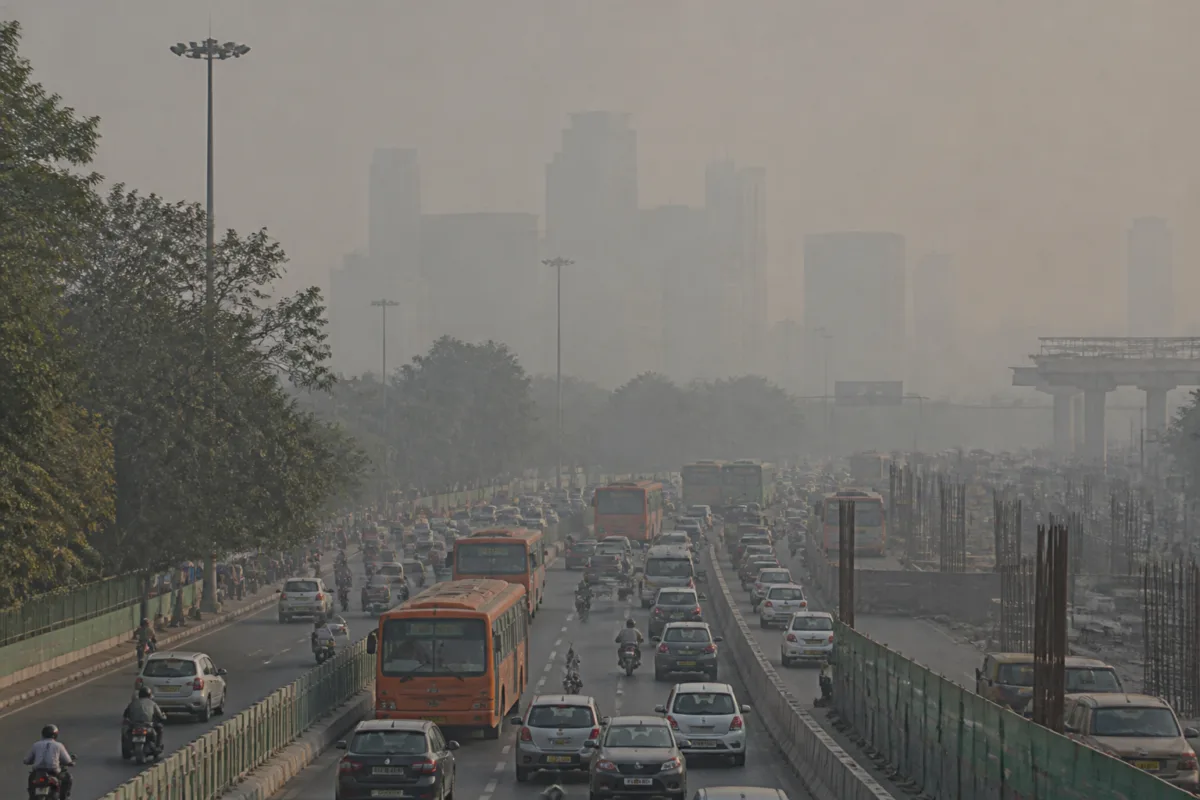
Delhi’s Graded Response Action Plan has become a recurring feature of winter life, but a new analysis suggests that emergency restrictions have not produced a sustained improvement in the city’s air quality. The finding is significant not because it proves that GRAP does not work, but because it exposes the limits of treating a chronic emissions problem primarily through short-term responses activated after pollution has already become severe.
An analysis by the Centre for Research on Energy and Clean Air found that Delhi’s average winter Air Quality Index rose from 280 in 2022-23 to 295 in 2025-26, despite restrictions being imposed through four winter seasons. Nearly four in five winter days saw restrictions under Stage II of GRAP or higher. The pattern points to a city that is repeatedly operating in emergency mode without demonstrating a corresponding long-term improvement in average winter air quality.
That distinction matters. GRAP is designed as a graded response system. Restrictions intensify as pollution worsens, with measures affecting construction activity, traffic, industrial operations and other sources. Its function is to limit exposure during dangerous pollution episodes. It is not, by itself, a comprehensive emissions-control programme. The evidence in the CREA analysis therefore raises a question about institutional design: can a system built to respond to pollution deliver lasting improvement when the sources of pollution continue to operate across the wider urban region?
The CREA analysis examined 12 episodes in which Delhi’s AQI rose from below Stage III to Stage III or IV. It studied three such episodes in each of the four winters. In 10 of the 12 episodes, pollution worsened in the week after the city entered the severe GRAP stages. Air quality eased after only two episodes. The analysis said the broad pattern was that pollution often remained high or increased after Delhi entered the severe stages of the plan.
The largest increase followed the November 2, 2023 episode. Average AQI rose by 114 points, from 317 before the episode to 431 afterwards, according to the report. Other major increases followed episodes on October 29, 2022, when AQI rose by 100 points, January 3, 2025, when it rose by 94 points, and January 28, 2025, when it increased by 92 points.
These figures do not establish that GRAP restrictions caused pollution to rise. The CREA analysis explicitly does not make that claim, nor does it demonstrate that the restrictions were ineffective. Pollution levels can be shaped by several factors operating at the same time, including weather conditions, regional transport of pollutants and emissions from multiple urban and rural sources. The report’s evidence is more limited and more precise: after Delhi entered severe GRAP stages, pollution frequently remained high or increased during the following week.
That limitation is central to interpreting the findings. The relevant counterfactual is not simply whether AQI was high after restrictions began. It is whether AQI would have been higher without those restrictions. A separate study cited in the report, titled “Possible effectiveness of Graded Response Action Plan restrictions in New Delhi, India”, reached a different conclusion. Scientists from IITM-Pune and the Commission for Air Quality Management found that, without GRAP restrictions, Delhi would have faced 60% more severe-AQI hours and around 60% to two times more than 30 severe-plus AQI hours.
The two findings are not necessarily contradictory. One assesses what air quality may have looked like without restrictions; the other tracks whether pollution improved after severe restrictions were activated. Together, they suggest that GRAP may reduce the intensity or duration of some dangerous conditions while still failing to deliver a sustained decline in winter pollution. In policy terms, a measure can prevent a worse outcome without solving the underlying problem.
This is the structural weakness of relying heavily on emergency action. GRAP is triggered by observed or forecast pollution levels. By the time higher stages are imposed, the city is already dealing with accumulated emissions and unfavourable conditions. Restrictions can reduce activity at that point, but they cannot instantly remove pollutants already present in the atmosphere. Nor can they, on their own, permanently change the energy, transport, construction, waste-burning and industrial systems that generate emissions across the region.
The geography of the problem further complicates the response. Delhi’s air is shaped by activity within the capital and by emissions moving across its surrounding urban region. The supplied analysis does not quantify the contribution of each source or jurisdiction, so it cannot establish which intervention would produce the largest improvement. It does, however, underline the difficulty of managing a regional pollution problem through restrictions concentrated in one city and activated during a limited part of the year.
The frequency of restrictions is another important signal. Nearly four in five winter days saw Stage II or higher measures, according to CREA. This means that emergency controls are not occasional interventions reserved for exceptional episodes. They have become a recurring operating condition for the capital during winter. That recurrence has implications for construction workers, businesses, commuters and municipal agencies, even though the supplied report does not quantify the economic or employment effects of the restrictions.
For construction and urban infrastructure, the repeated activation of curbs creates an operational challenge. Projects may face restrictions when pollution crosses specified thresholds, while the same projects operate in a city where construction dust and material movement are among the activities subject to scrutiny. The report does not assign responsibility for Delhi’s pollution to construction or any other single sector. Its wider lesson is that emergency restrictions cannot substitute for consistent controls at source, particularly when compliance and enforcement must operate across numerous sectors and jurisdictions.
The institutional question is therefore not whether GRAP should exist. The evidence cited by the report indicates that restrictions may prevent significantly worse air-quality conditions. The question is whether GRAP is being asked to perform a job it was not designed to do. CREA said a long-term clean-air strategy should place emissions reduction at source as the primary objective, with GRAP serving as the last line of defence when severe pollution still occurs.
That framing separates two policy functions. The first is prevention: reducing emissions before winter pollution reaches severe levels. The second is emergency management: limiting exposure once dangerous conditions emerge. A city that relies mainly on the second function will continue to cycle through restrictions, partial relief and renewed deterioration. The AQI trend reported by CREA, from an average of 280 to 295 across the four winters, shows why repeated emergency action cannot be treated as evidence of long-term improvement.
The evidence also cautions against drawing a simple verdict from a single indicator. Average winter AQI increased, and pollution often worsened after severe-stage episodes in the CREA analysis. At the same time, the IITM-Pune and CAQM study found that restrictions prevented a substantially worse outcome. The available evidence supports neither the claim that GRAP solved Delhi’s air problem nor the claim that it had no effect.
What it does establish is a policy gap. Delhi continues to require restrictions across most winter days while its average winter AQI has not shown sustained improvement in the period examined. The immediate task remains managing severe episodes, but the larger urban challenge is reducing the emissions that make those episodes recur. Until that shift is visible in the evidence, GRAP will remain necessary as an emergency shield—and insufficient as a clean-air strategy.

