


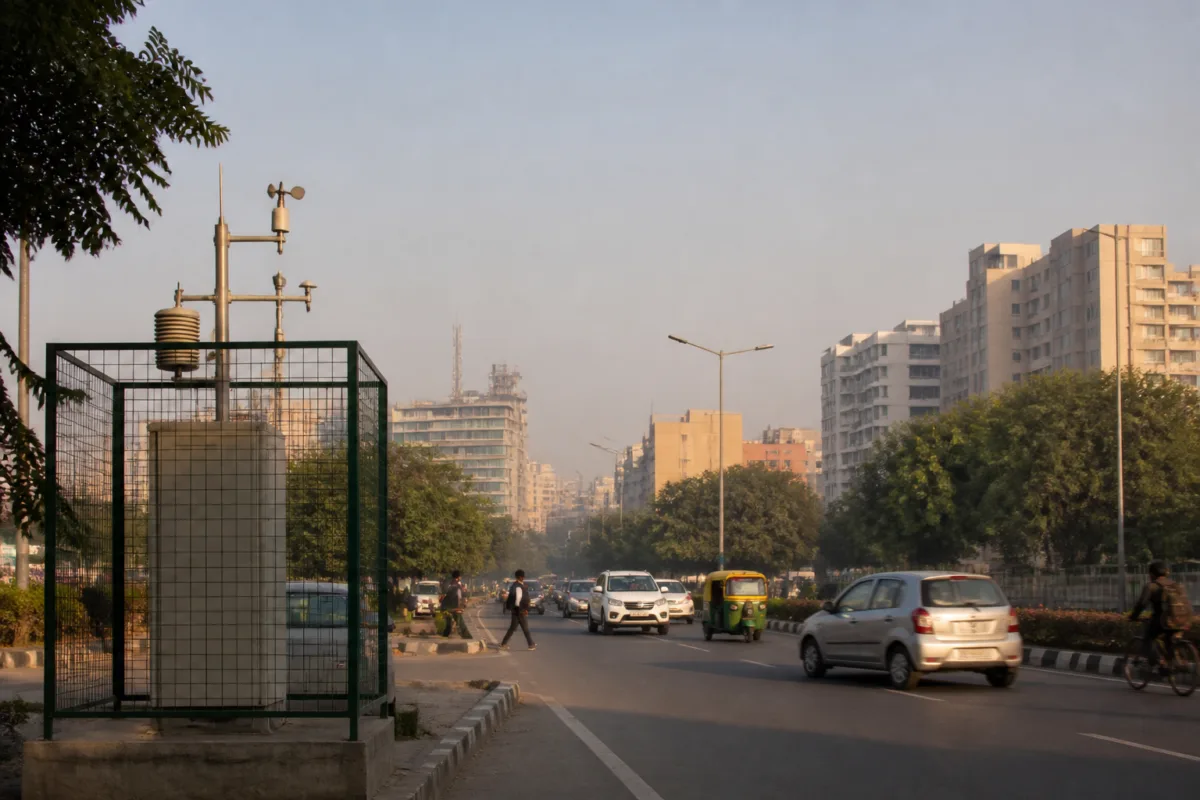
Delhi air pollution levels were lower in October 2026 than in most previous years, according to data compiled on a public dashboard by Delhi-based think tank Envirocatalysts. The dashboard shows declines in concentrations of particulate matter, nitrogen dioxide and ozone in the capital during the month.
The dashboard brings together air-quality data from the Central Pollution Control Board and the Commission for Air Quality Management. It provides public access to pollution readings and other air-quality parameters, allowing October’s levels to be compared with those recorded in earlier years.
The report did not provide specific concentration figures for the pollutants or identify the precise margin by which this October’s levels were lower. It also did not attribute the decline to a particular policy, weather pattern or emissions-control measure.
Particulate matter, nitrogen dioxide and ozone are among the key pollutants monitored in Delhi’s air-quality system. Their concentrations are tracked through official monitoring networks and are used to assess changes in the capital’s pollution conditions.
The comparison comes as Delhi’s air quality remains a recurring public-health and governance concern, with pollution monitoring involving both the CPCB and the CAQM. The public dashboard compiled by Envirocatalysts brings data from those authorities into a single platform for public reference.
The findings indicate that October’s recorded pollution levels were comparatively lower across the three reported pollutant categories. However, the supplied report does not establish whether the improvement continued across all monitoring locations or whether it represented a sustained change beyond the month. Further details from the dashboard and the official agencies would be required to assess the scale and duration of the decline.

