


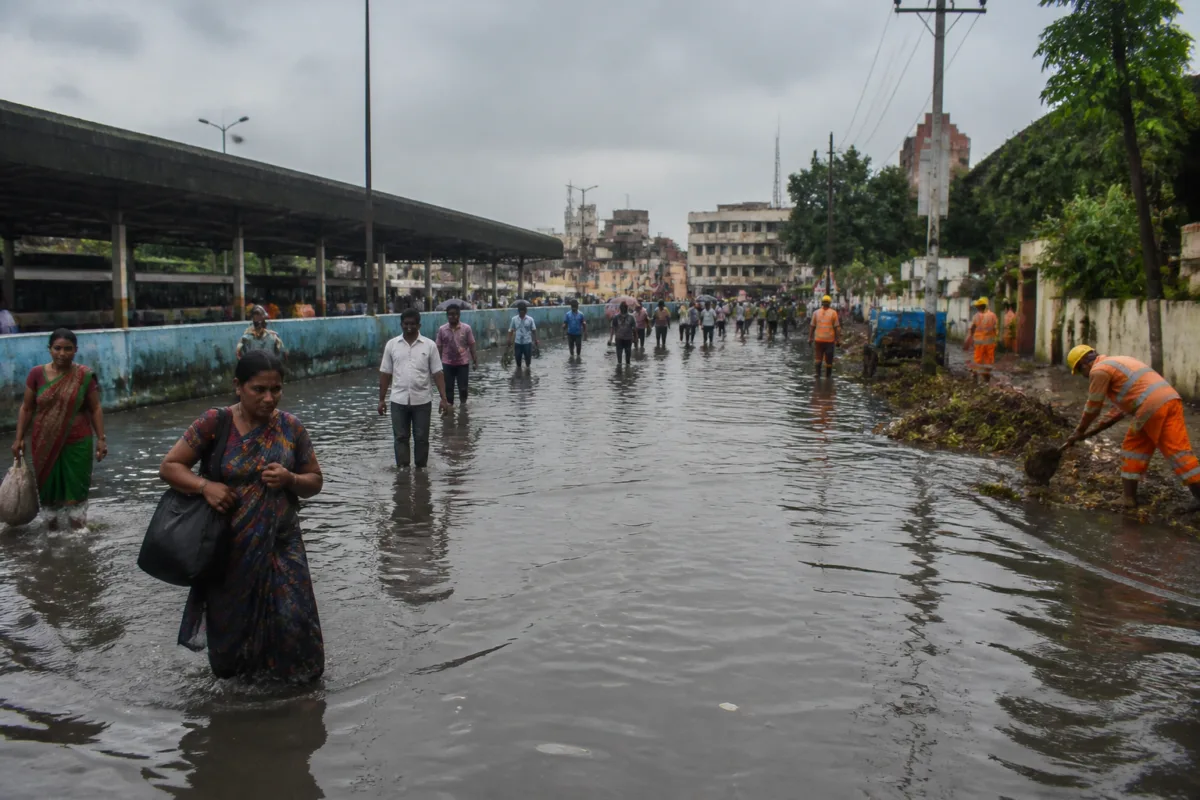
Cyclone Arnab’s heavy rain has inundated large parts of Machilipatnam, including the bus station, disrupting traffic and daily life as authorities moved residents from low-lying areas, arranged relief supplies and began efforts to restore essential services.
Excise minister Kollu Ravindra toured affected parts of the Andhra Pradesh city on Wednesday and directed officials to accelerate relief operations. He asked residents to remain indoors until the cyclone’s impact subsided and instructed departments to coordinate the response across transport, electricity, policing, health and municipal services.
Ravindra held a teleconference with the district collector, revenue divisional officer, tahsildar, municipal commissioner and officials from the electricity, police and health departments. The review focused on shifting residents from vulnerable low-lying areas to safer locations and ensuring that food and medicines were available at rehabilitation centres.
The minister inspected a rehabilitation centre near AJ College in Machilipatnam along with mayoral candidate Abdul Abida, party leaders and government officials. He also visited the dumping yard, Sarada Nagar and other affected localities. Food was distributed to people staying at rehabilitation centres, while milk packets were supplied to residents who were unable to leave their homes because of the heavy rain.
The flooding has affected public movement in the city, with inundated roads and the waterlogged bus station disrupting commuters. Ravindra asked municipal officials to keep drains free of blockages so that rainwater could flow more easily and directed them to take steps to prevent further waterlogging on roads.
The minister cautioned residents against approaching fallen or waterlogged electricity poles and urged them to exercise care while travelling through rain-filled streets. The warning comes as fallen poles and possible electrical hazards add to the risks faced by residents and emergency teams operating in flooded areas.
At a review meeting held later at the collectorate, Ravindra directed officials to remove uprooted trees from roads immediately to restore traffic movement. Electricity officials were asked to replace fallen poles promptly and restore power supply at the earliest, according to the report.
The response also included public-health measures for the period after the floodwaters recede. Ravindra instructed officials to launch sanitation drives in affected areas and asked health authorities to remain alert. Officials were also directed to prevent sewage from entering drinking-water reservoirs and to ensure that drinking-water pipelines were not contaminated.
The minister’s instructions place the immediate response across several municipal systems: clearing roads and drains, protecting electricity infrastructure, maintaining access to food and medicines, and safeguarding drinking water. Further action will depend on the removal of obstructions, restoration of power and the sanitation operations ordered for affected localities after the water recedes.

