


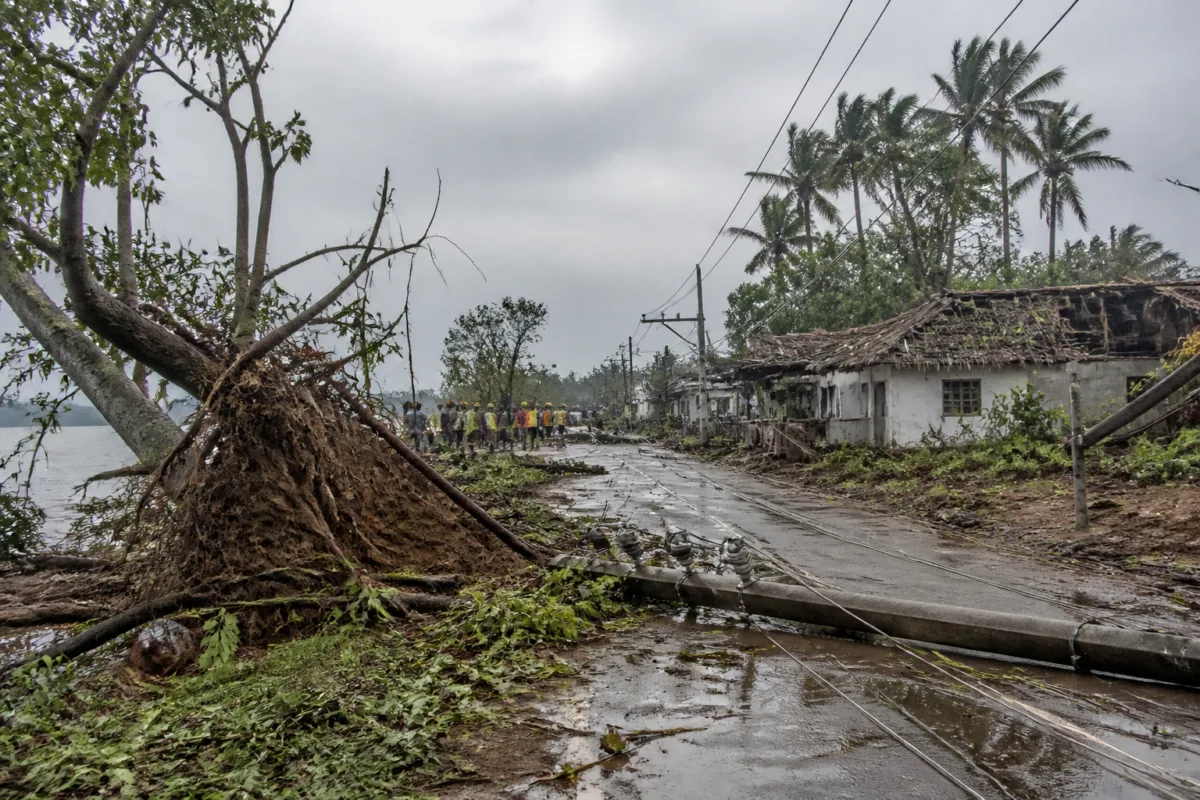
Cyclone Arnab crossed the coast near Yanam on Wednesday morning with winds of 125-135 kmph, gusting up to 150 kmph, damaging homes, crops, trees, roads, power infrastructure and communication networks. No deaths were reported after precautionary measures by the Puducherry district administration, according to a report by the Times of India.
The storm brought heavy rain to Yanam, an enclave of Puducherry located about 800 km from the Union Territory’s headquarters. The Godavari river swelled during the cyclone, while sea levels rose by 1-2 metres. Seawater breached coastal boundaries and submerged low-lying areas in the region.
Agriculture suffered significant damage, with more than 101 hectares of paddy crops destroyed. More than 500 trees, including some estimated to be about 100 years old, were uprooted. The storm also brought down 35 high-tension and 25 low-tension electric poles, damaged two transformers and affected about 15 km of power lines.
Electricity supply had been shut down at 4 pm on Tuesday as a precautionary measure. Outages continued after the cyclone passed, as damaged poles, transformers and lines required assessment and repair. Mobile services remained partially disrupted, while internet connectivity was completely affected and was awaiting restoration, the report said.
The cyclone also damaged around 60 thatched-roof houses and 25 cattle sheds, with some structures collapsing completely. Government buildings, compound walls and local roads were affected, while several fishing boats were damaged. The impact highlights the exposure of low-lying coastal settlements and rural infrastructure to high winds, storm surge and flooding at the same time.
Puducherry Public Works Minister Malladi Krishna Rao, Yanam Regional Administrator Shivraj Meena and other officials oversaw relief and rescue measures in the region. They assured residents that the government would take appropriate steps to provide relief and assistance.
The immediate response is focused on restoring electricity and communications, clearing fallen trees and assessing damage to houses, roads, public buildings, agricultural land and boats. Further relief measures are expected to follow the administration’s assessment of losses and the restoration of essential services.

