


Cyberabad water shortage concerns are set to intensify from January after the Hyderabad Metropolitan Water Supply and Sewerage Board (HMWSSB) decided to reduce supplies from the Singur and Manjeera dams to 20 million gallons per day (MGD), down from the present 120 MGD, Telangana Today reported. The reduction could affect more than 3.5 lakh household and commercial water connections across Hyderabad’s IT corridor.
The areas most exposed to disruption are in and around Serilingampally constituency, which relies heavily on water from the two sources. Gachibowli, Madhapur, Kondapur, Nanakramguda, Lingampally, Chandanagar, Miyapur, Madinaguda, Beeramguda, Ramachandrapuram, Patancheru, Kukatpally, KPHB Colony, Pragathi Nagar, Bhagya Nagar Colony, Moosapet, Jubilee Hills, Banjara Hills and Shaikpet are among the locations identified as likely to see worsening supply conditions.
The reported reduction represents a 100 MGD shortfall against current supply levels. The decision has been linked to sharply falling water levels in the Singur and Manjeera dams. The affected network includes dense residential neighbourhoods, gated communities, high-rise apartment complexes and commercial areas concentrated around Hyderabad’s technology and business districts.
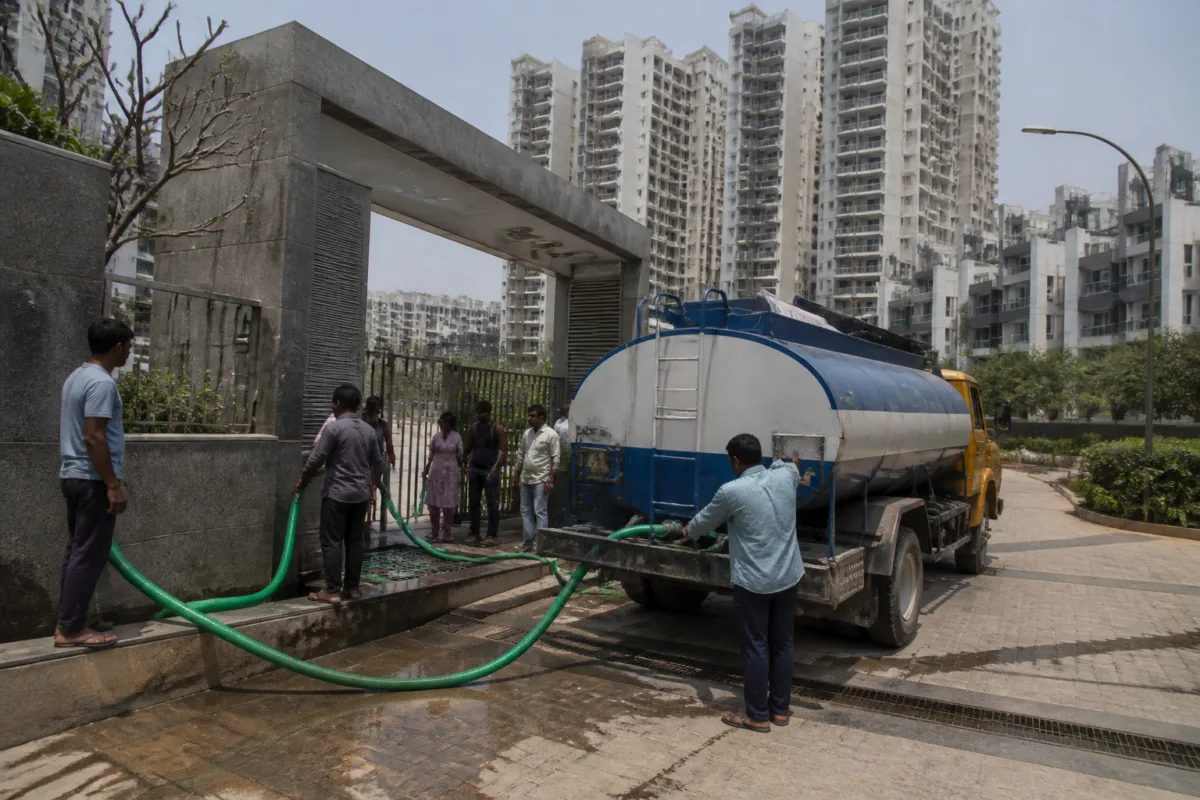
Private water tanker operators in Cyberabad are anticipating higher demand as the supply reduction approaches. The expected increase has raised concerns among residents and housing societies about higher prices and waiting periods that could extend for several days. Apartment communities already dependent on tankers may face additional operating costs while trying to maintain basic domestic supply.
Residential complexes in Gachibowli, Kokapet, Nanakramguda and Kondapur have begun prioritising essential uses over amenities, according to the report. Resident Welfare Associations have closed or reduced the use of swimming pools, clubhouses and fountains and stopped landscaping irrigation to conserve water. Several upscale apartment complexes have also drained and closed swimming pools as HMWSSB supply and groundwater levels have declined.
The impact could extend beyond household consumption. High-rise buildings depend on large daily volumes of water and pumping systems to distribute it across multiple floors. A reduction in incoming supply can therefore affect domestic use, common facilities and building operations at the same time. Housing societies in the IT corridor are reportedly spending lakhs of rupees each week on private tankers to meet basic requirements, pushing up monthly maintenance costs for residents.
Technology companies could also face operational difficulties if water availability falls below critical levels. Grade-A IT buildings commonly use water-cooled chillers for central air-conditioning systems. The report said a severe shortage could make it difficult to operate these cooling systems, raising the possibility that companies may consider hybrid or work-from-home arrangements if office buildings cannot be adequately cooled.
The reported HMWSSB decision places the immediate pressure on water-dependent residential and commercial infrastructure in western Hyderabad. The next key development will be the implementation of the reduced supply from January and how the affected areas, apartment societies, tanker operators and technology parks manage the resulting shortfall.

