


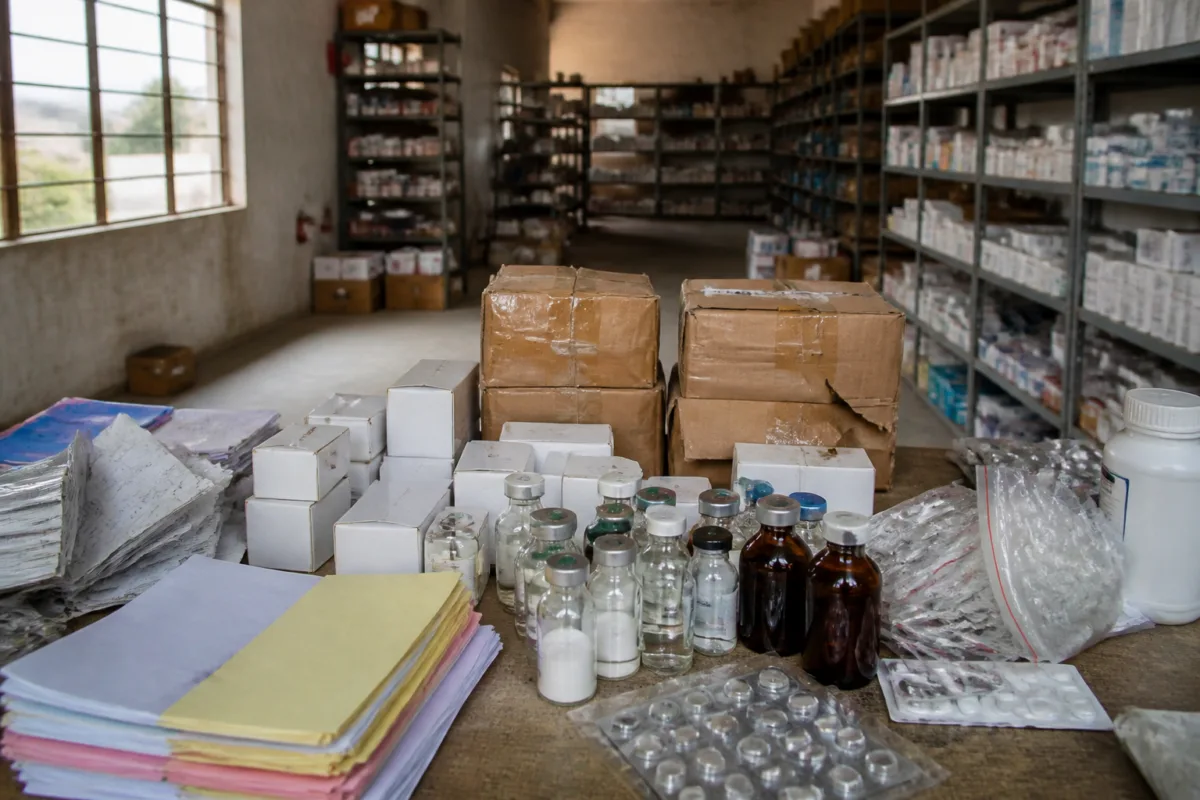
The Enforcement Directorate has searched five premises linked to an alleged counterfeit-medicine network in Bengaluru, freezing bank accounts containing around Rs 9 lakh and seizing digital devices, records and other documents under the Prevention of Money Laundering Act. The action follows an FIR registered at Tavarekere police station in Bengaluru South district on August 18.
The investigation concerns generic medicines that were allegedly repackaged and relabelled as expensive branded antibiotics, including Pfizer products. According to the ED investigation cited by the Times of India, medicines were stored at a residential property in CK Tandya village without valid licences, while labels on the products were replaced.
The agency has identified R Prashanth, also known as Prashanth Rajan Babu and Prashanth Doreswamy, as an alleged organiser of the operation. He is described as a medical representative who arranged a farmhouse near Bidadi for manufacturing, repackaging and relabelling medicines without a drug licence or permit.
Investigators said cheaper bulk formulations sourced from manufacturing centres in several states were repackaged into new vials and fraudulently labelled as Pfizer antibiotics, including Zavicfta and Emblaveo. The medicines were allegedly distributed through DM Pharmaceuticals and supplied to Krupa Healthcare.
Krupa Healthcare, which is located near Minerva Circle in Bengaluru and is owned by Veeresh Kumar Jain, also known as Veeresh Kumar, allegedly supplied the medicines to other pharmaceutical entities and hospitals. The investigation found that the suspected products were supplied alongside genuine medicines, a method the agency said was intended to avoid detection.
The ED froze bank accounts belonging to the accused linked to Krupa Healthcare, with funds of around Rs 9 lakh. It also seized electronic devices, records and other material during the searches. The agency’s action forms part of a money-laundering investigation arising from the police case.
The case involves multiple points in the urban pharmaceutical supply chain, including storage, relabelling, wholesale distribution and hospital supply. The alleged movement of the medicines through established commercial channels is now being examined by investigators, although the supplied report does not specify the hospitals or pharmaceutical entities that received them.
A special investigation team and the drug control authority had earlier seized medicines valued at close to Rs 4.9 crore. The latest searches are intended to trace the financial transactions and documentary evidence connected with the alleged network. Further action will depend on the ongoing ED, police and drug-control investigations.

