


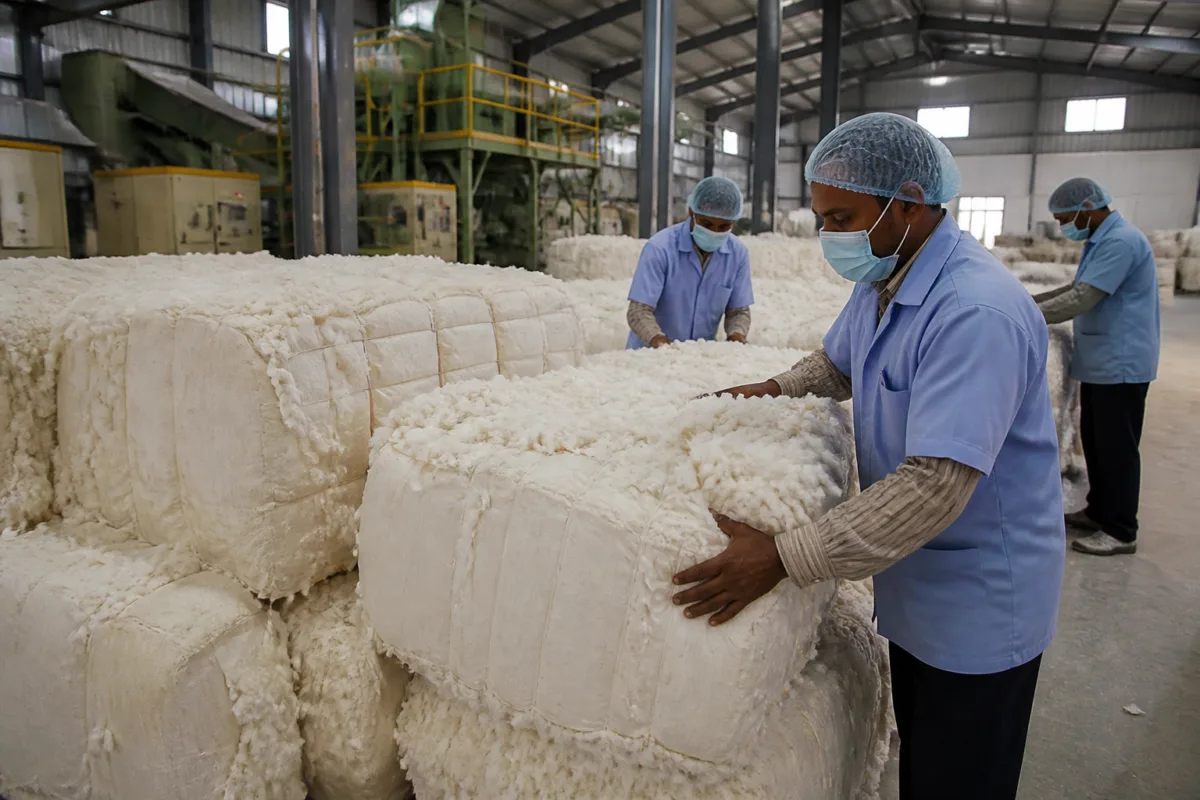
The Centre has extended the exemption from customs duty on cotton imports by two months, allowing textile mills and other companies to bring in cotton without the levy until December 31, 2026. The decision comes as domestic supplies remain below market expectations and concerns grow over production in the 2026-27 season.
The Finance Ministry extended the exemption through Notification No. 35/2026-Customs issued on October 30. The waiver was earlier scheduled to end on October 31. It had removed the 11% customs duty on imported cotton for the period from June 1 to October 31, 2026.
The extension gives domestic spinning, textile and garment companies an additional window to source raw cotton from overseas without paying the import duty. The move is intended to improve the availability of raw material and reduce procurement costs at a time when mills are facing uncertainty over domestic supplies.
The supply concerns are linked to expectations of lower cotton production in the current season. The available assessment points to a reduction in cultivated area and the impact of drought in parts of Maharashtra and Karnataka, two major cotton-producing states. These conditions may affect crop yields and limit the quantity reaching markets.
The arrival of the new crop has begun in several markets, but the volume reaching mandis is reported to be lower than expected. Daily arrivals of raw cotton have been estimated at around 70,000 to 80,000 bales. Each bale weighs 170 kilograms. By October 23, total arrivals had reached approximately 1.5 million bales.
Market participants expect arrivals to increase after Diwali. However, the reported pace of supply has remained a concern for textile mills, which need predictable access to cotton to maintain production and manage input costs. Cotton prices have also remained elevated amid lower arrivals and uncertainty over output.
Farmers holding back their produce has been cited as another factor affecting market availability. Some growers are reportedly waiting for better prices instead of selling their cotton immediately, adding to the short-term pressure on supplies reaching mandis.
The duty exemption provides mills with another source of cotton and may lower the cost of imported raw material. The measure is expected to be particularly relevant for small and medium-sized textile companies, which may find it harder to absorb higher cotton prices. It may also support the ability of Indian textile and garment manufacturers to compete in international markets.
The policy may have an effect on the domestic cotton market as imported supplies increase. A larger flow of overseas cotton could put pressure on prices in the domestic market, while the overall benefit to mills will depend on international prices, freight costs and the availability of cotton from producing countries.
The exemption will remain available until December 31, 2026, after which the government’s next decision will determine whether the duty-free import window is continued, modified or allowed to lapse.

