


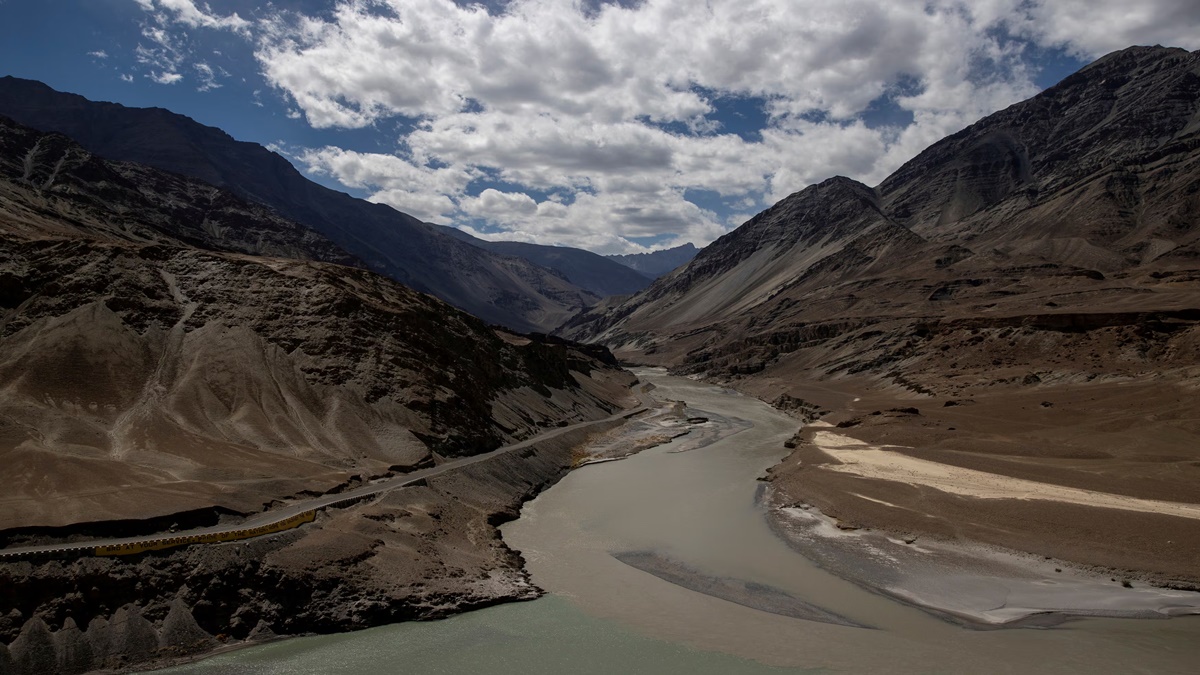
India has formally suspended the Indus Waters Treaty, a landmark 64-year-old water-sharing agreement with Pakistan.
The decision, announced following the deadly Pahalgam terror attack, underscores the deepening complexities surrounding one of South Asia’s most critical transboundary river systems—now under mounting pressure from climate change, geopolitical friction, and shifting regional demands. Signed in 1960 after nearly a decade of negotiations facilitated by the World Bank, the Indus Waters Treaty has long been hailed as a model of international cooperation. It allocated control over the eastern rivers—Ravi, Beas, and Sutlej—to India, while Pakistan was given rights to over 80% of the western rivers—Indus, Jhelum, and Chenab. The agreement survived wars and diplomatic breakdowns, offering a rare channel of continued dialogue even in strained times. However, with rising temperatures, glacial retreat, and increasing water demand on both sides, the treaty is being tested like never before.
Pakistan’s reliance on the Indus system is profound: over 80% of its agriculture and nearly a third of its hydropower depend on these waters. As glaciers feeding the Indus Basin shrink due to global warming—particularly those in the Hindu Kush-Himalaya region—the river’s flow is becoming increasingly erratic. Climate projections suggest that the Indus could become a seasonal river by 2050, with significant consequences for water security, agriculture, and energy generation in the region. Tensions have been further inflamed by disputes over Indian hydropower projects. The Kishanganga and Ratle hydroelectric projects have drawn objections from Pakistan, which argues that these installations reduce river flows in violation of treaty terms. India, however, maintains that its infrastructure is compliant with the treaty’s provisions, including run-of-the-river designs that do not divert or store excessive water. The matter is currently under review by both a World Bank-appointed Neutral Expert and a Court of Arbitration, reflecting a legal stalemate that mirrors the broader political deadlock.
In parallel, Indian officials argue that the country has not even fully utilised its entitled share of the water due to limited storage infrastructure. With climate variability on the rise, India is seeking to improve its water resilience through better storage and irrigation systems—moves Pakistan views with apprehension. Experts warn that without transparent cooperation and upgraded governance mechanisms, the basin could descend into a dangerous cycle of mistrust and mismanagement. While India’s suspension of the treaty is a strategic response to security threats, it also signals the urgent need for rethinking transboundary water agreements in a climate-altered world. Neither country can afford to treat water as an unlimited resource nor ignore the growing ecological precarity of the region.
The long-term sustainability of the Indus water system now hinges on forward-looking, cooperative frameworks that account for changing hydrology, technological advancement, and humanitarian necessity. The time to modernise the treaty—and integrate climate resilience, equitable use, and sustainable management—is now. South Asia’s water future depends on it.
Also Read: https://urbanacres.in/green-light-for-pune-elevated-corridor/
