


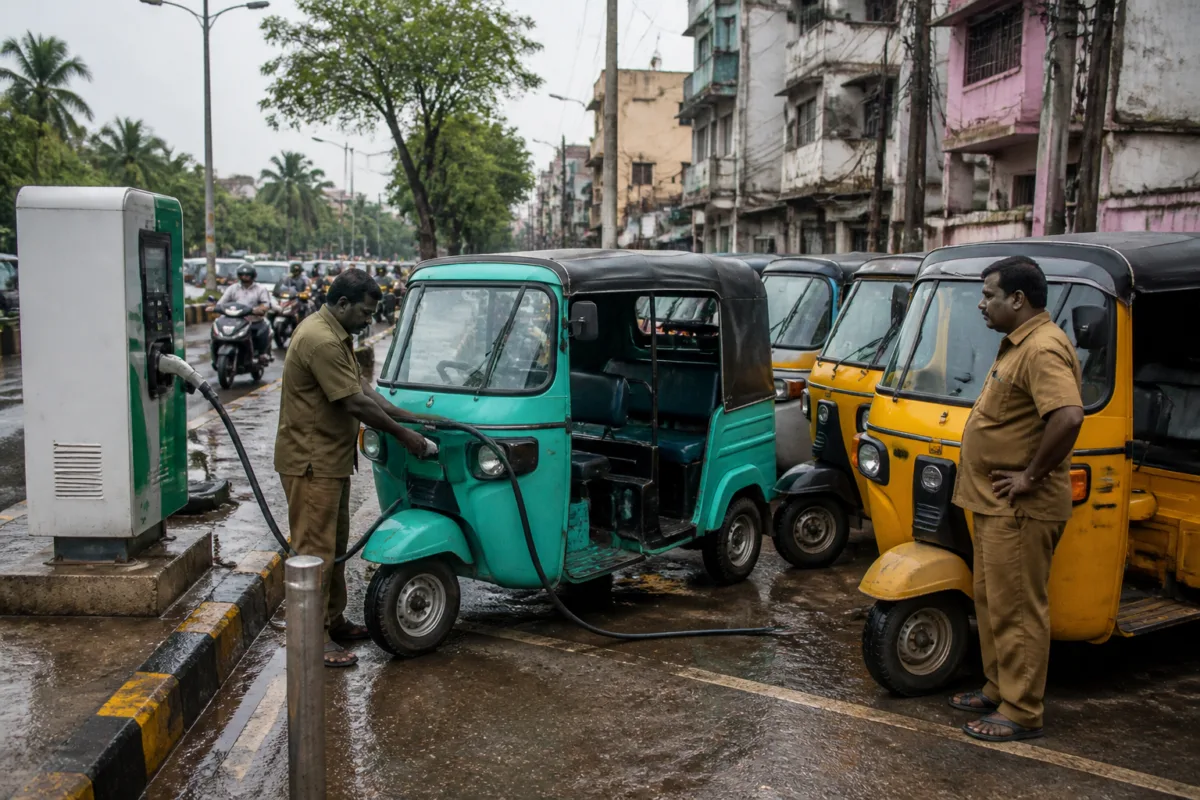
Nearly seven in 10 auto-rickshaw drivers surveyed in Chennai are interested in switching to electric vehicles, but high purchase costs, rented vehicles and inadequate charging infrastructure are limiting adoption, according to a study by the Citizen consumer and civic Action Group (CAG).
The report, titled ‘Electrifying three-wheelers: Understanding barriers to electric auto uptake among drivers in Chennai’, is based on a survey of 1,008 auto drivers across North, South and Central Chennai. Its findings highlight the gap between the city’s electric-mobility ambitions and the financial and infrastructure conditions facing drivers.
The affordability problem is especially significant because 60.5 per cent of surveyed drivers depend on rented autos. Among these drivers, 76.2 per cent pay between Rs 300 and Rs 500 a day in rent. Nearly 44.4 per cent of all respondents reported daily earnings of between Rs 1,000 and Rs 2,000.
The study found that 71.1 per cent of drivers were unaware of electric-auto rental options, while only 7 per cent said such options were available to them. Dependence on rented vehicles makes it difficult for drivers to purchase or retrofit electric autos independently, while vehicle owners may be reluctant to replace relatively new vehicles before recovering their investment.
About 56.1 per cent of vehicle owners surveyed said their autos were less than five years old, and another 37.6 per cent said their vehicles were between five and 10 years old. The report therefore identifies early replacement as a potential financial burden for owners whose existing vehicles remain in serviceable condition.
Fuel savings could provide a strong incentive for the transition. About 58.5 per cent of drivers interested in switching to electric autos spend more than Rs 600 a day on fuel. The report cites estimates that the annual energy cost of operating an electric three-wheeler for 100 km a day is around Rs 29,200, compared with Rs 82,394 for a CNG vehicle, Rs 1.10 lakh for a diesel vehicle and Rs 1.47 lakh for a petrol vehicle.
However, charging access remains a practical obstacle. About 46.4 per cent of surveyed drivers travel between 60 km and 80 km daily, while 29.5 per cent travel between 80 km and 100 km. Many drivers live in rented houses or informal settlements without dedicated parking spaces or permission to install charging points. The CAG study also says that several existing public chargers are designed mainly for four-wheelers.
The report identifies fragmented charging systems, battery-safety concerns, a shortage of service centres and difficulties in maintaining vehicles during rains and floods as additional barriers. These constraints mean that an electric auto is not only a vehicle purchase but also a requirement for reliable charging, servicing and battery support close to the driver’s daily routes and residence.
Access to finance is another constraint. According to the report, banks may hesitate to lend to auto drivers because of irregular earnings, limited credit histories and a lack of collateral. It says interest rates for loans on electric three-wheelers can exceed 20 per cent, compared with 10 to 15 per cent for conventional vehicles.
Previous experience with electric autos appears to influence willingness to switch. The study found that 77.1 per cent of drivers who had previously operated electric autos were interested in making the transition, compared with 66.7 per cent among those without such experience. Around 70 per cent of respondents wanted to interact with existing electric-auto drivers, pointing to the role of demonstrations and peer experience in building confidence.
The report recommends affordable financing, electric-auto rental and leasing models, battery-as-a-service options and credit-guarantee schemes. It also calls for charging facilities at auto stands, transport hubs and residential neighbourhoods, along with more authorised service centres and stronger battery warranties.
For vehicle replacement, the study suggests prioritising autos older than 15 years that fail fitness tests for scrapping and exploring retrofitting for vehicles between three and seven years old. These proposals seek to align fleet renewal with the financial realities of owners rather than requiring all drivers to replace vehicles immediately.
The findings are significant for a city with more than one lakh registered auto-rickshaws. Registrations of electric three-wheelers in Chennai increased from 691 in 2023 to 2,115 in 2025, according to VAHAN data cited in the report, although electric vehicles still represent a small share of the city’s auto fleet.
Tamil Nadu’s Electric Vehicles Policy 2023 identifies Chennai as one of six cities expected to prepare roadmaps for the complete electrification of three-wheelers. At the launch of the CAG report, Chennai Unified Metropolitan Transport Authority member-secretary Jeyakumar Iyamperumal said Chennai had five registered vehicle-retrofitting agencies. He also said CUMTA was developing an aggregator application for auto drivers, which is expected to be launched by May 2027.
The study’s central implication is that electrification cannot depend on driver interest alone. Its adoption will also depend on whether public agencies, manufacturers and financial institutions can make vehicles affordable, provide charging and repair access, and reduce the risks faced by drivers whose incomes depend on daily vehicle use.

