


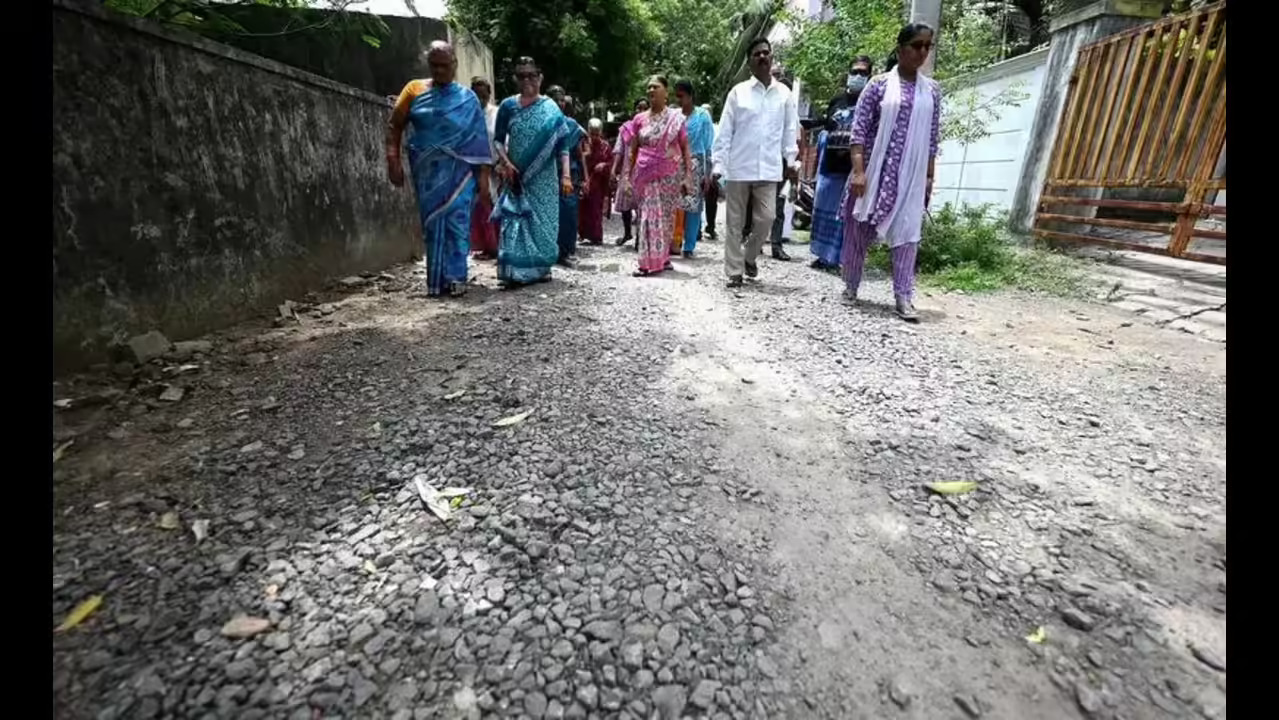
In Puzhudhivakkam, residents of Subramania Nagar and Dharma Nagar have endured nearly two decades without proper road access. Despite coming under Greater Chennai Corporation (GCC) jurisdiction in 2011, both neighbourhoods remain unserved by civic upgrades—a 200‑metre road has received just 90 metres of pavement to date, a fraction of the repair their deteriorating lane demands.
The issues began when GCC officials reportedly declared Subramania Nagar unregistered, rendering it ineligible for infrastructure upgrades. Although Dharma Nagar’s surface was last resurfaced in 2013, both localities now face severe degradation. Residents report worsening potholes and slush during rains, which impede metro water tanker access and have caused accidents across the area. Despite repeated petitions to civic authorities and the ward councillor, promises remain unfulfilled. A ceremonial ground‑breaking was held in June 2025, including rituals to invoke favourable conditions, but no construction has commenced. Officials later cited recent monsoon rains and a lack of budgetary sanction as causes of delay.
According to the Perungudi zonal officer, priority repairs were postponed due to resource constraints. Nonetheless, authorities have indicated that work may begin within days. Residents remain sceptical as repeated assurances over the years have not translated into action. Urban development experts suggest that such neglect reflects deeper governance issues: failing to include newly incorporated localities into civic plans risks undermining equitable service delivery. The scattered focus of civic funding is evident—while GCC allocates nearly two thirds of its annual revenue to roads and drains, underserved localities like Subramania and Dharma Nagar fall through the cracks of planning.
The infrastructural void has not only rendered local mobility difficult but also exposed systemic inequities. Puzhudhivakkam residents, who rely on tanker water delivery, face daily hardship navigating unpaved roads in monsoon-affected weather. The stalled repair programme has also raised concerns about equitable urban inclusion in a rapidly expanding metropolis. Despite inclusion in GCC limits over a decade ago, the dual roads have been effectively treated as unofficial lanes. Community leaders argue that the municipality’s failure to update its records and budget allocation renders the area invisible in political and technical planning. Until the roads are formally recognised, securing funding remains elusive.
Chennai’s broader infrastructure remit has expanded in recent years—corporation data shows ongoing investments in marginalised areas such as Puzhudhivakkam, Nanganallur, Perungudi and Madipakkam. Still, this internal expansion has fallen short of translating into physical service upgrades in some interior zones. As monsoon season intensifies, the resilience of neighbourhood infrastructure is being put to the test. Equity advocates argue that delayed repairs in these wards represent more than inconvenience—they illustrate how bureaucratic omissions can compound civic vulnerability.
The urgency remains clear: Subramania and Dharma Naga residents await decisive municipal intervention that guarantees not only road surfaces but equal access to essential urban services. Without inclusive planning, pockets of neglect could undermine Chennai’s bid to mature as a sustainable and equitable metropolis.
Also Read : Kochi Flat Owners Urge Government Help on Sewage Plant Crisis
