


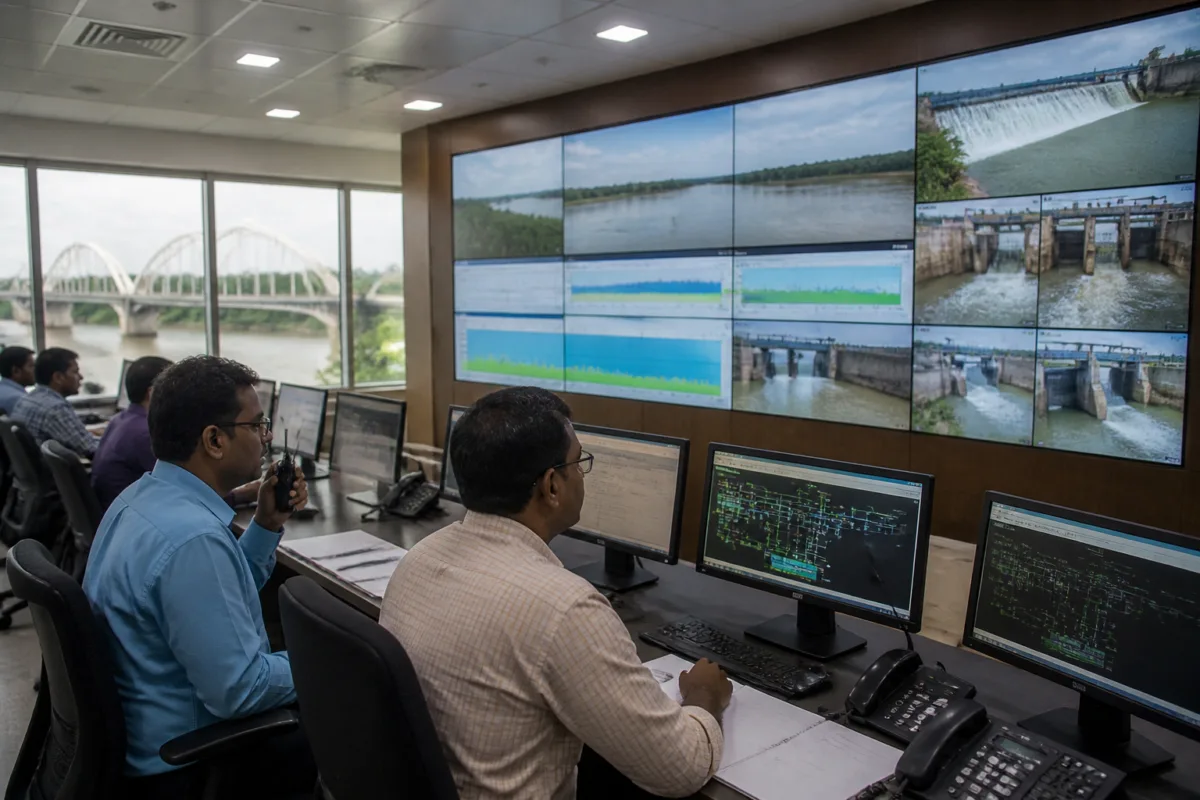
Tamil Nadu has commissioned an integrated control centre in Chennai to monitor three reservoirs supplying the city and remotely operate their sluice gates when surplus water needs to be released, according to a report by Dinamalar.
The control centre is located at the Water Resources Department office inside the Indian Naval Station Adyar campus near Napier Bridge on Kamarajar Salai. Sub-control centres have been established at Puzhal, Poondi and Chembarambakkam reservoirs, the report said.
The reservoirs, along with Cholavaram and Thervaikandigai in Tiruvallur district, supply drinking water to Chennai. During the northeast monsoon, increased inflows can require the release of surplus water. The report said such releases have contributed to flooding in Chennai, Tiruvallur and Kancheepuram districts, creating a need for closer, real-time monitoring and coordinated gate operations.
The system uses supervisory control and data acquisition, or SCADA, technology to track inflows online. Software servers at the control centre are also being used to monitor the reservoirs through CCTV cameras around the clock. When required, officials in Chennai can operate the reservoir gates remotely to discharge water, according to the report.
The SCADA project has been implemented at Puzhal, Poondi and Chembarambakkam at a reported cost of Rs 31 crore. Dinamalar quoted an unnamed Water Resources Department official as saying that the system at the Chennai drinking-water reservoirs was functioning successfully and that preliminary work had begun to extend the approach to the department’s 90 dams.
The official said the wider rollout could take at least eight years. If implemented, the system would allow dams in the Western Ghats and other remote locations to be monitored from Chennai. The official also said that, once the relevant facilities are connected, the Mettur dam’s irrigation releases could be initiated from the Chennai integrated control centre rather than requiring the Chief Minister to travel to the dam.
The Chennai installation links reservoir operations with a centralised digital monitoring system, but the report does not provide technical details on control-room staffing, emergency safeguards, cybersecurity, communications redundancy or the approval protocols for remote gate operation. These arrangements will be important as the system is considered for larger dams and more geographically dispersed water infrastructure.
For Chennai and neighbouring districts, the immediate relevance is the possibility of faster coordination during periods of heavy inflow. However, the report does not provide measured data on whether the system has reduced flood incidents or improved the timing and volume of releases. Those outcomes will need to be assessed separately as the system operates through future monsoon seasons.

