


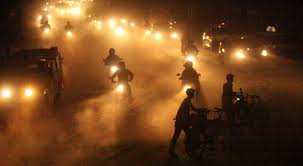
National Clean Air Programme (NCAP) launched in 2019, Chennai has achieved only a modest 12.1 per cent reduction in PM10 particulate matter concentrations between 2017-18 and 2024-25. This incremental progress places the city significantly behind other major Indian metropolises, raising crucial questions about the efficacy of current strategies and the imperative for more rigorous interventions to foster truly zero-net-carbon, eco-friendly urban living.
The latest data from the Ministry of Environment, Forest and Climate Change reveals that Chennai’s annual average PM10 concentration decreased from 66 µg/m3 to 58 µg/m3, marginally meeting the National Ambient Air Quality Standards (NAAQS) of 60 µg/m3. However, this figure pales in comparison to the substantial gains seen elsewhere; Mumbai recorded a 44 per cent reduction, Kolkata 37 per cent, and even Delhi achieved a 15.8 per cent decrease. Experts lament that while the numbers might appear acceptable on paper, the health ramifications for Chennai’s growing population remain significant, with respiratory cases continuing to rise. This highlights a critical disconnect between statistical improvements and tangible public health outcomes.
Also Watch: “Mumbai will rock, shine and always be India’s best city to live.” In an exclusive, MHADA CEO Sanjeev Jaiswal (IAS) talks about Mumbai’s enduring charm, livability, and the government’s focus on making it affordable for all
The city’s Clean Air Action Plan, formulated under NCAP, addresses key pollution sources including vehicular emissions, road dust, construction activities, and industrial pollutants. Local authorities were directed to implement dust mitigation measures and strictly enforce regulations against open waste burning. Yet, consistent public complaints regarding unchecked construction dust and ongoing garbage burning underscore the patchy enforcement of these crucial environmental norms. This fragmented approach impedes Chennai’s journey towards a sustainable and equitable urban future, where clean air is a fundamental right for all citizens, irrespective of their socio-economic standing.
Financial allocations for air quality improvement under NCAP and the 15th Finance Commission grants show that Tamil Nadu received ₹652.24 crore between 2019-20 and 2025-26, with an impressive 82.4 per cent utilisation rate of ₹537.35 crore. This efficient fund deployment contrasts favourably with other states. However, Chennai’s limited impact on air quality despite this suggests that mere expenditure is insufficient; strategic allocation and effective ground-level implementation are paramount. For instance, Thoothukudi in Tamil Nadu achieved a remarkable 54.5 per cent reduction in PM10 levels, demonstrating that significant improvements are achievable within the state, given robust local-level commitment.
Nationally, out of 130 cities covered under NCAP, 103 have recorded a decline in PM10 levels. However, many continue to exceed safe limits. While the Ministry acknowledges the complexity of linking air pollution directly to mortality due to multifactorial influences, the rising respiratory ailments reported by healthcare professionals serve as a stark reminder of the chronic health burden. As the government now aims to reduce the Air Quality Index (AQI) to below 50 in the next five years, Chennai must significantly accelerate its local interventions. Dr S Vishvaja, a prominent doctor and activist, advocates for a multi-pronged approach encompassing a faster transition to electric public transport, systematic addressing of unpaved roads, stringent enforcement of construction norms, and strict emission compliance from industrial units. The path to a truly sustainable and healthy Chennai necessitates a concerted, proactive push from all stakeholders to transform the city’s air quality for the long-term well-being of its residents.
Also Read: Air India Flight AI 2744 Skids Off Mumbai Runway Amid Rain Today
