


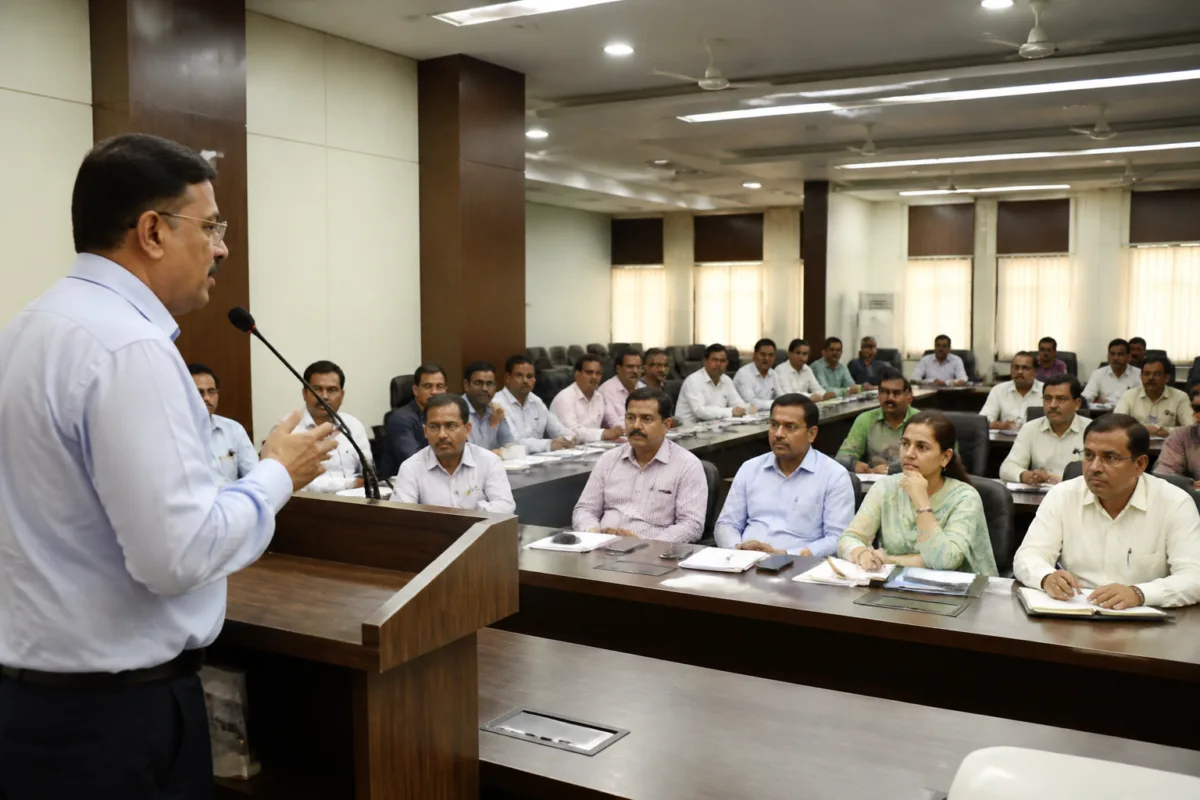
Madhya Pradesh officials have been instructed to prioritise accuracy and field-level supervision as preparations advance for Census 2027, with municipal commissioners expected to monitor the exercise in urban areas and district collectors asked to personally attend training for field trainers.
The directions were issued at a conference at the Naronha Administration Academy in Bhopal, where Madhya Pradesh Chief Secretary Ashok Barnwal and Census Deputy Director General Biswajit Das addressed divisional commissioners, collectors and municipal commissioners, according to a report by Dainik Bhaskar.
Barnwal cautioned officials against rushing the census or taking steps merely to create records or claim credit. He said even minor errors could have serious consequences and stressed that the information collected must be accurate and credible. In cities, municipal commissioners were told to maintain regular oversight rather than leave the entire exercise to subordinate officers.
The emphasis on data quality is significant for urban administration because census information is used to support government schemes and policy decisions, the report said. However, the conference details did not specify which urban programmes would be affected by the additional questions or how the data would be integrated into municipal planning systems.
The exercise will use digital technology for the first time, with enumerators collecting information through a mobile application. The report also said residents would have access to self-enumeration, another new feature for this census. Das said the use of digital systems was expected to allow the results to be released more quickly than in previous exercises, although no release date was provided.
The number of questions will increase from 29 in the 2011 census to 40 in the upcoming exercise. The period available for enumeration has also been extended. According to the report, 15 days will be provided for self-enumeration, followed by 35 days for the door-to-door exercise, compared with 20 days in earlier censuses.
After the household survey ends on 28 February, a revision period will run from 1 to 5 March. The report said children born during the enumeration period would be added during this stage, while people who die after being counted would be removed. The revision exercise will use 1 March as the reference, or “zero”, day.
Officials were also told to prepare for a separate count of homeless people at midnight on 28 February. District collectors must identify locations where people without homes are likely to sleep, including pavements, religious sites, railway stations, bus stands and spaces beneath bridges. The directions place responsibility on local administrations to map these locations before the count begins.
Dainik Bhaskar reported that around 2.3% of the population was missed in the previous census and that the stated objective this time is to ensure that no person is left out. The report did not provide a district-wise estimate of the homeless population, details of the locations already identified or information on how municipal teams will verify the count.
For urban local bodies, the preparations combine a technology shift with a demand for closer administrative supervision. Mobile-based enumeration and self-reporting could expand the channels through which residents provide information, while the extended schedule is intended to reduce errors caused by time pressure. The effectiveness of these measures will depend on field training, public participation and the ability of municipal and district officials to identify residents who may be difficult to reach, particularly people living in temporary or public spaces.
The Bhopal conference therefore places data completeness, rather than only the speed of collection, at the centre of the state’s preparations. The next reported steps are the training of field personnel, advance identification of homeless-sleeping locations and the conduct of enumeration, self-enumeration and the March revision period according to the announced schedule.

