


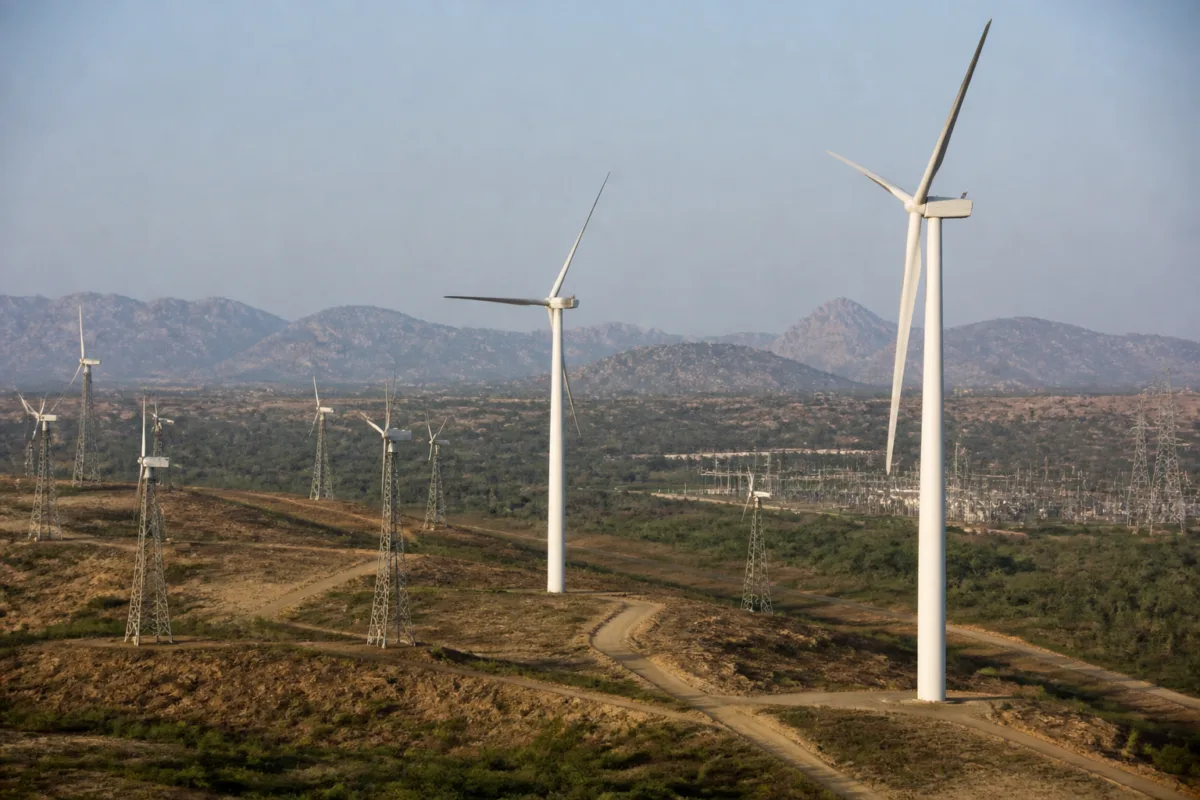
The Central Electricity Authority (CEA) has issued a standard operating procedure for wind repowering projects in which modern turbines are installed while older machines continue operating, according to Renewable Watch. The procedure applies to repowering projects across India and to partially commissioned plants using approved grid connectivity, subject to system feasibility.
The SOP sets out how these mixed-turbine projects are to be assessed during the transition period. In steady-state grid studies, older turbines that do not comply with current requirements will be treated as having zero power output until repowering is completed, the project’s design life ends, or its power or wheeling agreements expire.
After the applicable milestone, every turbine at the site must comply with CEA connectivity requirements. Turbines that do not meet those requirements must either be retired or repowered, the report said.
The procedure also requires developers to provide detailed root mean square and electromagnetic transient simulation models. These models will be used to assess reactive power performance and power quality. Aggregated models for dynamic studies of the new turbines are also required.
Mitigation equipment, including harmonic filters and reactive power devices where required, must be installed before a project is connected to the grid. Compliance for harmonic filters can be completed in batches covering at least 33% of the project’s capacity, allowing the equipment and repowering work to progress in phases.
Power quality meters will be mandatory at the point of interconnection. Disturbance recorders or digital fault recorders must also be installed at the point of interconnection or on turbines commissioned after February 2019, according to the reported SOP requirements.
Validation of wind-turbine models will similarly take place in stages. The first validation batches must cover at least 33% of capacity and be supported by periodic meter readings and fault data until the repowering programme is complete.
The framework links the physical replacement of ageing turbines with staged verification of their electrical behaviour. For grid operators, the requirements create a defined basis for studying projects that combine older and newer equipment during repowering. For developers, the SOP makes simulation models, power-quality equipment, monitoring and phased validation part of the grid-connection process.
The reported requirements do not eliminate the need for project-specific system-feasibility assessments. Instead, they establish technical conditions for permitting mixed-turbine operation while the repowering process continues, followed by full compliance or retirement of non-compliant turbines at the specified milestones.

