


The BYF COP31 participation will place six decades of rural climate work from Uruli Kanchan, Pune district, before an international audience as the organisation presents its research at the 31st United Nations climate conference in Antalya, Türkiye. The conference is being held from 9 to 20 November, with BYF scheduled to present its work on Friday, 13 November.
BYF Development Research Foundation, based in Uruli Kanchan, is participating as an organisation recognised under the United Nations Framework Convention on Climate Change. Its delegation includes Dr Manojkumar Aware, who works on livestock nutrition and climate-change mitigation; Dr Dinesh Sadure, who specialises in climate-resilient agriculture; and Mahesh Lade, whose area of work is renewable energy.
The delegation will present experience covering climate-resilient farming, methane-emissions management, renewable energy and sustainable rural livelihoods. It will also hold discussions with institutions, experts and other stakeholders to explore new opportunities for collaboration aimed at strengthening climate action in rural India, according to the report.
BYF’s work is focused on improving the livelihoods of small and marginal farmers, strengthening rural incomes and increasing the capacity of villages to respond to climate change. One of its key interventions is the wadi model, which combines agriculture, horticulture and forestry. The model has been implemented successfully even in drought-prone areas, according to the organisation’s account cited in the report.
The foundation has also worked on restoring grasslands, promoting regenerative agriculture and deploying nature-based solutions across more than 97,000 hectares of degraded and fallow land in India. The work has improved soil health and resulted in the absorption and storage of approximately 2.24 million tonnes of carbon, while also increasing agricultural productivity and reducing farmers’ spending on expensive fertilisers.
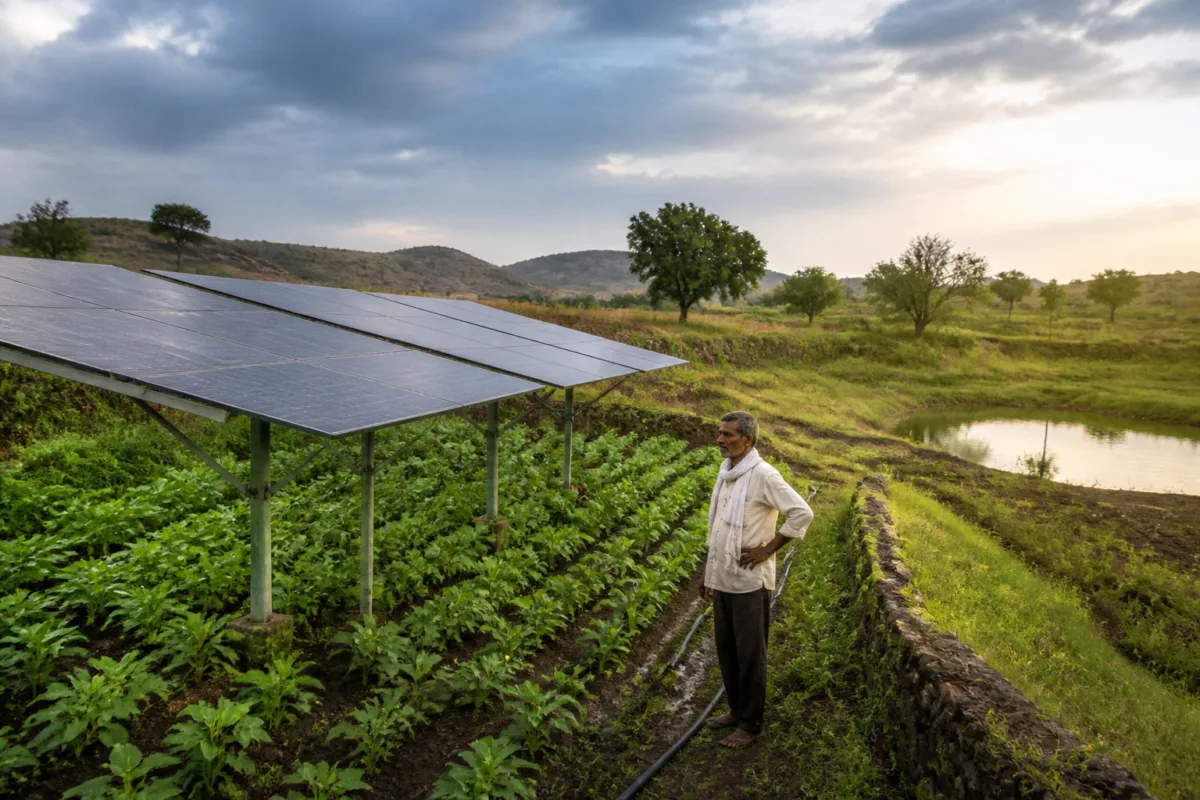
Water and energy interventions form another part of the organisation’s climate response. Watershed development, rainwater harvesting, groundwater recharge and soil-and-water conservation have increased water availability in villages and helped make farmland more capable of adapting to changing climatic conditions. BYF is also presenting its work on solar energy in farms and clean energy in villages.
Its decentralised energy systems and agrivoltaic approaches are intended to allow farmers to generate solar power while continuing to cultivate crops. The model links land and water management with rural energy access, placing climate adaptation alongside livelihood security rather than treating them as separate interventions.
The presentation comes as rural communities face the combined pressures of water stress, changing agricultural conditions, rising input costs and the need to protect incomes. The figures cited by BYF indicate the scale of its land-restoration work, while the COP31 platform gives the organisation an opportunity to place locally developed approaches within international climate discussions.
The scheduled presentation on 13 November and the delegation’s discussions with global institutions and stakeholders are the next reported milestones. BYF’s stated objective is to use these exchanges to identify collaboration opportunities for more effective rural climate action in India.

