


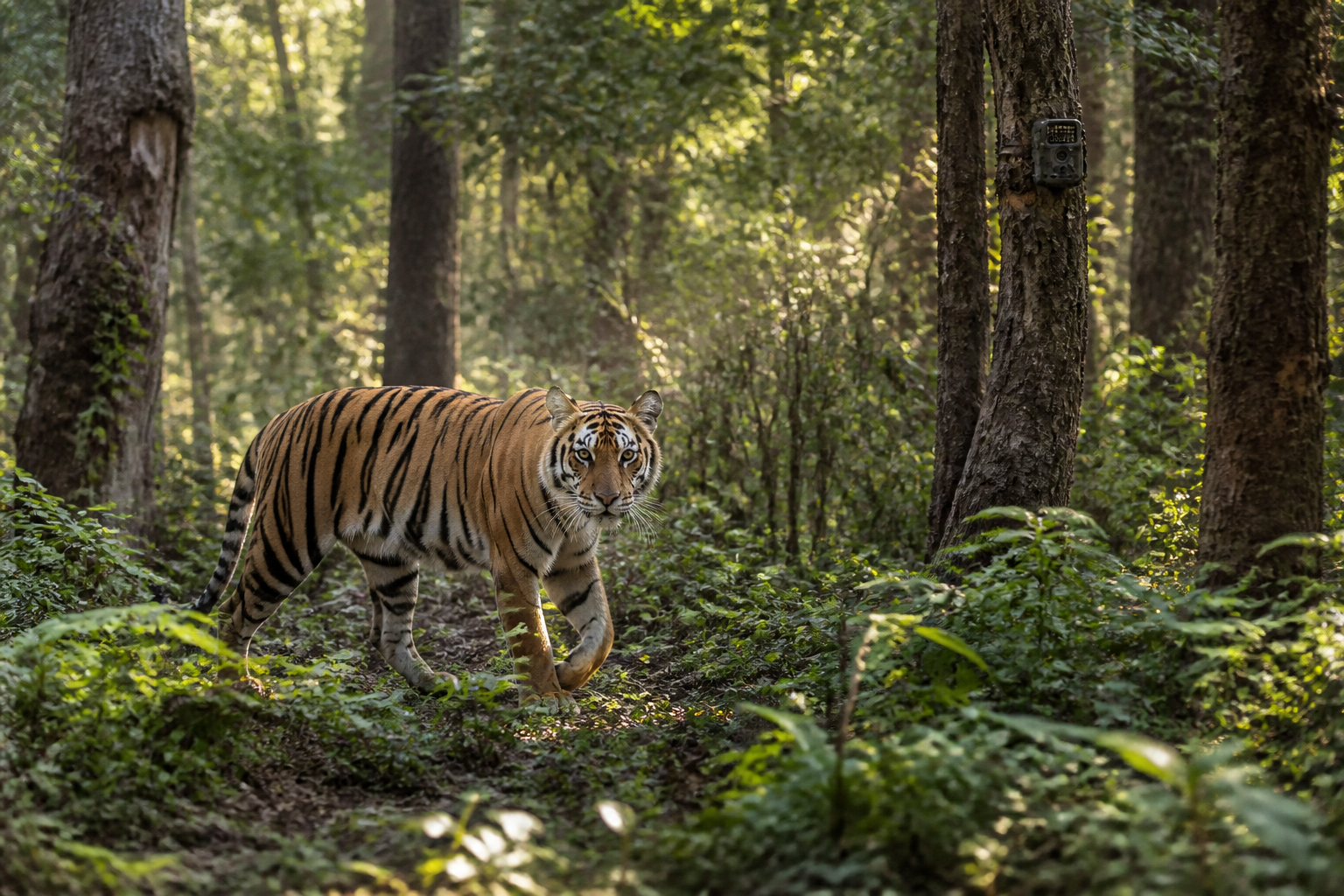
Buxa Tiger Reserve in Bengal has received a three-year-old tigress from Bihar’s Valmiki Tiger Reserve, marking the first step in a planned effort to reintroduce tigers and rebuild the reserve’s big-cat population. Three more tigers are expected to be released in Buxa over the next two months, according to officials cited by PTI.
The tigress was released on Friday in Alipurduar district in the presence of Union Environment Minister Bhupender Yadav and Bengal Chief Minister Suvendu Adhikari. The animal, identified as T138, was brought from Valmiki Tiger Reserve as part of a translocation programme intended to populate Buxa with tigers.
Adhikari said three more tigers would be released in the reserve within the next two months. Bengal forest minister Manoj Oraon described the translocation as a significant step towards increasing the tiger population in Buxa.
Buxa currently does not have an established population of big cats, although camera traps have recorded a tiger in the reserve. Experts cited in the report believe that animal may have entered the region from Bhutan or Assam’s Manas National Park. The latest release is therefore intended to create a planned population rather than rely only on occasional movement across the wider landscape.
Yadav said in a post on X that the release fulfilled a promise to reintroduce a tiger in Buxa. He linked the initiative to Prime Minister Narendra Modi’s focus on landscape conservation and species protection, and thanked the governments of Bihar and Bengal for supporting the translocation.
The event coincided with the start of World Wildlife Week 2026. Adhikari also thanked Bihar Chief Minister Samrat Choudhary for facilitating the movement of the tigress from Valmiki Tiger Reserve to Buxa.
The translocation forms part of a five-year project covering the financial years 2023-24 to 2027-28. According to officials, the Proposal for Tiger Augmentation and Soft Release of Tiger in Buxa Tiger Reserve goes beyond moving animals into the reserve. It includes measures to improve prey availability, develop suitable habitat, strengthen wildlife corridors and reduce human-wildlife conflict.
These components are central to the project because the success of a translocation depends on more than the arrival of individual animals. The reserve will need adequate prey, secure habitat and movement routes for the released tigers to establish themselves. Managing interactions between wildlife and nearby communities is also part of the stated project framework.
The next releases are expected to take place before the end of the year, with three more big cats planned over the coming two months. Officials have not provided further details in the supplied report on the individual animals, release sites or monitoring arrangements.
