


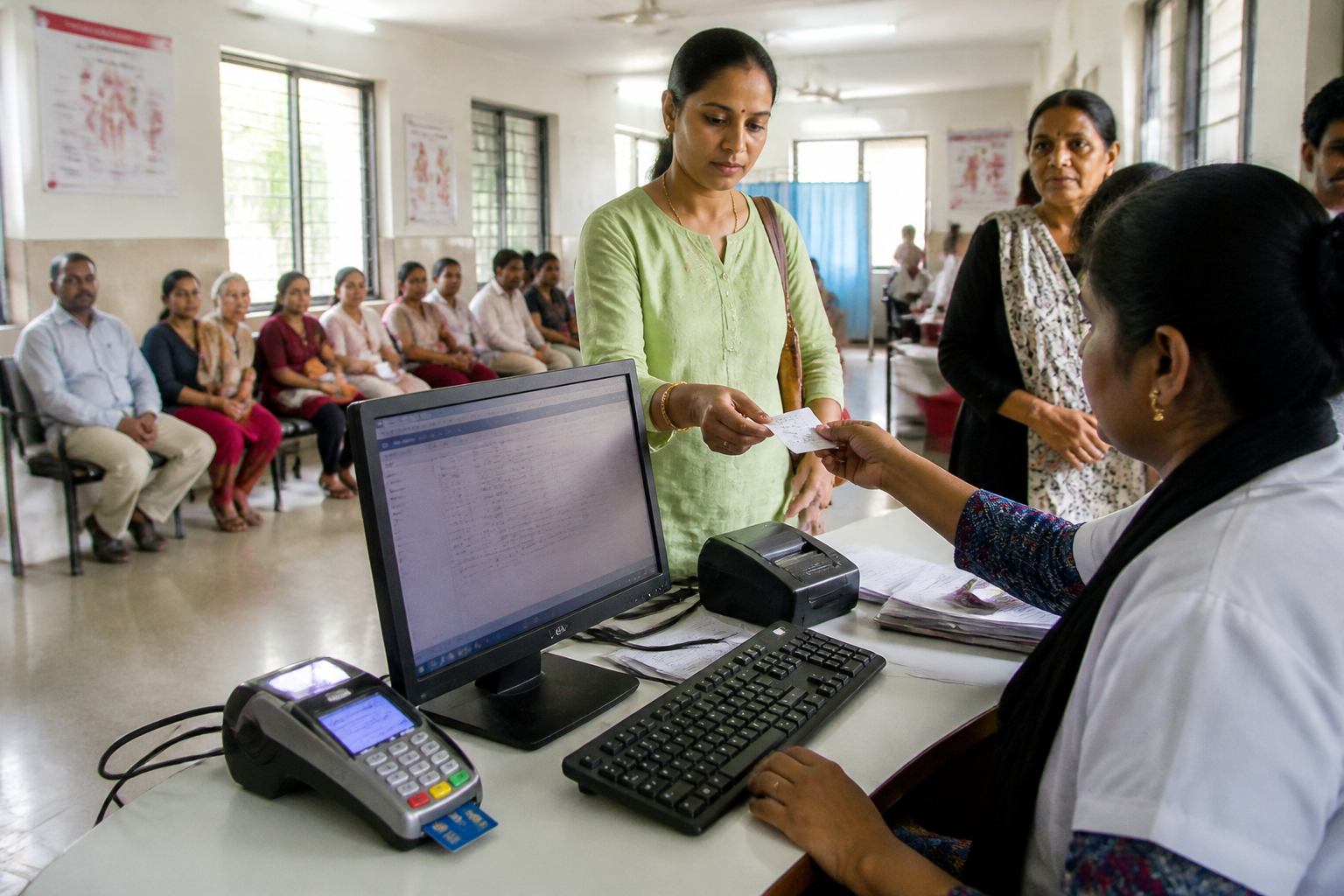
The Brihanmumbai Municipal Corporation has directed its municipal dispensaries, Urban Primary Health Centres and Hinduhridaysamrat Balasaheb Thackeray Aapla Dawakhanas to offer digital payment facilities to patients, in a move aimed at making registration and other payments more convenient at civic-run health centres.
The directive was issued by Additional Municipal Commissioner Prajakta Verma Lavangare during an inspection of civic health facilities and an anganwadi centre in Malad-Malvani. During her visit to the UPHC at Malvani-2, Lavangare reviewed the Hospital Management Information System used for patient registration and instructed officials to introduce online payments through the system.
She also directed the civic administration to ensure that all municipal dispensaries and Aapla Dawakhanas have point-of-sale machines and digital payment options. The BMC’s order places the payment facility alongside existing digital systems used to register patients and track health services at the field level.
The move is part of the civic body’s effort to make its healthcare network more technology-enabled. The inspection covered the operation of the HMIS and other digital systems used to monitor patients and health services. The supplied report did not specify a deadline for installing the payment facilities, the number of centres covered or the payment methods that will be accepted.
At an anganwadi centre on Marve Road in Malad, Lavangare reviewed the nutritional food provided to children, including the daily diet and monthly distribution of nutrition supplements. She also checked records on children’s health, nutrition, growth and development.
Officials briefed her on maternal and child health programmes being implemented through ASHA workers and health workers. These included measures under Chief Minister Devendra Fadnavis’s Mission 1000 Days initiative, which focuses on maternal and child health and nutrition from the preconception period through a child’s first two years.
The inspection also covered measures to prevent and control monsoon-related illnesses, communicable diseases and tuberculosis. These functions require coordination between civic health facilities, field workers and ward-level administration, making patient records and service monitoring important parts of the BMC’s digital health system.
Lavangare later visited the BMC’s Comprehensive Thalassemia Care Paediatric Haematology Cancer and Bone Marrow Transplantation Centre in Borivali East. She praised the centre’s work and said its bone marrow transplantation facility had helped several children with thalassemia and other blood disorders receive treatment and move towards a normal life.
The official said the centre’s work had helped build confidence among patients and their families about bone marrow transplantation as a treatment option for thalassemia. P North Ward Assistant Municipal Commissioner Kundan Valvi, P East Ward Assistant Municipal Commissioner Rupali Sarmalkar, Deputy Executive Health Officer Dr Varsha Puri, assistant health officers and medical officers were present during the inspections. The BMC’s next stated implementation step is to equip its municipal dispensaries and Aapla Dawakhanas with POS machines and online payment options.
