


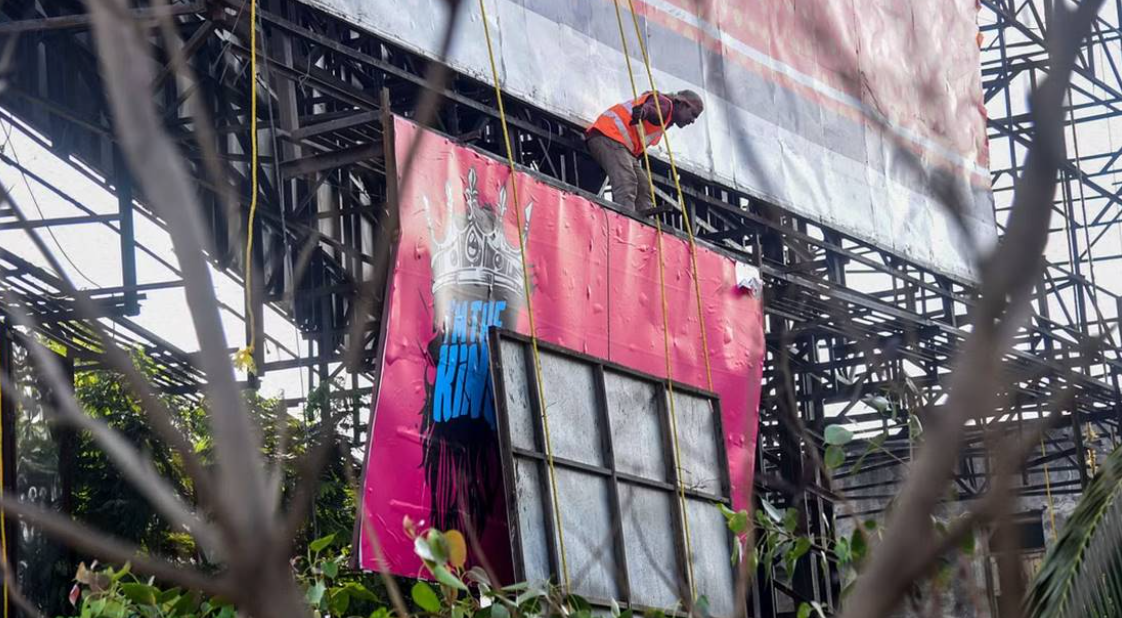
In the aftermath of the catastrophic hoarding collapse in Mumbai’s Ghatkopar area, which resulted in 16 fatalities and numerous injuries, civic authorities across the country have initiated stringent measures against illegal billboards.
The incident has cast a glaring spotlight on the often-overlooked hazards of the outdoor advertising industry, particularly concerning non-compliant and hazardous hoardings. The massive hoarding in Mumbai, weighing an astounding 250 tonnes, flouted numerous regulations before its collapse on a petrol station at Chheda Nagar. This tragedy has triggered immediate action in several cities to prevent similar incidents.
In Delhi, the Municipal Corporation has mandated all outdoor media operators to conduct structural audits of their hoardings, unipoles, and other billboard structures. Operators are required to submit compliance reports verifying their adherence to safety norms. In the capital, the maximum permissible size for hoardings is capped at 32×16 feet for roads wider than 100 feet, and 20×10 feet for narrower roads. However, these regulations are frequently violated, according to officials. Kochi has also responded swiftly. Mayor M. Anil Kumar of the Kochi Municipal Corporation stated that a comprehensive inspection of all hoardings in the city is underway. As per Kerala’s regulations, hoardings must be sanctioned by civic authorities and treated as structures akin to buildings. Violations can result in fines ranging from ₹10,000 to ₹50,000, with the potential revocation of installation licenses for repeat offenders. However, industry observers argue that the fines are insufficient to deter illegal installations.
In Tamil Nadu, the problem of illegal hoardings is pervasive. In June 2023, a billboard collapse on the Salem-Kochi Highway near Coimbatore resulted in three fatalities. Similarly, in 2019, an illegal banner in Chennai caused the death of a 23-year-old woman. These incidents underscore the urgent need for stricter enforcement of advertising regulations. Hyderabad stands out for its proactive approach. The city has maintained a hoarding-free status for over eight years, following a decision by the then Bharat Rashtra Samithi (BRS) Government to remove all uni-poles after heavy winds caused significant damage and posed risks to public safety. IT Minister K.T. Rama Rao’s announcement led to the removal of hundreds of hoardings. However, advertising on bus shelters and road medians remains permitted. Recent reports suggest that the current government is considering reintroducing hoardings, but this move is limited to municipal areas on the city’s periphery.
The economic impact of these regulatory measures has been significant. Advertising companies and property owners who previously earned substantial rental income from hoardings have been adversely affected. A hoarding at a prime location, such as Nagarjuna Circle in Hyderabad, could fetch up to ₹3 lakh monthly. The advertising industry is calling for better regulation of the Out-of-Home (OOH) advertising category. Veteran adman Ramesh Narayan emphasised that responsible advertisers should engage only with outdoor site owners who comply with all safety regulations. He urged industry associations to spearhead this initiative, making compliance mandatory to ensure public safety. This nationwide crackdown on illegal hoardings, prompted by the Mumbai tragedy, reflects a growing awareness and a commitment to enforcing safety standards in the outdoor advertising industry.
