


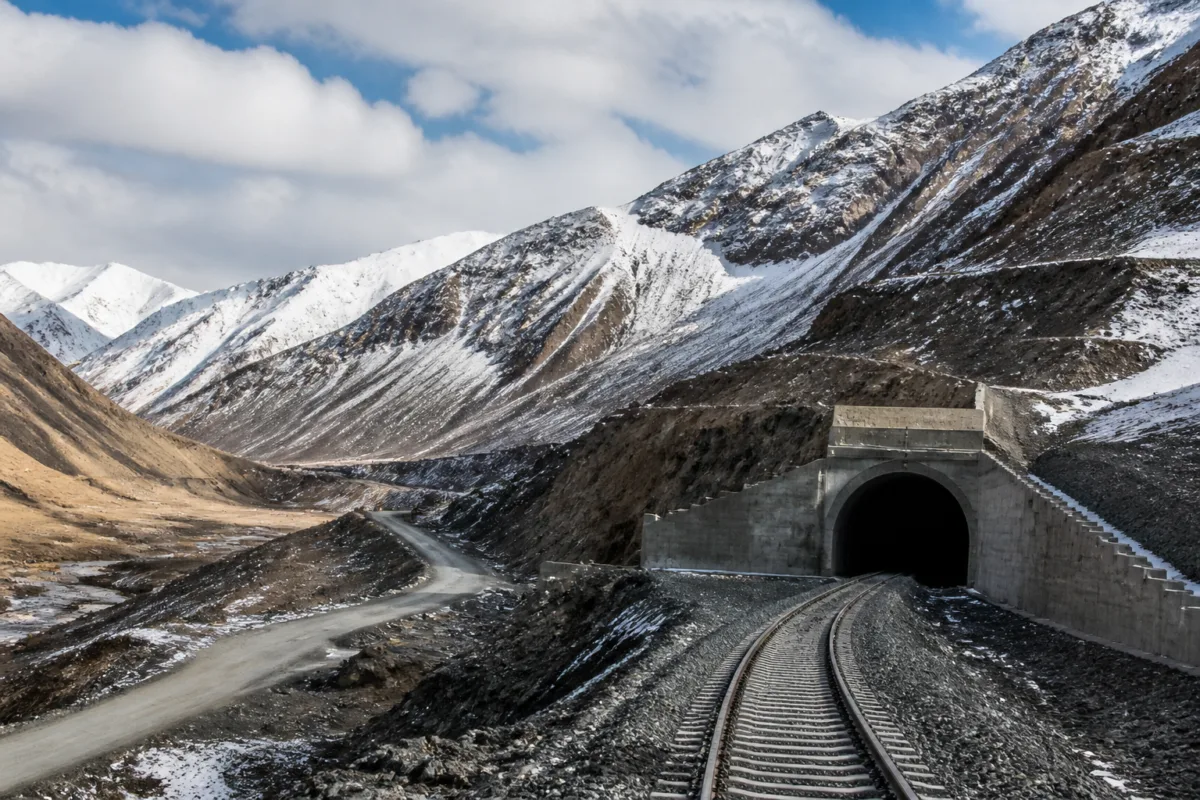
The proposed Bilaspur-Manali-Leh rail line could give India the world’s highest railway station, with a planned facility at 5,256 metres above sea level beneath the Tanglang La pass in Ladakh. The 489-kilometre project is intended to connect Bilaspur in Himachal Pradesh with Leh through some of the most difficult high-altitude terrain in the country, although it has not received final construction approval.
The proposed station would stand at 17,244 feet, around 188 metres higher than China’s Tanggula railway station, currently identified as the world’s highest railway station. Tanggula is located on the Qinghai-Tibet railway line at an elevation of about 5,068 metres.
The project is estimated to cost approximately Rs 1.31 lakh crore. The proposal envisages a rail connection running through Himachal Pradesh and Ladakh, creating an alternative to the mountain roads and high passes currently used for much of the journey to Leh. The project’s present status is significant: the route and engineering features have been proposed, but construction has not been given final approval.
The planned alignment would connect Bilaspur to Leh via several locations, including Sundernagar, Mandi, Manali, Keylong, Sarchu, Pang, Rumtse and Upshi. These locations reflect the project’s intended role as a long-distance mountain corridor rather than a short urban railway link. It would pass through areas where road connectivity is affected by difficult terrain and high-altitude conditions.
According to the reported plan, the rail line would include about 270 kilometres of tunnels. The tunnel-heavy design is linked to the geography of the route, which crosses steep mountain terrain and high passes. A major underground section would also be required around the proposed station beneath Tanglang La. The reported figures describe the scale of the engineering challenge, but the supplied report does not provide a construction schedule, detailed alignment map, land-acquisition plan or financing structure.
For residents and travellers in Himachal Pradesh and Ladakh, the proposed line could eventually provide another mode of movement between the two regions. At present, access to Leh depends substantially on mountain roads and routes through high passes. The rail proposal is therefore being presented as a connectivity project as well as a strategic infrastructure plan, although the report does not specify passenger services, freight capacity, fares or operating timelines.
The elevation record, if achieved, would be a consequence of the route’s geography rather than the project’s only purpose. The proposal is designed to extend the railway network towards Ladakh while linking a series of settlements and transport points along the Bilaspur-Manali-Leh corridor. However, the reported cost, tunnel length and extreme altitude indicate that the project remains at a planning stage requiring further decisions before construction can begin.
The next milestone is final approval for the project. Until that approval is granted, the 489-kilometre rail line, the proposed 5,256-metre station and the projected Rs 1.31 lakh crore cost should be treated as elements of a plan rather than completed or active railway infrastructure.

