


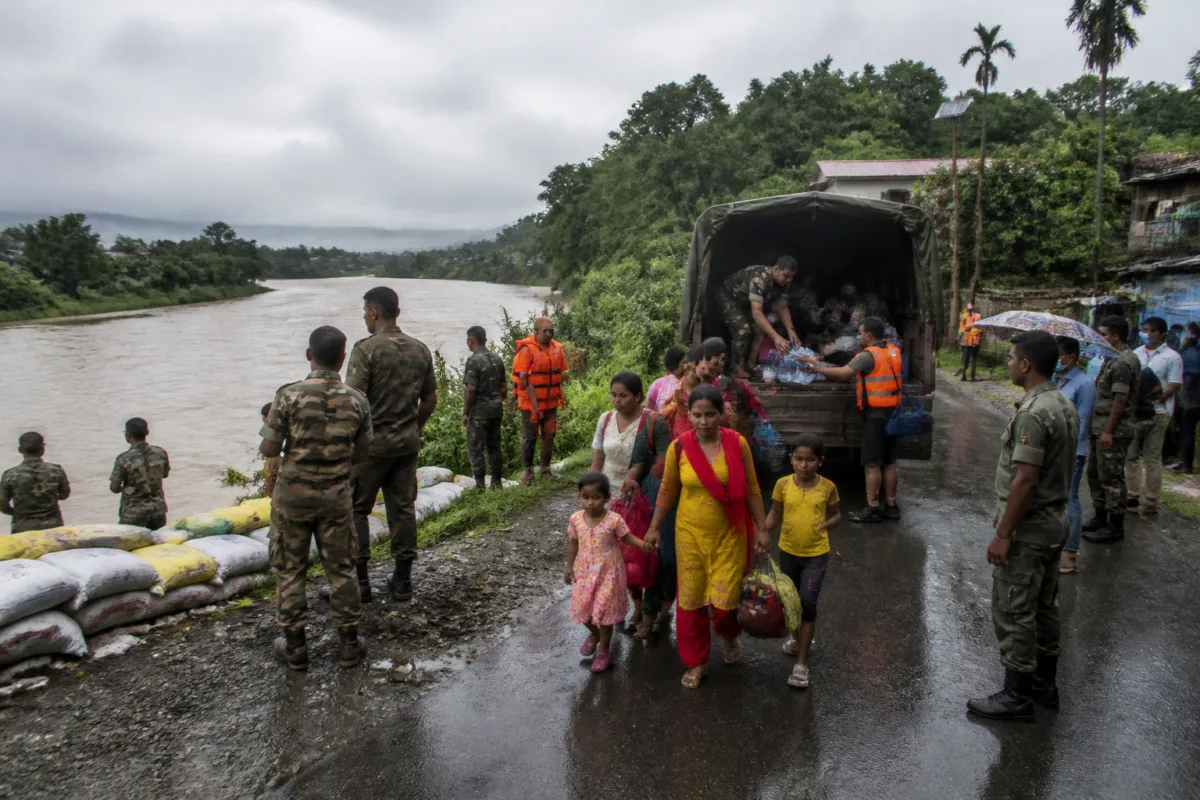
The Bhutan flood threat to parts of North Bengal was contained after the West Bengal administration evacuated at least 12,000 residents from vulnerable areas of Alipurduar, with Chief Minister Suvendu Adhikari saying all 47 people whose whereabouts had initially raised concern were safe.
The warning followed a glacial lake outburst flood in Bhutan’s Gasa district on Thursday evening. A glacier collapse breached the natural barrier of Shintaphu Lake, sending a sudden surge through the Gasa Tshachu region and damaging several structures, according to the report.
Floodwater then moved through Bhutan’s Mfo River towards the Sankosh, raising concerns about possible flooding in parts of West Bengal and Assam. The Bhutan government alerted the administrations of both states about the potential threat, prompting precautionary measures in areas considered vulnerable.
Speaking at a public outreach programme in Salt Lake, Adhikari said the situation in the affected areas of Jalpaiguri and Alipurduar remained under control. He said the Sankosh river was flowing below the danger mark and that officials had established contact with all 47 people whose whereabouts had initially been unclear.
“Till 4 am, the Superintendents of Police, ministers and MLAs were working. They were also in touch with the control room at Nabanna. The Sankosh river is flowing below the danger level. The reports of missing persons have also been resolved. We have been able to establish contact with everyone. All 47 people are safe,” the chief minister said.
The administration arranged drinking water and food for residents moved to safer locations. Senior police officers, ministers and legislators remained on duty overnight to monitor conditions and coordinate relief and rescue measures, according to the chief minister’s account.
The incident placed the cross-border nature of flood risk in the eastern Himalayan and North Bengal river systems at the centre of the response. A sudden event in Bhutan created a potential threat downstream in India, making early warning, communication between administrations and the rapid movement of residents central to limiting the impact.
Authorities said the situation did not escalate into a major disaster and confirmed that those evacuated were safe. The immediate response remains focused on monitoring the Sankosh river and maintaining coordination between the control room, district administrations and field officials.

