


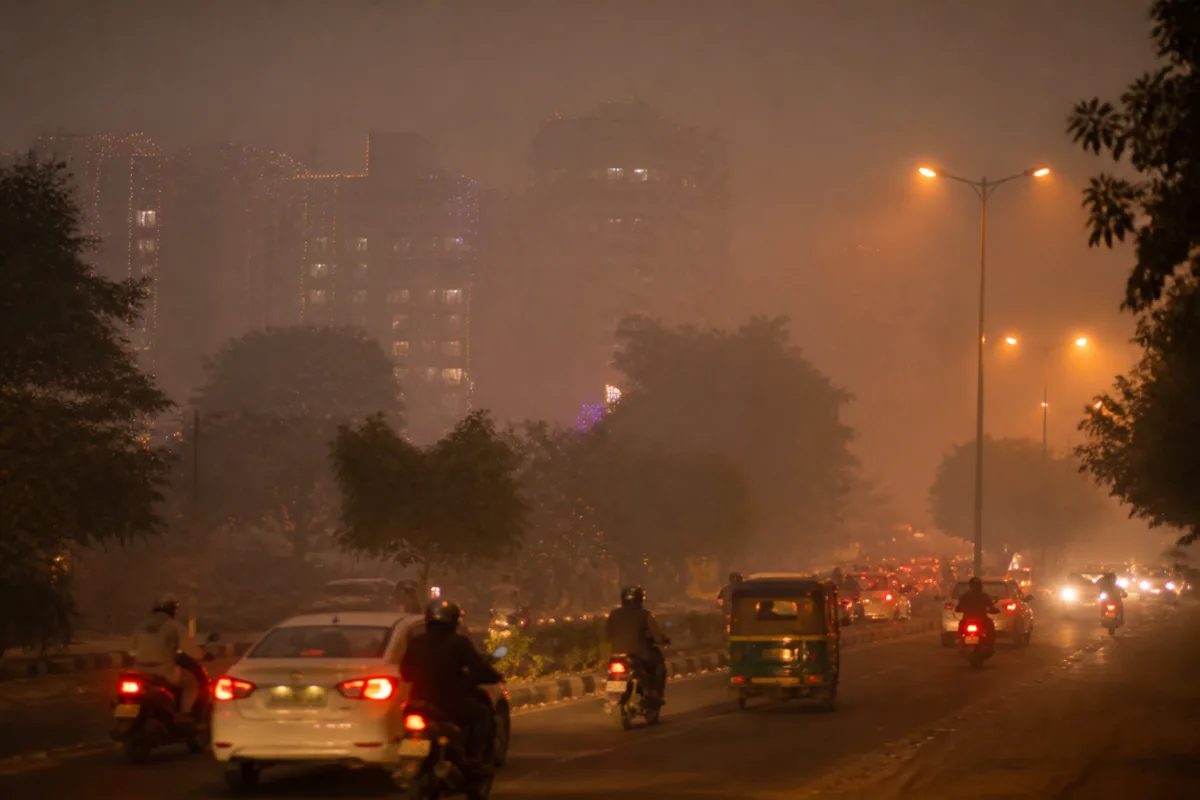
Bhubaneswar’s air quality deteriorated sharply on Diwali Sunday, with the Air Quality Index crossing 1,000 and reaching 1,091 at 9 pm, according to data available on AQI.in. The platform categorised the city’s air quality as “hazardous”.
The reading was recorded as the city experienced a major Diwali pollution episode. AQI.in also reported that Delhi’s AQI stood at 720 at the same time, lower than the reading recorded in Bhubaneswar.
The Bhubaneswar reading was accompanied by high concentrations of particulate matter. PM2.5 levels stood at 622 micrograms per cubic metre, while PM10 levels reached 750 micrograms per cubic metre at 9 pm, according to AQI.in.
PM2.5 refers to fine particulate matter small enough to penetrate deep into the lungs, while PM10 consists of larger particles that can also enter the respiratory system. The reported concentrations indicate a heavy presence of both fine and coarse particulate matter in the city’s air.
AQI.in’s classification placed Bhubaneswar’s air quality in the hazardous category. The reading raises concerns about the intensity of pollution in the city and the exposure of residents to particulate matter during the Diwali period.
The episode also highlights the difficulty of assessing citywide air quality through a single headline number. The reported figures relate to the data available on AQI.in at 9 pm, and the source material does not provide a station-wise breakdown, details of the monitoring locations, or a separate confirmation from a government pollution-control agency.
The available report does not specify the duration of the pollution spike, whether the reading was recorded across multiple monitoring stations, or what immediate measures local authorities planned to take. It also does not establish how the reported AQI compared with Bhubaneswar’s levels earlier in the day or before Diwali.
For residents, the reported levels indicate a significant deterioration in ambient air conditions on a key festival night. The combination of the AQI.in reading and elevated PM2.5 and PM10 concentrations places particulate pollution at the centre of the city’s Diwali air-quality episode. Further official monitoring data and authority responses will be needed to establish the full scale and duration of the deterioration.

