


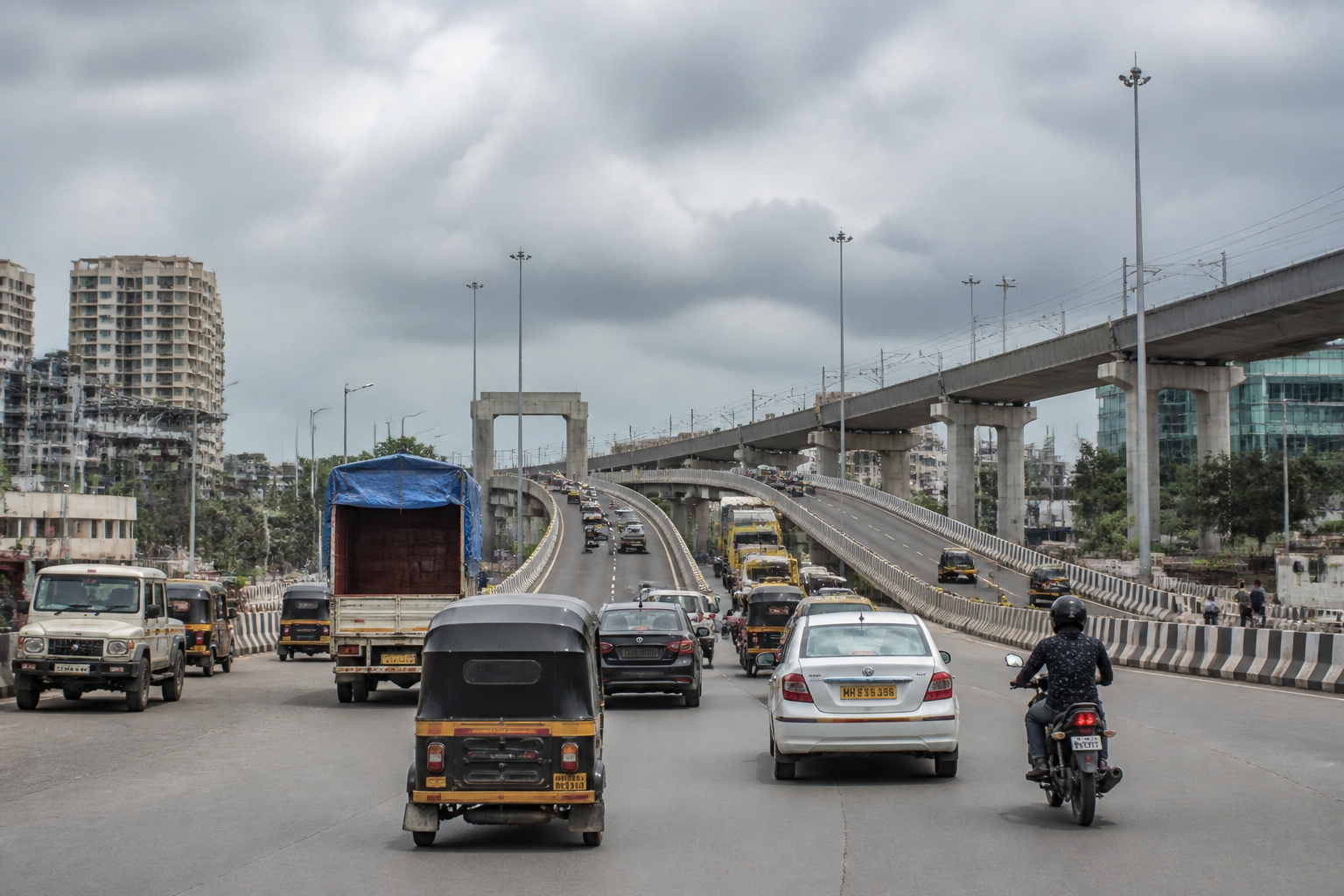
The MMRDA-built flyover between Deepak Hospital and Bhayandar Phatak in Mira-Bhayandar is causing confusion for commuters travelling towards Bhayandar West because clear direction signboards are missing along the route, according to a report published by Loksatta on September 30.
Passengers entering the flyover without realising that the route towards Bhayandar West does not approach the destination directly are required to continue towards Bhayandar Phatak, take a longer route and return towards their intended road. Commuters have said that the absence of signs at the beginning of the flyover and at key decision points is making navigation difficult.
The flyover is one of three structures built on major roads in Mira-Bhayandar alongside the metro corridor. The structures have been opened to traffic, but the Deepak Hospital-Bhayandar Phatak flyover has faced questions since before its opening because of its road layout.
The flyover has four lanes that narrow suddenly to two lanes, a design change that had raised safety concerns. The administration introduced some measures before the structure was opened for traffic. The latest complaint concerns a separate operational issue: motorists travelling towards Bhayandar West can mistakenly enter the flyover because the relevant exit or approach is not immediately apparent.
The problem highlights the importance of wayfinding infrastructure on elevated roads, particularly where several routes, lane changes and destinations converge. A flyover can reduce travel time only when road users can identify the correct entry, lane and exit in advance. Without visible signs, drivers may have to continue beyond their intended turn and make an additional loop, adding distance and increasing movement through already busy junctions.
Commuter Anil Notiyal has called for clear direction boards to be installed at the start of the flyover and at other important points along the route. The demand is specifically aimed at helping passengers identify the road towards Bhayandar West before committing to the flyover.
The issue also raises a coordination question for urban transport projects built alongside metro infrastructure. While the flyover’s physical structure is intended to improve traffic movement, its effectiveness depends on road markings, lane guidance, sign placement and the way approaches connect with the surrounding street network. These elements determine how the facility works for people using it in everyday conditions, not only how it performs as an engineering structure.
The report does not cite a response from the MMRDA or the Mira-Bhayandar administration on whether new signboards will be installed. Commuters are seeking signs at the flyover entrance and at other critical locations so that vehicles bound for Bhayandar West can choose the correct route without having to make a longer detour.
