


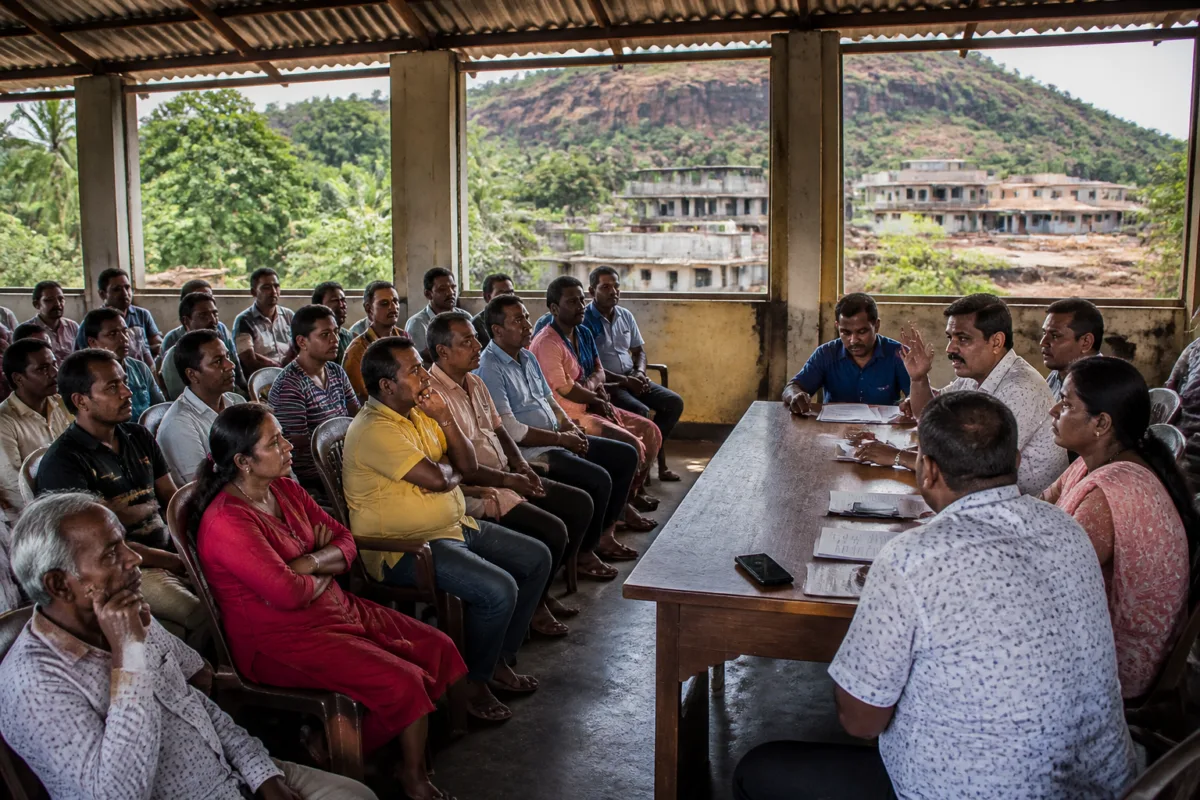
The Bethora-Nirankal-Conxem-Codar gram sabha in Goa’s Ponda area was adjourned on Sunday after villagers refused to confirm the minutes of the previous meeting, alleging that the village panchayat had acted against an earlier resolution opposing plot development. More than 150 villagers attended the meeting, where the permission granted for plot development at Bethora became the central point of dispute.
The disagreement escalated after the panchayat secretary read out the minutes of the previous gram sabha meeting. Villagers confronted sarpanch Akshay Gaonkar over the permission issued for the development, according to a report by The Times of India. The refusal to confirm the minutes prevented the meeting from proceeding as planned and led to its adjournment.
Gaonkar attempted to pacify the gathering and said the necessary permissions had been issued in accordance with court directives. The report did not provide details of the court directives or identify the specific permissions granted for the project.
Residents said the panchayat’s action conflicted with an earlier gram sabha decision. Dnyaneshwar Khandeparkar, a resident of Kasamshell-Bethora, said villagers would challenge the decision. Another resident, Devendra Chari, said the gram sabha held on July 19 had resolved not to allow plot development within the panchayat’s jurisdiction.
Chari further alleged that the panchayat granted permission at its fortnightly meeting on July 29, despite the earlier resolution. He also alleged that the plot owner had illegally cut a hill. The report did not include a response from the plot owner or details of any enforcement action concerning the alleged hill cutting.
The dispute also brought an existing drinking-water concern into the discussion. Chari said the village was already facing a shortage of drinking water and that additional plot development could aggravate the problem. The report did not specify the number of households affected, the present water supply arrangements or whether a technical assessment had been conducted on the development’s likely demand.
The episode highlights the administrative tension that can arise when a gram sabha resolution, panchayat-level permissions and court-related directions are understood differently by residents and local authorities. Under the reported account, villagers considered the July 19 resolution binding on the panchayat, while the sarpanch maintained that the permission was issued in compliance with court directives.
The immediate procedural outcome was the adjournment of the gram sabha after the minutes were not confirmed. Villagers’ stated plan to challenge the permission and the panchayat’s explanation regarding court directives are the next developments identified in the report.

