


Bengaluru’s ongoing B khata conversion exercise has generated Rs 908 crore for the city’s five corporations, but the revenue has not been specifically earmarked to create parks or civic amenity sites in the unapproved layouts where the need for public infrastructure is greatest, according to a report by Deccan Herald.
The Greater Bengaluru Authority has issued A khatas to around 43,000 property owners so far. The five corporations have received 85,419 applications, with about half being processed, and the collections are expected to exceed Rs 1,600 crore, the report said.
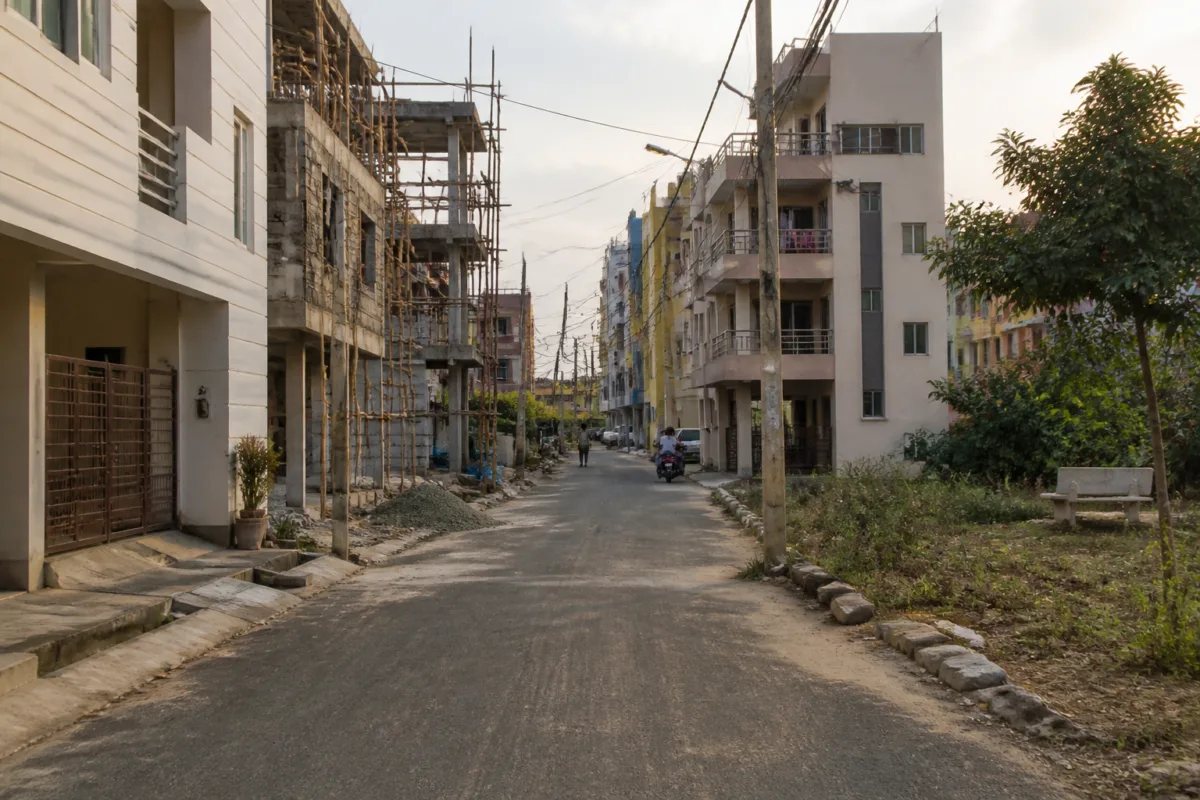
B khata properties generally relate to sites that do not meet all requirements for inclusion in the formal A khata system. In Bengaluru’s peripheral areas, a high concentration of such properties is associated with unapproved layouts, narrow roads, missing road links and limited or absent open spaces, according to the report.
The distribution of applications shows the strongest concentration in the city’s northern and western areas. Bengaluru North City Corporation has received 24,786 applications, followed by West with 23,841, South with 18,241 and East with 17,705. The Central corporation has recorded 846 applications.
The revenue is being used for day-to-day expenditure and development requirements, including road asphalting and the maintenance of parks and lakes. However, none of the five corporations is making a serious effort to create new parks or civic amenity sites, the report said. The shortage of vacant government land is cited as a major constraint.
Officials offered differing accounts of how much of the revenue is being directed towards infrastructure. Some said the funds were being used for development as well as maintenance because corporation revenues were generally insufficient even for routine expenditure, including staff salaries. A senior official from the North City Corporation said around 20% of collections was being allocated to new civic infrastructure.
The distinction between maintaining existing amenities and creating new ones is significant for Bengaluru’s outskirts. Areas developed through unapproved layouts may have received some basic services, but residents can still lack nearby public land for parks, community facilities and other civic uses. Converting property records without expanding these amenities would address a documentation and revenue issue without fully correcting the physical deficits of peripheral neighbourhoods.
Residents have argued that at least part of the revenue should be channelled back into the areas generating it. Kochu Shankar, a Horamavu resident, told Deccan Herald that the money could support the acquisition of suitable land, including available government property, for parks, civic amenity sites, roads and other public facilities.
The state government maintains that Bengaluru’s outskirts have received substantial investment in basic infrastructure over the past 15 to 20 years. Greater Bengaluru Development Minister Krishna Byre Gowda said this included Cauvery water connections, underground drainage, roads and other essential services. He also acknowledged that many layouts had been formed without the infrastructure available in planned neighbourhoods and said new parks could be created wherever land was available.
The reported revenue figures therefore expose a wider planning challenge: property regularisation can generate substantial public funds, but the resulting resources do not automatically produce land for public amenities. For residents of unapproved layouts, the practical value of the exercise will depend not only on receiving formal property documentation, but also on whether roads, open spaces and civic facilities improve in the neighbourhoods where they live.

