


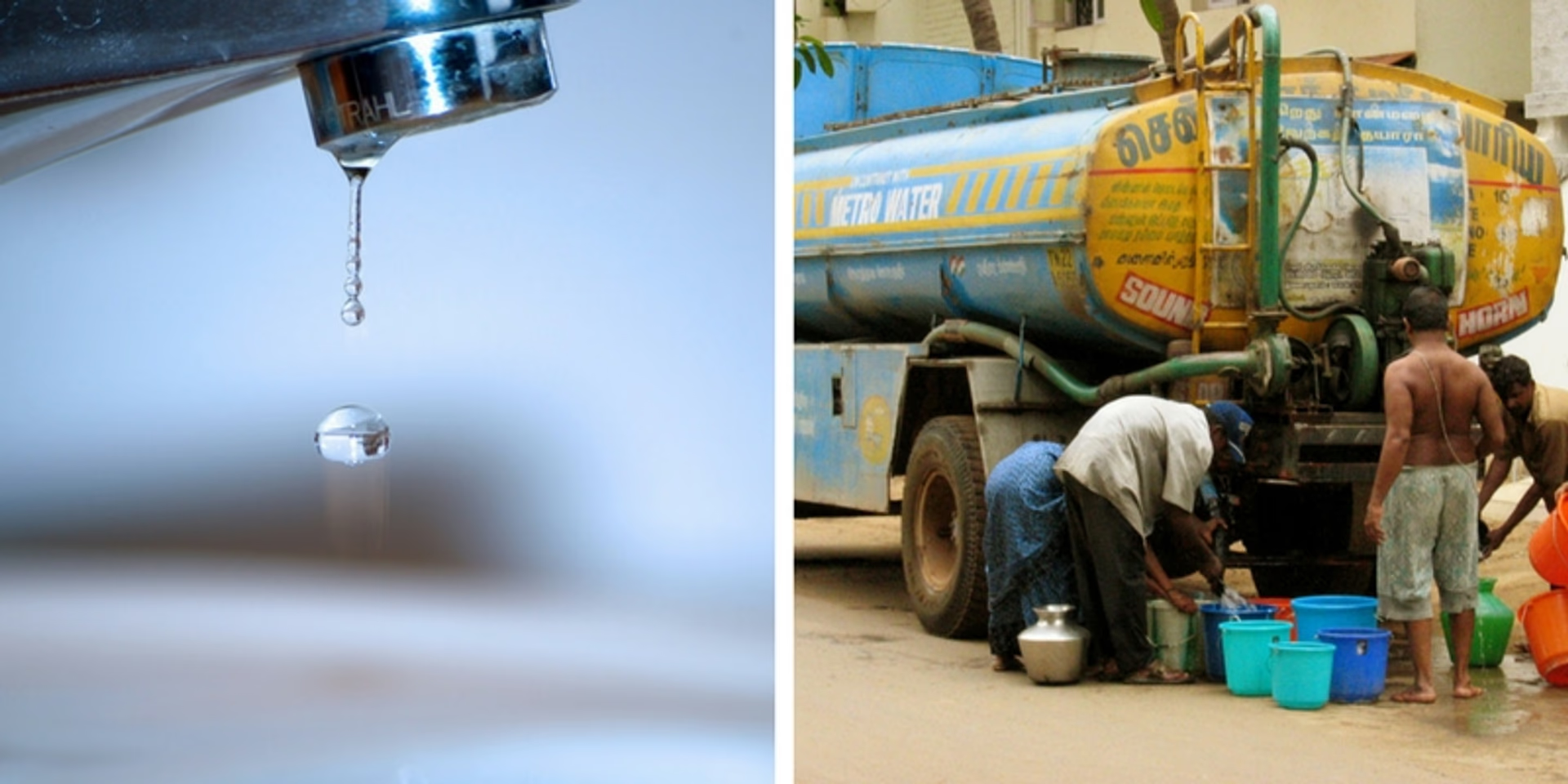
Bengaluru residents are grappling with the implications of a recent water tariff hike announced by the Bangalore Water Supply and Sewerage Board (BWSSB) after an 11-year hiatus.
The revised rates, effective from April 1, 2025, have raised concerns about affordability and equity, particularly among the city’s economically disadvantaged communities. The decision to increase water tariffs was driven by BWSSB’s mounting financial challenges. The board reported a monthly expenditure of ₹170 crore, with revenue collections falling short at ₹129 crore, leading to a deficit of ₹41 crore. This financial strain has been exacerbated by rising operational costs, including a significant increase in electricity charges, which have escalated from ₹35 crore in 2014 to ₹75 crore in 2025. Without a tariff revision, BWSSB projected a cumulative loss of ₹4,860 crore over the next five years.
For the average Bengaluru household consuming approximately 15,000 litres of water per month, the tariff hike translates to an additional ₹400 to ₹500 in monthly water bills. While this increase may seem modest for middle-income families, it poses a significant financial burden for low-income households . The tariff hike disproportionately affects slum residents, who often lack direct access to BWSSB’s piped water supply. Many rely on alternative sources such as borewells, water ATMs, or private water tankers, which are not only unreliable but also considerably more expensive. For instance, residents of undeclared slums in areas like Chikka Banaswadi and DJ Halli pay up to ₹250 per 1,000 litres of water, a stark contrast to the subsidised rates enjoyed by formal consumers .
A resident of Kasturinagara, spends approximately ₹400 monthly on water, which constitutes a significant portion of her household income. Similarly, Lingamma from Laggare spends between ₹600 and ₹800 monthly, often exceeding her daily wage. These figures highlight the stark inequality in water access and affordability within the city. In response to the growing concerns, Deputy Chief Minister D.K. Shivakumar acknowledged the necessity of the tariff hike to sustain BWSSB’s operations. He also announced plans to regularise illegal water connections and improve water distribution in underserved areas. Additionally, the government has allocated ₹20 crore to provide water to slums and urban poor, a scheme that had been previously halted .
While the water tariff hike is essential for the financial health of BWSSB, it underscores the need for a more equitable approach to water distribution and pricing. Ensuring that all residents, regardless of their economic status, have access to affordable and reliable water is crucial for fostering social equity and sustainable urban development in Bengaluru.
Also Read: Wildfires Expose Gaps in Road Sustainability in Israel
