


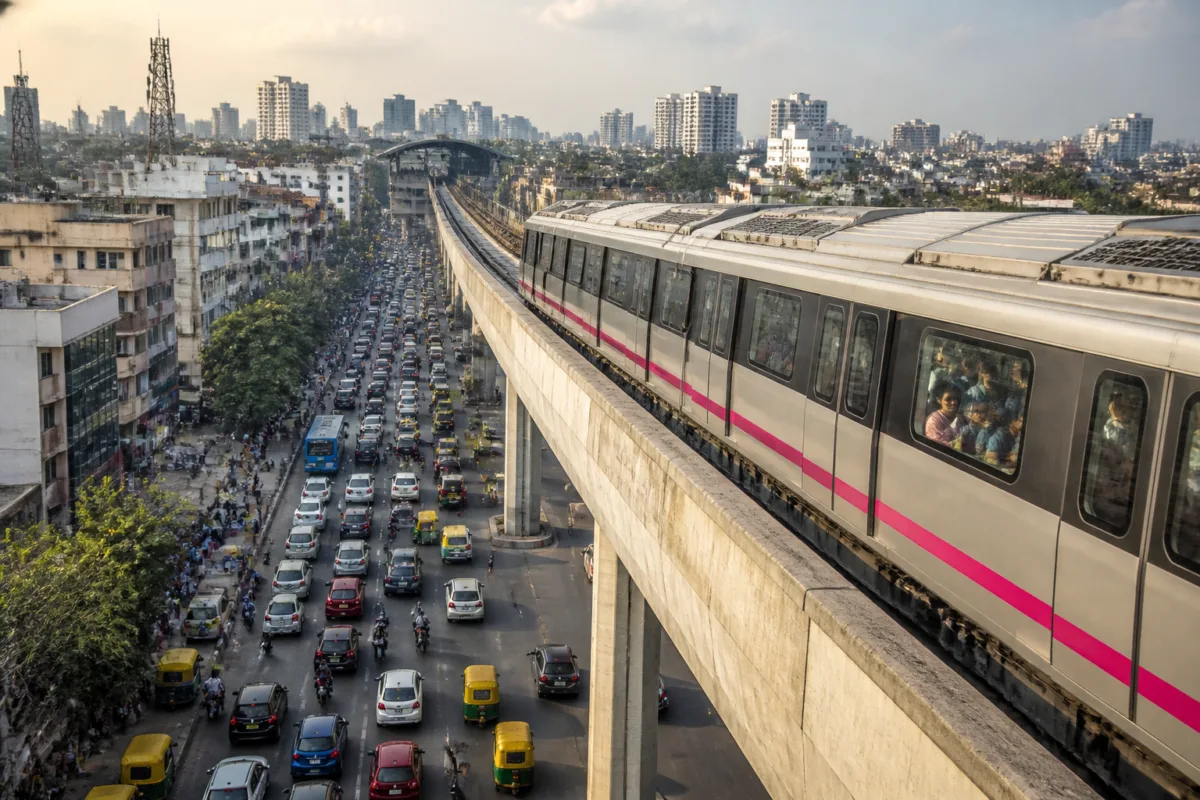
Bengaluru’s 7.5-km elevated Metro Pink Line was inaugurated as Prime Minister Narendra Modi launched and dedicated a package of infrastructure and development projects worth ₹15,600 crore across Karnataka on November 14, according to Prajavani. The projects include metro, railway, renewable energy, fuel storage and public facility upgrades in Bengaluru, Mysuru and other parts of the state.
Speaking after the Pink Line inauguration at an event at the Indian Institute of Management Bangalore, Modi described Bengaluru as a key driver of India’s technology and economic growth and said the Union government would provide continued support for Karnataka’s overall development. He said the Bengaluru Metro network, which covered 17 km in 2014, had now expanded to 103 km.
The Pink Line project forms part of Bengaluru’s efforts to expand mass transit capacity and reduce dependence on road travel. Karnataka Deputy Chief Minister D.K. Shivakumar said the state had set a target of expanding the city’s Metro network to 500 km in the coming years. He said traffic congestion was among Bengaluru’s biggest challenges and that a larger Metro network could reduce the time residents spend travelling.
Shivakumar also placed several demands before the Prime Minister, including equal sharing of Metro project costs by the Centre and the state. He said delays in central approvals were increasing project costs and slowing implementation, and sought faster clearances for upcoming Metro projects.
The projects launched or dedicated during Modi’s visit included integrated transmission networks for renewable energy zones in Koppal and Gadag, estimated to cost ₹4,450 crore, and a ₹1,370-crore solar power transmission project in Bidar with a capacity of 2,500 MW. Transmission networks were also announced for renewable energy zones in Davangere, Chitradurga and Ballari, including a ₹3,450-crore integration network and a ₹1,100-crore network for renewable energy units with a combined capacity of 3 gigawatts.
Other facilities included railway stations redeveloped under the Amrit Bharat Station Scheme at Chamarajanagar, Chikkamagaluru, Sakleshpur and Subrahmanya; the Bengaluru–Mangaluru–Madgaon Vande Bharat Express; a doubled 45-km railway section between Bagalkot and Vandal; and a 55-km electrified railway line between Sakleshpur and Subrahmanya. A compressed biogas plant by GAIL in Bengaluru, an MRPL fuel marketing terminal at Doddasara Halli in Bengaluru South and an 80,000-tonne LPG storage facility built by HPCL in Mangaluru were also included.
At a separate event in Mysuru, Modi inaugurated the Cosmos Planetarium. Shivakumar used the programme to raise issues related to irrigation, education and farmers’ welfare. The state also sought drought assistance from the National Disaster Response Fund after reporting drought across 226 taluks and estimated losses of ₹62,482 crore. It requested ₹22,400.58 crore in relief, along with action on the Mekedatu reservoir approvals, ethanol procurement and sugarcane farmers’ demands.
The Chief Minister’s demands also included reconsideration of the Kasturirangan report recommendations in affected areas and the use of corporate social responsibility funds, in line with state guidelines, to upgrade 1,000 government schools as Karnataka Public Schools. Modi said the Centre would continue to support Karnataka’s development and that improved transport links, electrification and infrastructure would help make daily life easier for residents. The newly launched projects now move into their respective operational and implementation phases.

