


The latest political dispute over Bengaluru Metro funding is not simply a quarrel over which government deserves credit. It exposes a more consequential problem for public infrastructure: the same project can produce sharply different accounts of responsibility depending on whether officials are referring to capital expenditure, grants, debt, guarantees, ownership or the share attached to a particular phase.
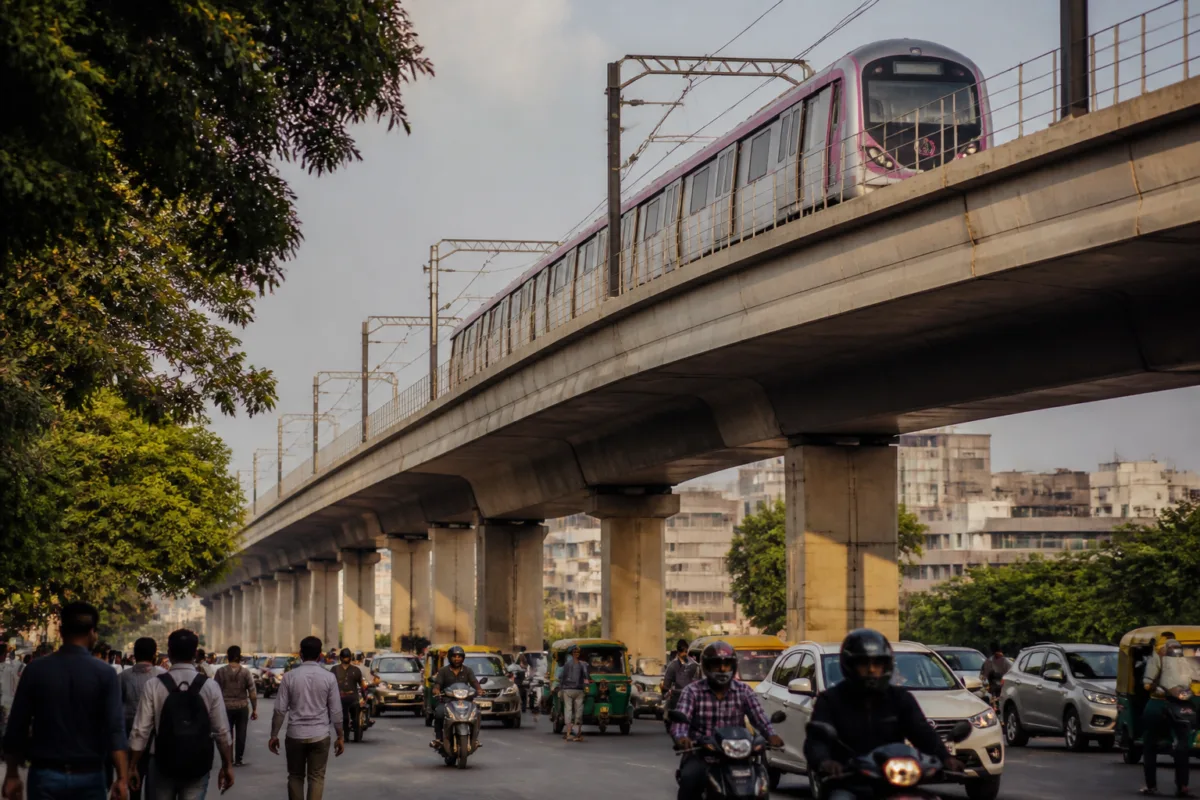
The dispute intensified ahead of the proposed inauguration of the Pink Line of Namma Metro by Prime Minister Narendra Modi. BJP leaders accused the Karnataka government of understating the Centre’s role in the metro system, while ministers in the Congress government said the state had contributed most of the project’s capital and was being denied a fair share of recognition. The competing statements cited figures ranging from 16.2% to 54% for the Centre’s contribution, and from 46% to 83.8% for the state’s share.
Those numbers cannot be treated as interchangeable. They appear to refer to different financial categories or project calculations, but the report does not provide the underlying project-wise accounts needed to establish which figure applies to which component. That gap is central to the controversy. Without separating grants, equity, loans, guarantees, interest obligations and expenditure already incurred, a headline percentage can create more political clarity than financial clarity.
BJP MP Tejasvi Surya said the Centre had helped Bangalore Metro Rail Corporation Ltd secure a loan of ₹29,000 crore and had provided a guarantee for it. He alleged that the state government was presenting this borrowing as its own contribution even though, according to him, the state would not repay the loan. He further claimed that project documents showed 54% central investment and 46% state investment, with both governments sharing ownership of the project.
Other BJP leaders offered a related argument. Opposition leader R. Ashoka alleged that the state government was portraying its share as 84%, describing that presentation as an attempt to mislead the public. Former chief minister Basavaraj Bommai said the metro project had a separate debt component of 65%, which would be repaid from metro revenue, and that the Centre was responsible for the loan. These statements place the emphasis on borrowing and repayment obligations rather than only on direct budgetary expenditure.
The Karnataka government’s position is substantially different. Greater Bengaluru Development Minister Krishna Byre Gowda said that most of the capital expenditure was being borne by the state and complained that his speech had been removed from the programme for the Pink Line inauguration after he sought a “fair share” for Karnataka. Backward Classes Welfare Minister Shivraj Tangadagi said the Centre’s contribution to Namma Metro was only 16.2%, despite publicity around a 50:50 funding arrangement. Forest Minister Ramalinga Reddy also cited a state share of 83.8% and a central share of 16.2%.
The immediate political question is therefore who paid more. The institutional question is what exactly is being measured. A government’s direct cash contribution is not the same as a loan raised by a project company. A sovereign guarantee may reduce the borrowing risk faced by the implementing agency, but it is not identical to a grant or an equity infusion. A repayment obligation backed by metro revenue is different from an amount paid directly from a state budget. Ownership arrangements may also not mirror annual expenditure shares.
The report’s conflicting figures—54:46, 50:50, 83.8:16.2 and a 65% debt component—demonstrate why metro financing needs to be published in a more transparent format. The figures may relate to different phases, financing structures or accounting treatments, but the report does not identify the relevant corridor, approval, financial year or project document for each claim. In the absence of that information, readers cannot determine whether the politicians are contradicting one another or discussing different parts of the same system.
This is particularly important for Bengaluru because metro construction is not financed through a single transaction. The public debate refers broadly to “the metro project”, while the statements appear to cover different stages and financial arrangements. The report mentions the approval of Metro Phase 2 during the previous United Progressive Alliance government and says construction was launched when Siddaramaiah was chief minister. It also refers to the forthcoming Pink Line inauguration. But it does not provide a consolidated account showing how the financing of each phase has been divided between the Union government, Karnataka, the metro corporation and lenders.
That missing project-level breakdown makes political communication easier and public scrutiny harder. A government can highlight grants or direct capital spending. An opposition party can emphasise guarantees, debt mobilisation or the central role in securing financing. Both can use technically valid categories while presenting them as if they describe the entire investment structure. The result is a contest over percentages without a common accounting base.
The dispute also reveals the overlapping responsibilities in large urban transport projects. The metro corporation is the implementing institution, but its finances are connected to decisions taken by both the Union and state governments. The state has a direct interest because metro expansion shapes Bengaluru’s mobility, land use and public spending. The Centre’s role can include approvals, financial support, guarantees or participation in specific project structures. The report records claims about these roles, but it does not reproduce the relevant approvals, agreements or audited accounts.
A useful public disclosure would therefore need to distinguish at least five items: direct grants from each government, equity or capital contributions, loans raised by the metro corporation, guarantees issued by governments, and the source of repayment for each borrowing. It would also need to identify whether each number refers to the full network, a specific phase, an individual corridor or only a particular financing package. Without these distinctions, a percentage may describe an accounting category rather than the full public cost of building and operating the system.
The repayment question is equally significant. If metro revenue is expected to service a loan, the public should be able to see the loan amount, interest burden, repayment schedule and the revenue assumptions attached to it. If a government guarantee stands behind the borrowing, the contingent liability should also be disclosed. The supplied report records the BJP’s claim that the Centre guarantees a ₹29,000 crore loan and Bommai’s statement that the Centre is responsible for a 65% loan component. It does not provide the loan agreement or official financial statement needed to confirm those details.
The state government’s 83.8% figure raises a different set of questions. It is not clear from the report whether this refers to total capital expenditure, the contribution for a specific phase, the state’s share after excluding debt, or a particular funding arrangement. The same applies to the 16.2% central figure cited by state ministers. Those numbers should not be accepted as a definitive description of the entire metro system without the documents and accounting period behind them.
The 54% central and 46% state figures cited by Tejasvi Surya also require the same qualification. His statement attributed the figures to project documents and said both governments held ownership. That makes the claim identifiable and reportable, but the report does not name the documents or explain whether the calculation includes guaranteed loans, direct investment, grants or other liabilities. The figure is therefore evidence of the BJP’s position in the dispute, not independently established proof of the total funding structure.
The political setting has added another layer to the financing argument. BJP leaders linked the controversy to Prime Minister Narendra Modi’s visit for the Pink Line inauguration and criticised state ministers and Congress leaders for their comments. Krishna Byre Gowda and Shivraj Tangadagi, in turn, framed the removal of the state minister’s speech as part of a broader dispute over Karnataka’s treatment in the programme and over the state’s share in metro financing. These claims concern the politics of recognition, but they also affect how citizens understand responsibility for a public asset they use and help finance.
For Bengaluru commuters, the institutional distinction is not academic. The source of capital determines who bears repayment risk, who can approve additional borrowing and which government is accountable when costs rise or delivery is delayed. The source of operating revenue determines whether fares, commercial income or budgetary support will fund debt servicing and maintenance. Yet none of these questions can be answered from slogans about whether the Centre or the state has “given” more.
The immediate lesson from the controversy is that public transport financing cannot be communicated responsibly through a single headline percentage. The same project may involve direct expenditure, debt and guarantees spread across several institutions and time periods. A transparent statement would publish the phase, corridor, date, sanctioned cost, expenditure to date, financing source, debt liability, guarantee provider and repayment mechanism for every major component.
The supplied report establishes that the political disagreement is real and that named leaders on both sides are using materially different figures. It does not establish which account is correct. The next important evidence will be the underlying project agreements, audited accounts and phase-wise funding statements for Namma Metro, particularly the documents relating to the ₹29,000 crore loan, the alleged 65% debt component and the 83.8:16.2 contribution ratio. Until those records are placed side by side, Bengaluru’s metro funding debate will remain a contest of competing numbers rather than a settled account of public responsibility.

