


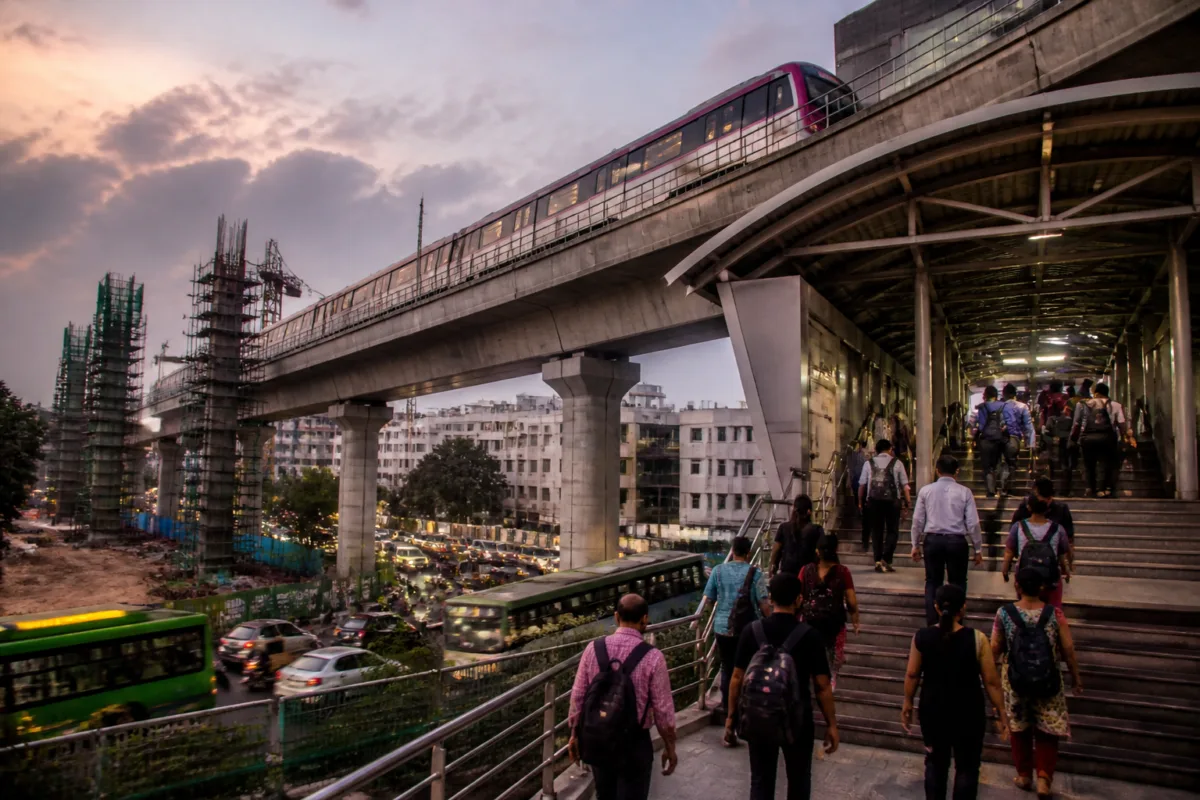
Bengaluru Metro funding has become the centre of a fresh dispute between Karnataka and the Union government, with Chief Minister D.K. Shivakumar urging Prime Minister Narendra Modi to introduce a more equitable system for financing expansion projects.
Shivakumar raised the issue during the inauguration of Bengaluru Metro’s Pink Line at the Indian Institute of Management Bangalore on Friday. He called for faster project clearances, affordable long-term financing and a clearer division of financial responsibilities between the Centre and the state.
The Chief Minister said Metro projects were generally taken up on a 50:50 cost-sharing basis, but Karnataka’s actual financial burden was considerably higher. According to him, the state pays for land acquisition, utility shifting, 100 per cent of state taxes, 50 per cent of central taxes, repayment of foreign loans and most cost escalations.
“Everyone shares the benefits of Metro connectivity. Therefore, its financial burden must also be shared fairly,” Shivakumar said, according to the statement reported by Deccan Chronicle.
He asked the Centre to introduce time-bound approvals for Metro projects and to assess project costs using prevailing market rates. He also sought central support for additional expenditure caused by approval delays, operational losses and foreign exchange risks linked to overseas loans. The Chief Minister proposed affordable long-term loans in Indian rupees to reduce the financial pressure on state agencies.
Shivakumar also called for a national technical institution to standardise Metro technologies across the country, accelerate approvals, promote indigenous technology and strengthen passenger safety. The proposal comes as cities continue to rely on large, capital-intensive rail systems to expand public transport capacity.
The Chief Minister linked the funding request to wider demands from Karnataka during his address to the Prime Minister. He urged the Centre to expedite the release of Rs 22,400.58 crore in drought relief after the state recorded what he described as its second-lowest rainfall in 70 years. He said 226 of Karnataka’s 240 taluks had been declared drought-hit and crops across 58 lakh hectares had been damaged, with estimated losses of Rs 62,482 crore.
He also raised the concerns of sugarcane growers, who are seeking Rs 5,500 per tonne for the 2026-27 season against the Fair and Remunerative Price of Rs 3,650 per tonne. Shivakumar said the minimum support price of sugar had remained unchanged at Rs 31 per kg since 2019 and sought a fair share for Karnataka in ethanol allocation.
For Bengaluru’s Metro system, the immediate issue is whether the existing funding structure can keep pace with land costs, utility relocation, borrowing obligations and construction-related escalation. The Centre’s response to the Chief Minister’s demands, including the requests for time-bound approvals and additional cost sharing, will determine the next stage of discussions on Metro expansion financing.

