


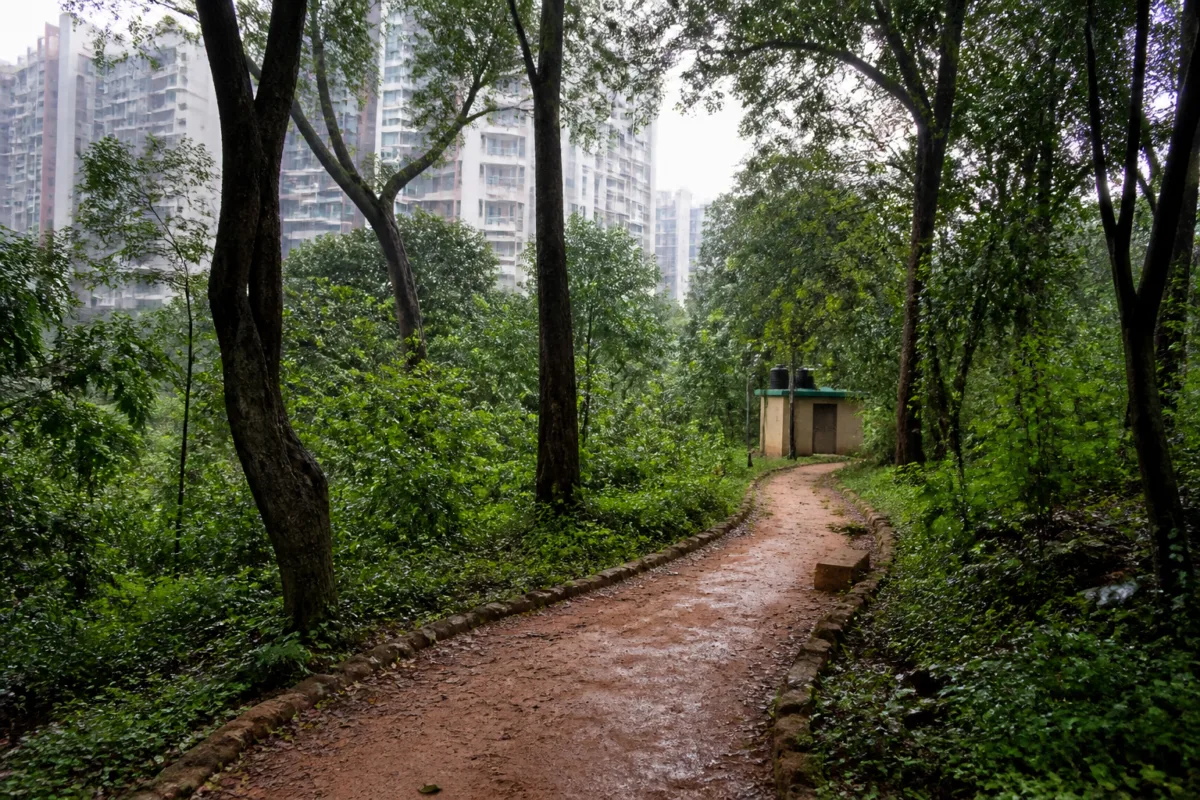
Bengaluru’s proposed eco-parks are being presented as a response to two linked urban pressures: the loss of vegetation to construction and concretisation, and the weakening of the city’s ability to absorb rainwater. The Forest Department plans to develop 15 mini eco-parks on selected portions of existing forest land, with nine sites proposed for the first phase under the Centre’s Nagar Van Yojana.
The proposal matters because it treats green space not only as an amenity but also as part of the city’s environmental infrastructure. The department says the parks would improve greenery, provide cleaner public spaces and support groundwater recharge while keeping the larger forest areas protected. That combination is central to Bengaluru’s urban challenge: the city needs accessible open spaces, but converting natural land into formal parks can itself create pressure for roads, buildings and intensive public use.
The plan is still at the proposal stage. The Forest Department is expected to submit it to the government, after which the proposal would be placed before the Cabinet if it is finalised. The available information does not establish an approval date, project budget, construction schedule, operating agency or maintenance arrangement. Those details will determine whether the initiative remains a low-impact forest-access programme or becomes another urban development project requiring substantial built infrastructure.
## A green-space plan built around existing forest land
The identified locations include Jarakabande, Mallasandra, Panathur, Kalkere, Mandur, Turahalli Reserve Forest, Turahalli Minor Forest, Doresanipalya, Machohalli and a forest area near Sulikere. The department has described these as selected portions of forest land rather than entirely new parks created through land acquisition.
The distinction is important. Bengaluru already has well-known public green spaces such as Cubbon Park and Lalbagh, but the proposed eco-parks are intended to retain more of the natural character of forest areas. Officials have said that only designated portions would be opened to visitors, while the remaining forest land would continue to receive strict protection.
The proposed physical interventions are also deliberately limited. According to the department, basic amenities such as toilets may be provided, but no extensive concrete structures are planned. Mud pathways would be used instead of concrete roads. The stated objective is to allow residents to experience nature without substantially disturbing the forest ecosystem.
That design approach places the project closer to a controlled public-access model than to a conventional landscaped park. It also creates a practical governance requirement: the boundaries between public access, ecological protection and routine maintenance must be clearly defined before visitors are admitted. The supplied report does not specify how those boundaries would be enforced or how visitor volumes would be managed.
## The groundwater question
The Forest Department has linked the proposal to Bengaluru’s hydrological problems. A department official said rapid urbanisation, concretisation and encroachment had reduced vegetation and that large-scale construction over the past two decades had affected the soil’s ability to absorb rainwater.
This is the most consequential part of the proposal. A green space can serve several urban functions at once: it can provide shade and recreation, preserve habitat and leave soil available for infiltration. But the water-related benefit depends on the condition of the land, the plant species used, the extent of paving and the way stormwater moves through each site. The announcement establishes the department’s stated objective of improving groundwater recharge, but it does not provide site-level recharge estimates, groundwater data or monitoring indicators.
Under the Nagar Van Yojana framework, the department plans to remove invasive species such as eucalyptus and acacia from the identified areas and replace them with native, indigenous and environmentally suitable species. The report does not provide a planting list, ecological assessment or timetable for this transition. It therefore remains unclear how species selection will vary across the different forest locations or how the department will measure whether replacement planting improves ecological and hydrological conditions.
The absence of such details does not invalidate the proposal, but it limits what can currently be concluded about its environmental performance. The plan has a clear stated rationale; its results will depend on how that rationale is translated into site-specific management.
## Forest protection versus public access
Opening any portion of forest land to citizens involves an institutional balance. Public access can make urban nature more visible and give residents a reason to value protected landscapes. At the same time, increased footfall, waste, lighting, noise and informal construction can alter the very ecosystems the project is intended to protect.
The Forest Department has said the proposed development will not come at the cost of existing forests. It also says that development activity will be kept to a minimum. These assurances are significant because forest-based public spaces can expand gradually after their initial approval. A project that begins with mud paths and toilets may later attract requests for parking, food outlets, visitor centres or larger circulation routes. The current proposal, as reported, does not include those additions, and there is no evidence in the supplied material that they have been approved.
The department has also said separate permission from the Union Ministry would not be necessary because the initiative falls under the Nagar Van Yojana and involves developing designated portions of forest land as forest-based public spaces. This is an administrative claim about how the project would be treated under forest regulations. The proposal’s subsequent government and Cabinet consideration will be important in establishing the formal approvals, conditions and safeguards that apply.
## The implementation gap
The public value of the eco-parks will ultimately be determined by implementation rather than by the number of locations announced. The current proposal identifies 15 parks and a first phase of nine, but does not set out the sequencing of those projects. It also does not state whether all the identified sites have the same legal status, ecological condition, access arrangements or restoration needs.
Those differences matter in a city where forest patches are distributed across areas experiencing varied levels of development pressure. A site near a rapidly urbanising neighbourhood may face different access and protection challenges from a larger reserve forest. Without published site plans, it is not possible to compare the proposed locations or determine whether the first phase prioritises ecological need, citizen access or administrative feasibility.
The proposal also leaves maintenance unresolved. Even low-impact parks require arrangements for sanitation, path upkeep, visitor control, security, waste management and ecological monitoring. The report identifies toilets as a possible basic amenity but does not identify the agency responsible for their operation or the source of recurring funds. These institutional details are not secondary to the project; they will shape whether the parks remain minimally built forest spaces or become difficult-to-manage public facilities.
The larger urban question is whether Bengaluru can add public green access without treating every natural landscape as a development opportunity. The Forest Department’s proposal recognises that the city’s green cover, soil and groundwater systems are connected. Its stated commitment to limited construction and continued protection of the remaining forest areas points towards a restrained model of urban nature access.
What remains unestablished is how that model will be governed. The next milestones are the finalisation of the proposal, its submission to the government and any subsequent Cabinet decision. Those steps should clarify the legal permissions, site boundaries, phase-wise schedule, funding, maintenance responsibility and ecological monitoring framework. Until then, the 15 eco-parks are a significant policy proposal, but not yet an operational network of public green spaces.

