


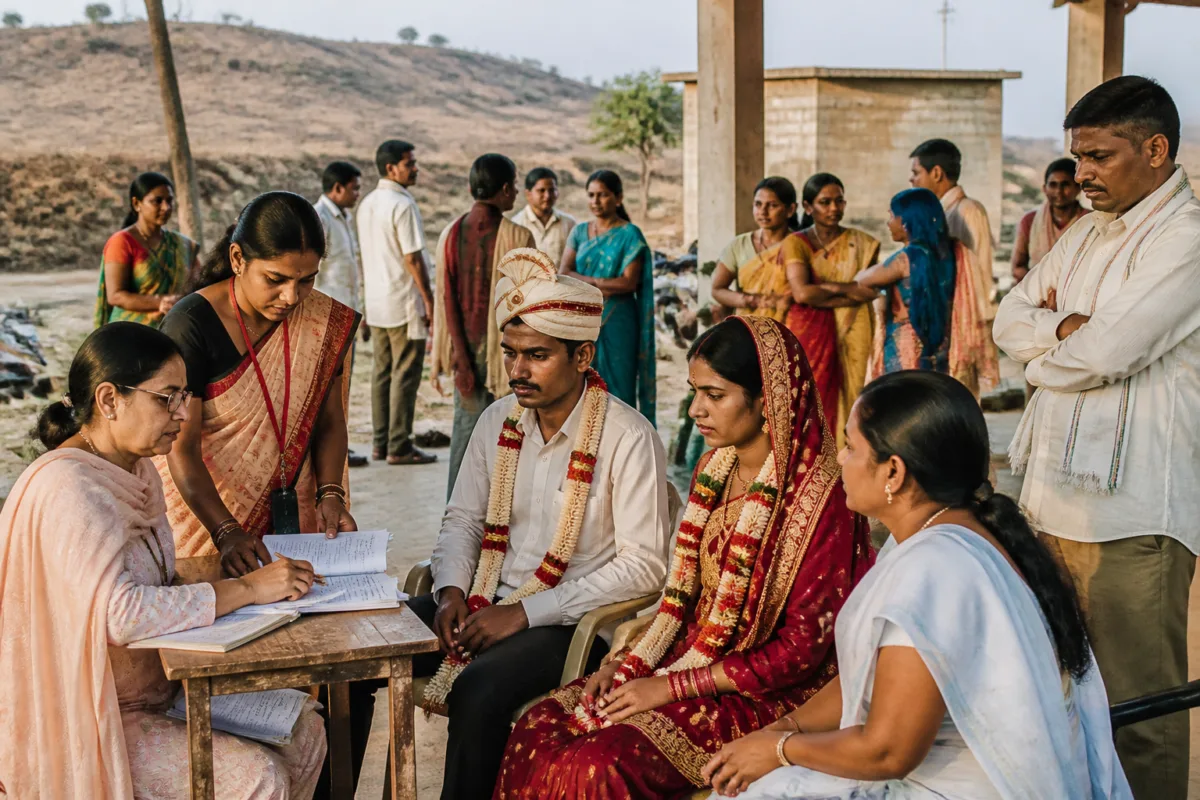
The Beed mass wedding scheme will offer government assistance of up to Rs 25,000 to eligible couples from drought-hit rural families, with weddings scheduled in three phases between November and December. The initiative is aimed at reducing the financial burden on farmers, agricultural labourers and sugarcane harvester families in Maharashtra’s Beed district.
Beed District Collector Vivek Johnson announced the programme in an Instagram post on Saturday, stating that the state government had declared drought across the entire district. The administration decided to organise mass weddings to help farmer families manage marriage-related expenses during the drought, he said.
The weddings are scheduled for November 25-26, November 14-15 and December 30-31. The district administration said eligible couples would receive assistance through government schemes including Kanyadaan and Shubhamangal. The support will be subject to the eligibility requirements of the relevant schemes.
The initiative covers beneficiaries from communities included under the schemes, including scheduled castes, neo-Buddhists, denotified tribes, nomadic tribes, other backward classes and special backward categories. Families of farmers and agricultural labourers can also apply, provided they meet the applicable eligibility criteria.
The administration has asked eligible couples to register through their local Anganwadi workers. Applicants can select a date from the scheduled wedding phases while registering. The administration has provided 9307670495 as a contact number for queries about the registration process.
The programme is being implemented under the guidance of G Sreekanth, Divisional Commissioner of Chhatrapati Sambhajinagar. A district-level committee headed by the additional collector has been formed to coordinate the initiative, while taluka-level committees led by the respective tehsildars will oversee local arrangements.
The taluka committees will include block development officers and child development project officers from the Women and Child Development Department. This structure places registration and local coordination through existing administrative and frontline welfare networks, including Anganwadi workers and officials at the taluka level.
Johnson said the initiative was intended to ensure that financial constraints did not add to the difficulties rural families were facing during the drought. He also described participation in mass weddings as a way to reduce expenses and support a wider social commitment.
The administration’s announcement does not specify the total number of couples expected to participate, the overall budget for the programme or the venues for each phase. Registration through local Anganwadi workers and the scheduled wedding dates are the immediate next steps for eligible families.

