


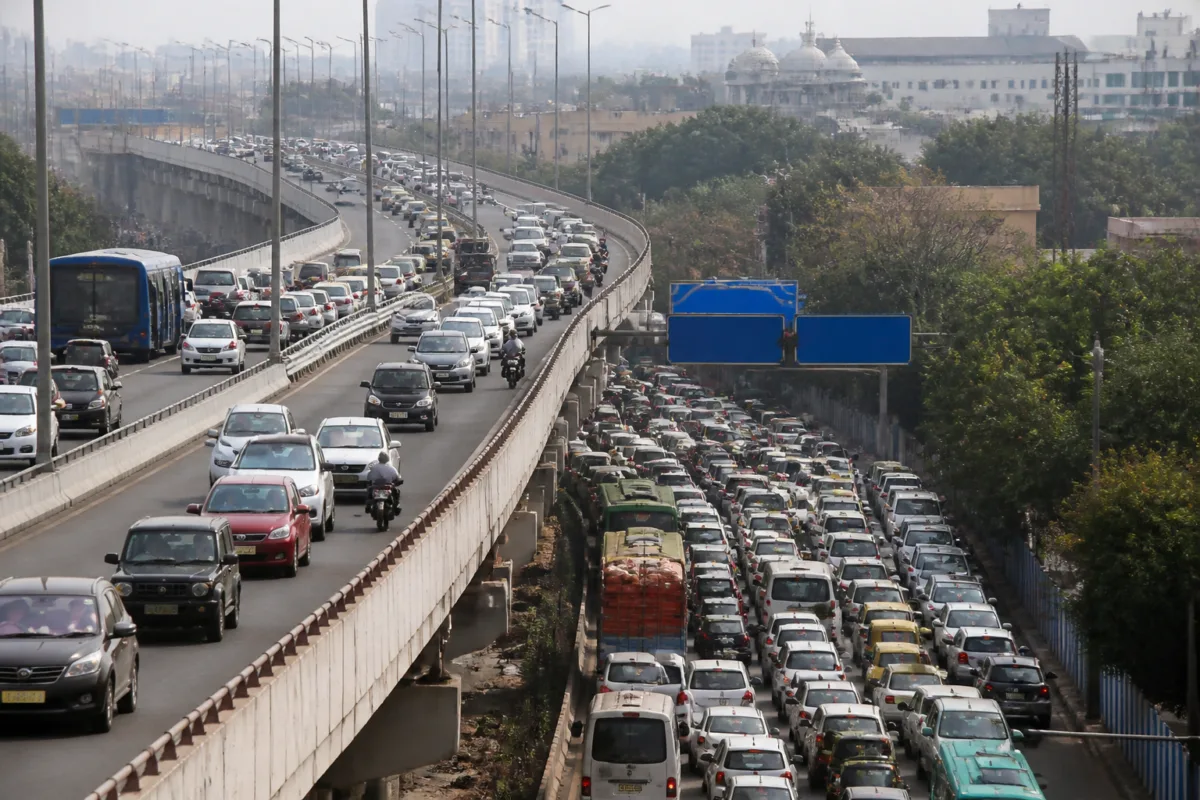
Barapullah flyover traffic has eased between Mayur Vihar and Sarai Kale Khan after Google Maps updated the traffic status on the Barapullah Phase-3 lane towards AIIMS, but a severe bottleneck continues near the slip road used by vehicles heading to the hospital.
According to a report by Jagran – New Delhi, the updated traffic information is allowing drivers to see real-time congestion after reaching Sarai Kale Khan and choose alternatives such as NH-24 and other connecting routes. The change has reduced the pressure on the approximately 3.5-kilometre stretch between Mayur Vihar and Sarai Kale Khan.
Before the update, Google Maps was reportedly showing the Barapullah flyover as clear even during peak congestion between 9 am and 1 pm. Drivers following the digital route guidance were therefore reaching the congested corridor without prior warning. Vehicles arriving from the Mayur Vihar red light towards Sarai Kale Khan would become trapped in traffic, with some drivers turning back towards Mayur Vihar and adding to the congestion.
The improvement, however, has not resolved traffic movement across the entire corridor. Drivers travelling towards AIIMS from the DND, Delhi-Mumbai Expressway, Ashram Extension Flyover and Maharani Bagh continue to face heavy congestion while attempting to enter the slip road near Sarai Kale Khan. Traffic is also reported on the route from Sarai Kale Khan through the Sundial Loop towards the Barapullah flyover.
The affected section is part of Barapullah Phase-3, a 3.5-kilometre connection between southern and eastern Delhi. The corridor was inaugurated on September 29, according to the report. Its traffic performance is affected not only by the flyover itself but also by the movement of vehicles towards connecting roads, slip roads and hospital-bound routes.
The Delhi Traffic Police has been diverting vehicles approaching Barapullah Phase-3 from the Noida Link Road, through Mayur Vihar, towards NH-24 and the DND when congestion builds up. The Google Maps update now means that drivers are more likely to receive real-time alternative-route suggestions instead of being directed towards a section that is already jammed.
The traffic situation also highlights the operational importance of accurate digital mapping on recently opened or modified urban corridors. When a road’s traffic condition is not reflected on navigation platforms, route guidance can concentrate vehicles on a bottleneck and make congestion harder to manage. In this case, the update has helped on the Mayur Vihar-Sarai Kale Khan section, while the continuing queue near the AIIMS-bound slip road remains the main unresolved problem.
The report also notes that work has begun to install traffic signals on Barapullah Phase-3. The traffic police diversions and the signal installation are the next reported measures intended to improve movement between Mayur Vihar, Sarai Kale Khan and the AIIMS-side connection.

